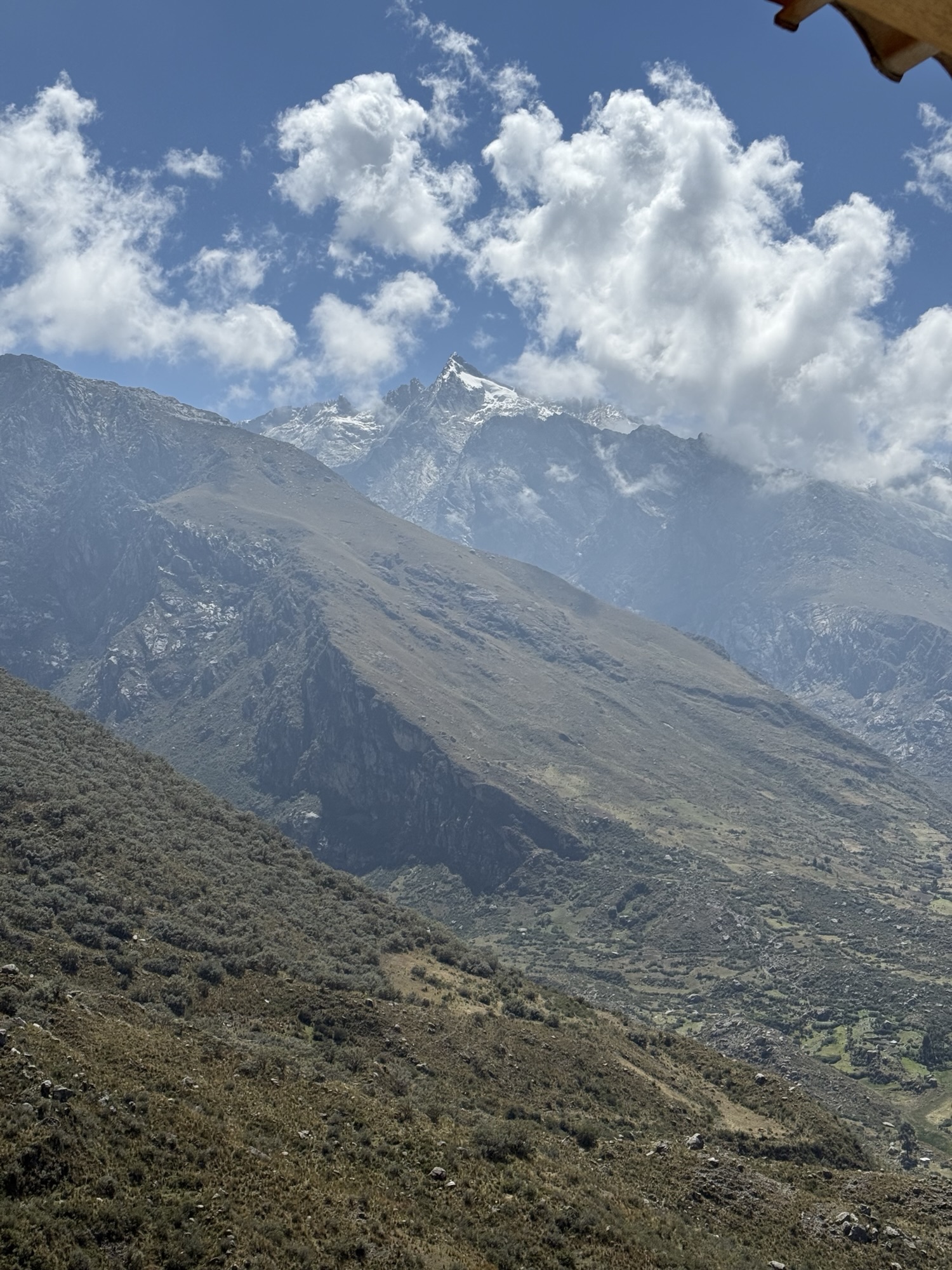
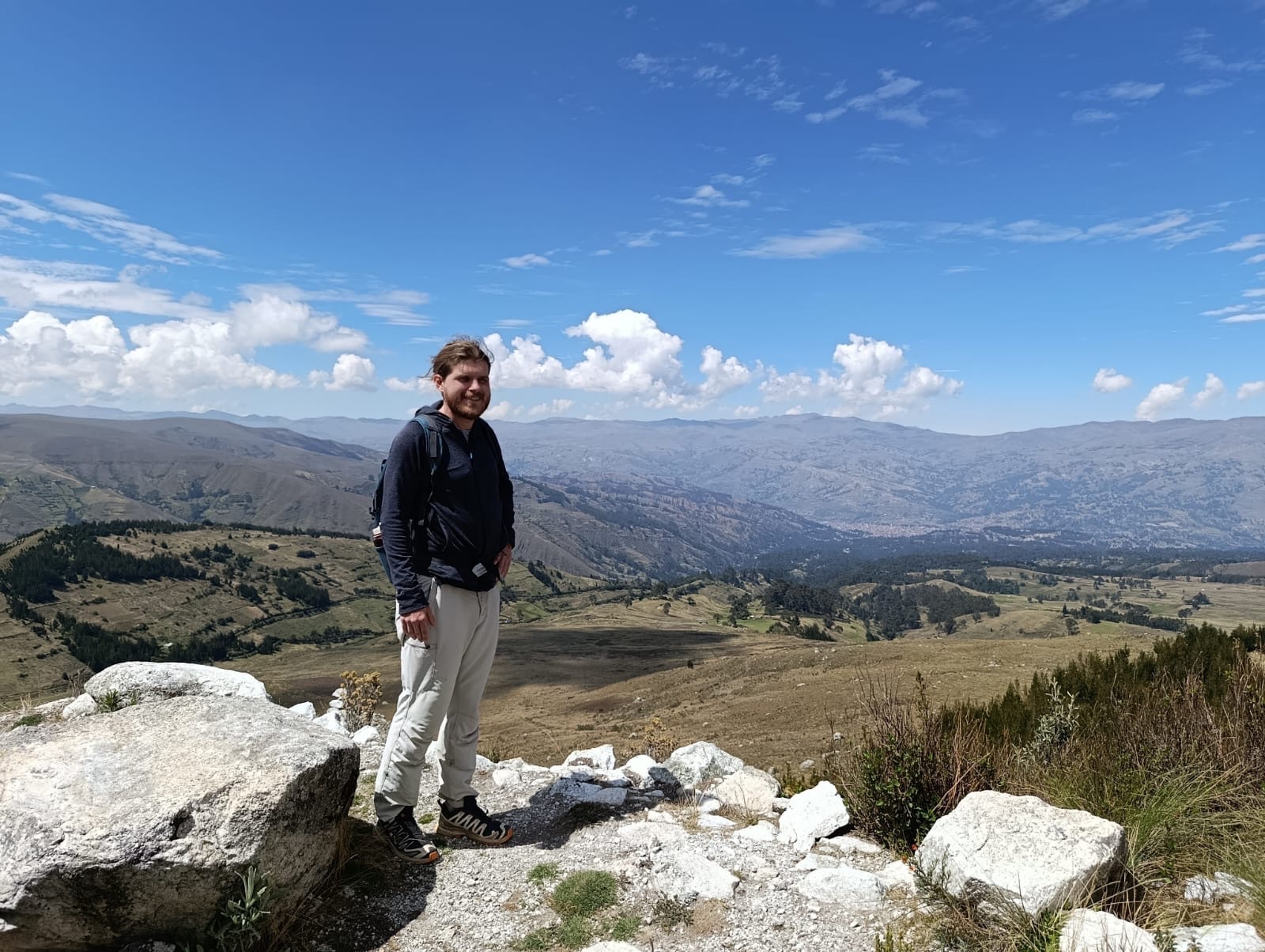
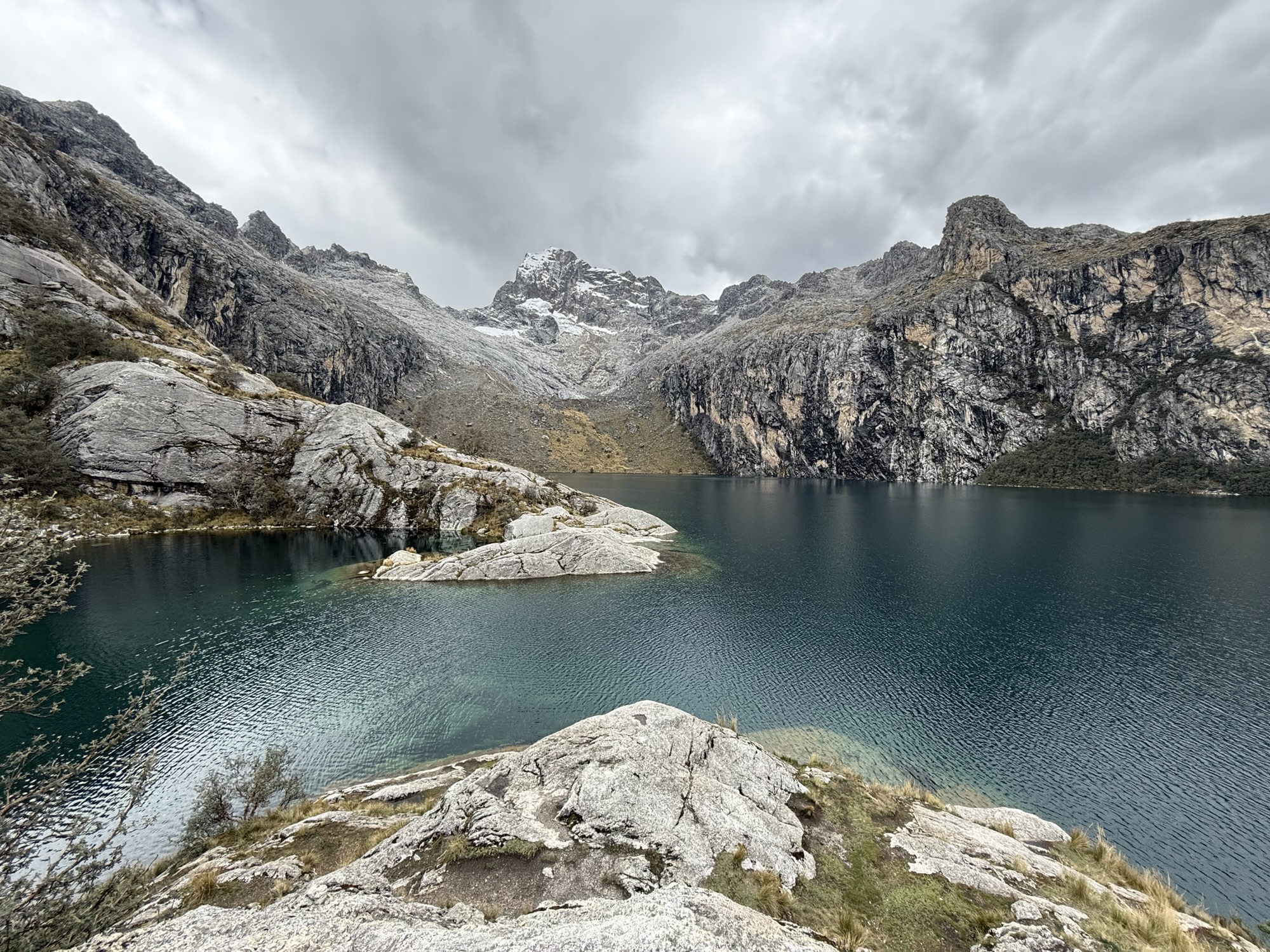
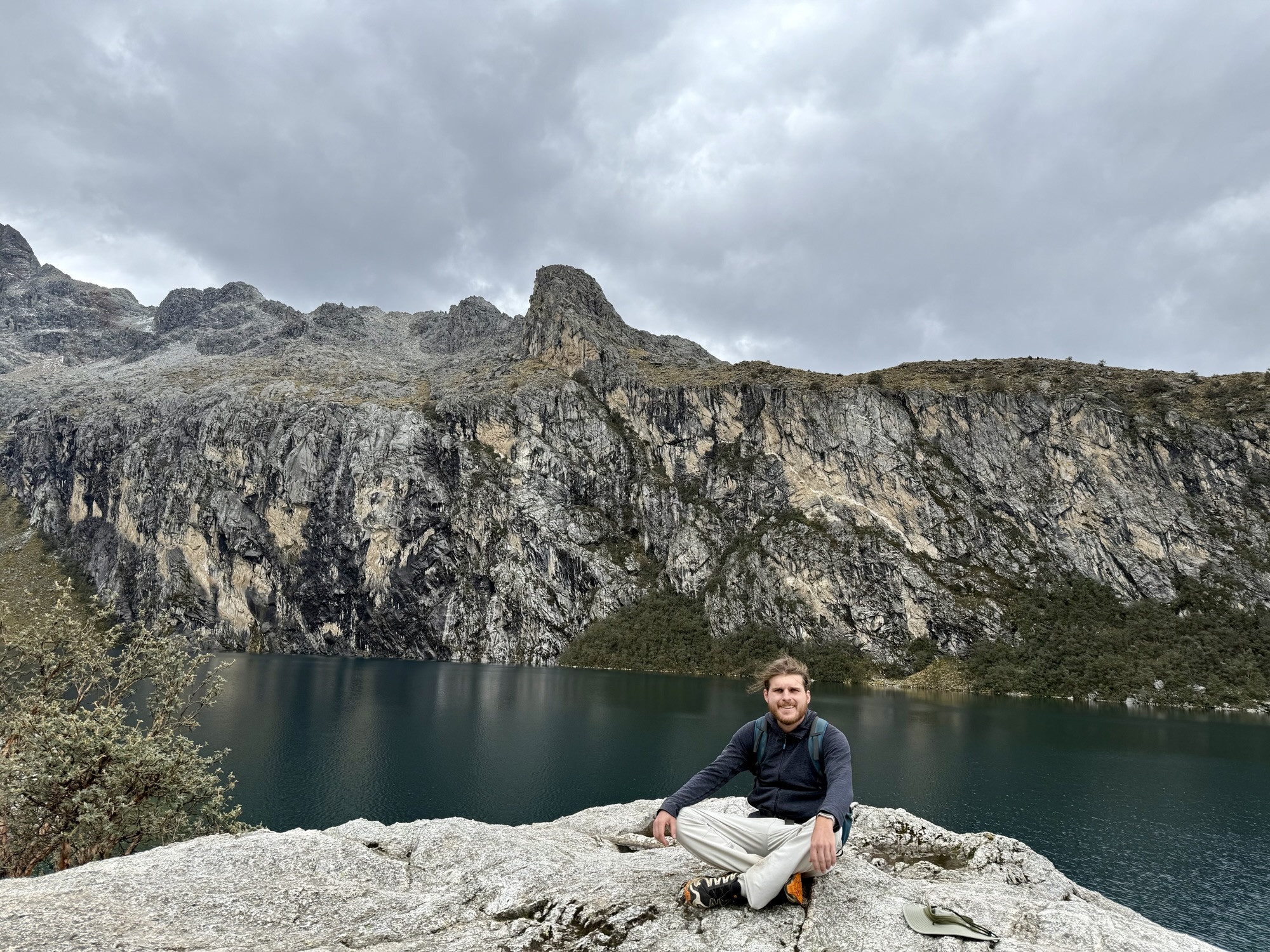
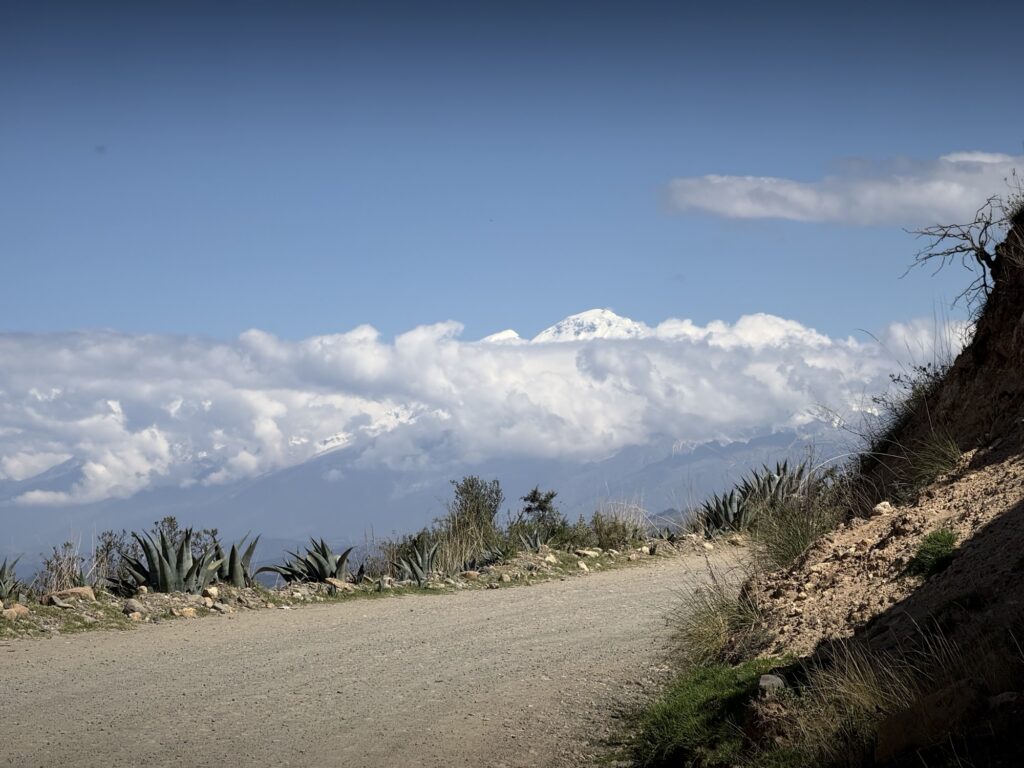
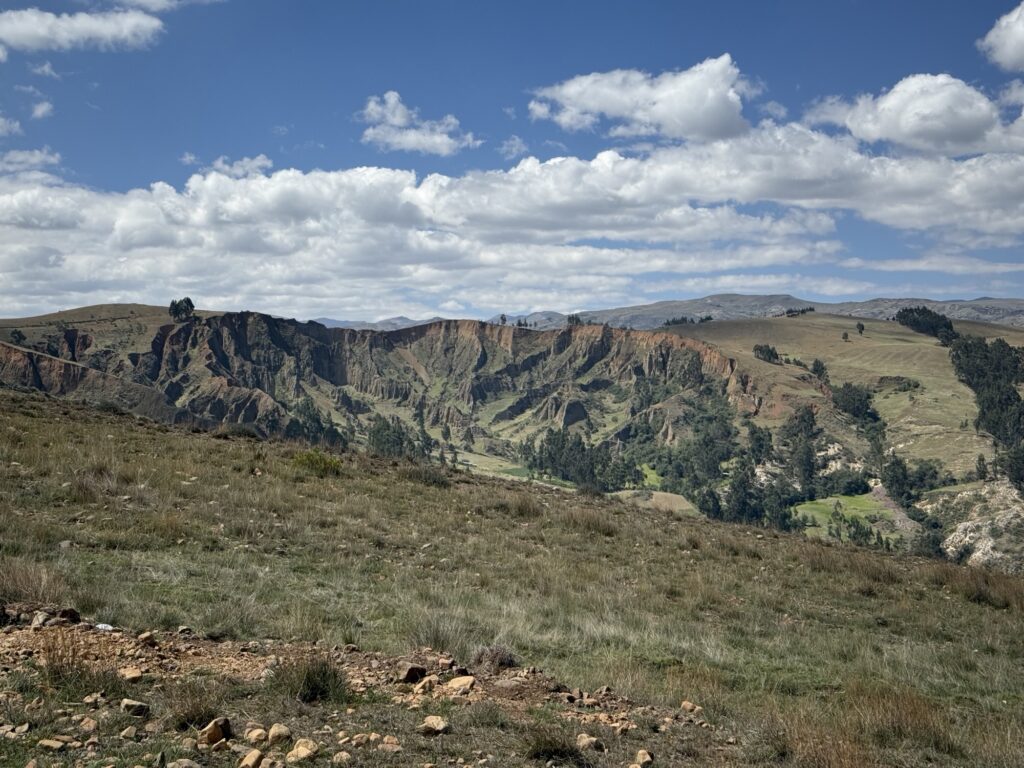
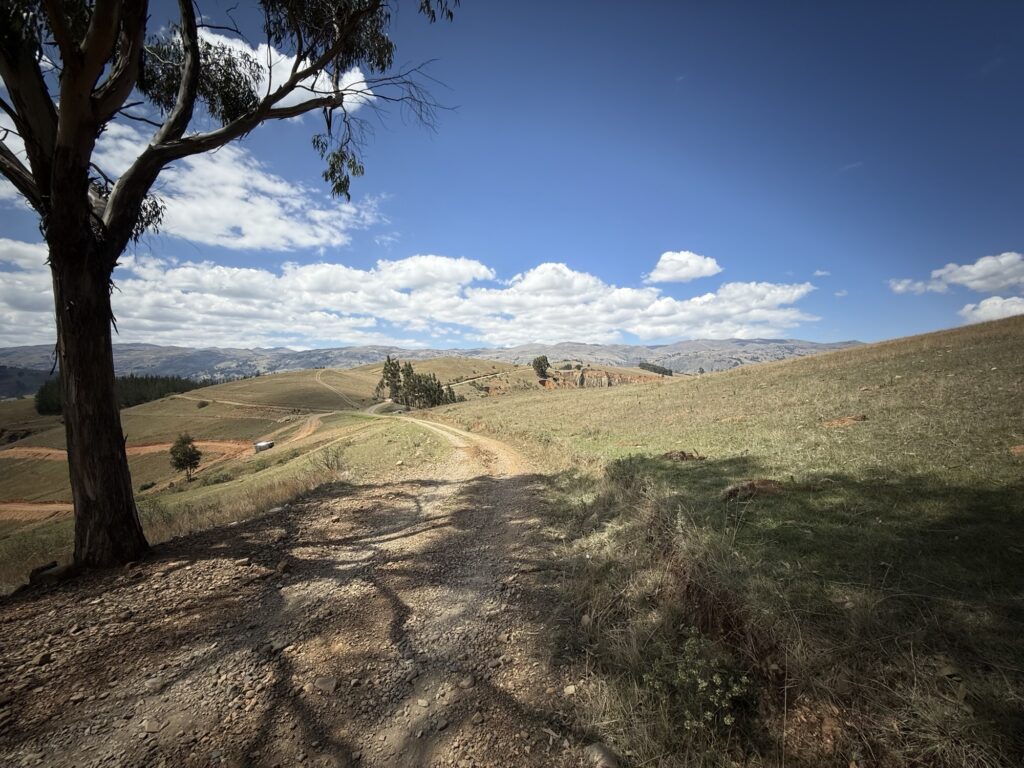
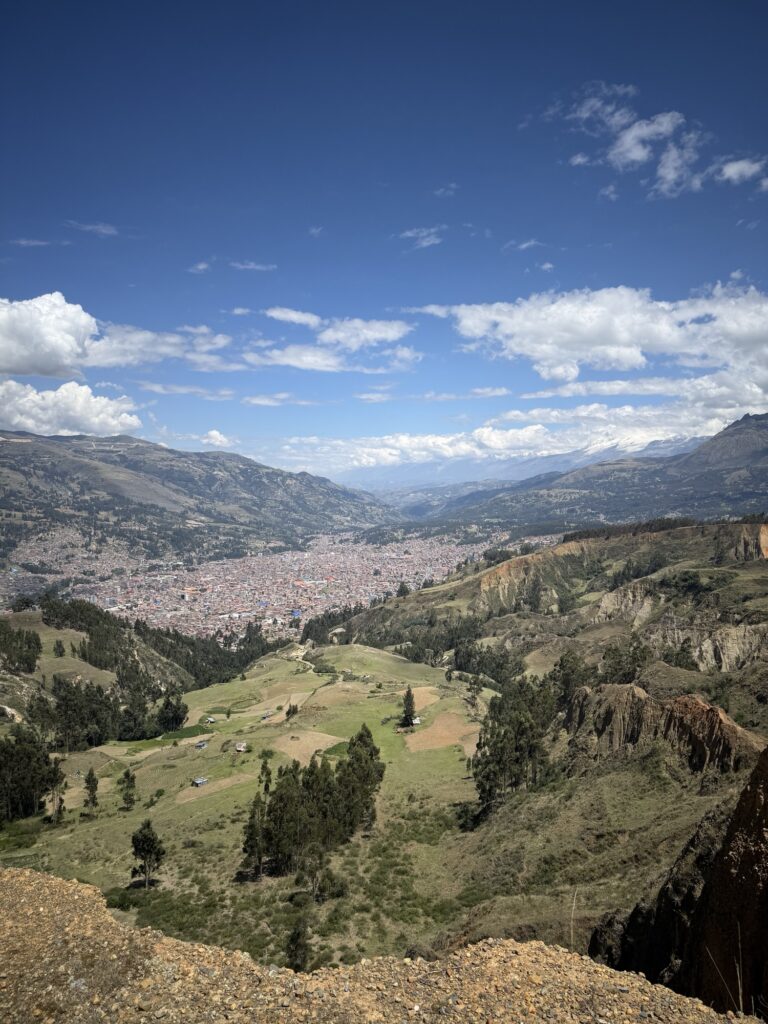
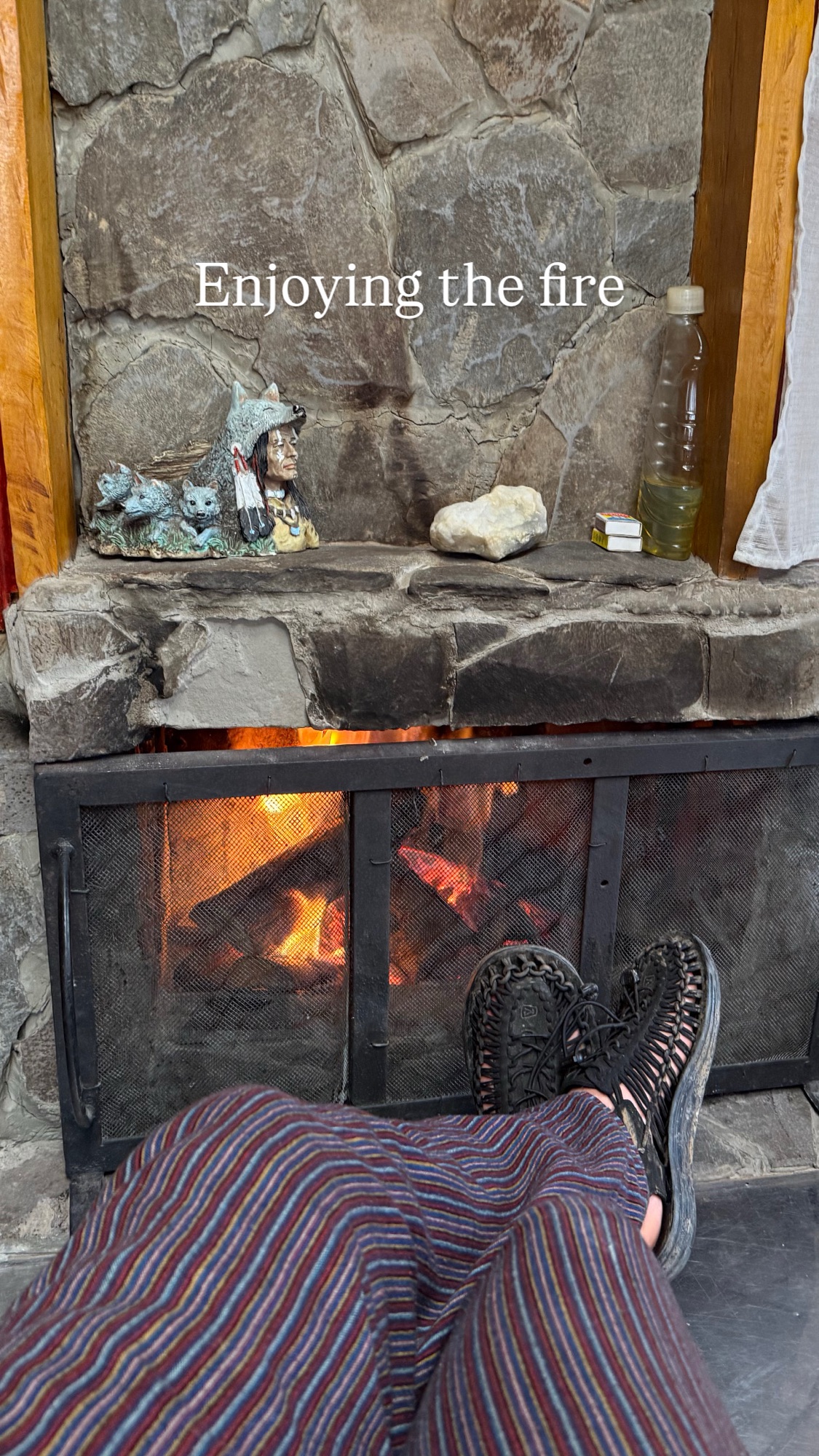
Unfortunately, soon after arriving in Huaraz I get sick. The fever and general weakness mean that I cannot really go outside that much. I spend a few days at the rental apartment, curled up in a blanket and drinking tea. It’s not the worst way to spend my time, but I am a bit sad that I will not be able to do all the hikes I had planned.
Probably it’s not a wise decision but as soon as I feel a tiny bit better I push myself to do some “light” hikes. Of course, they turn out to be more demanding than I anticipated.
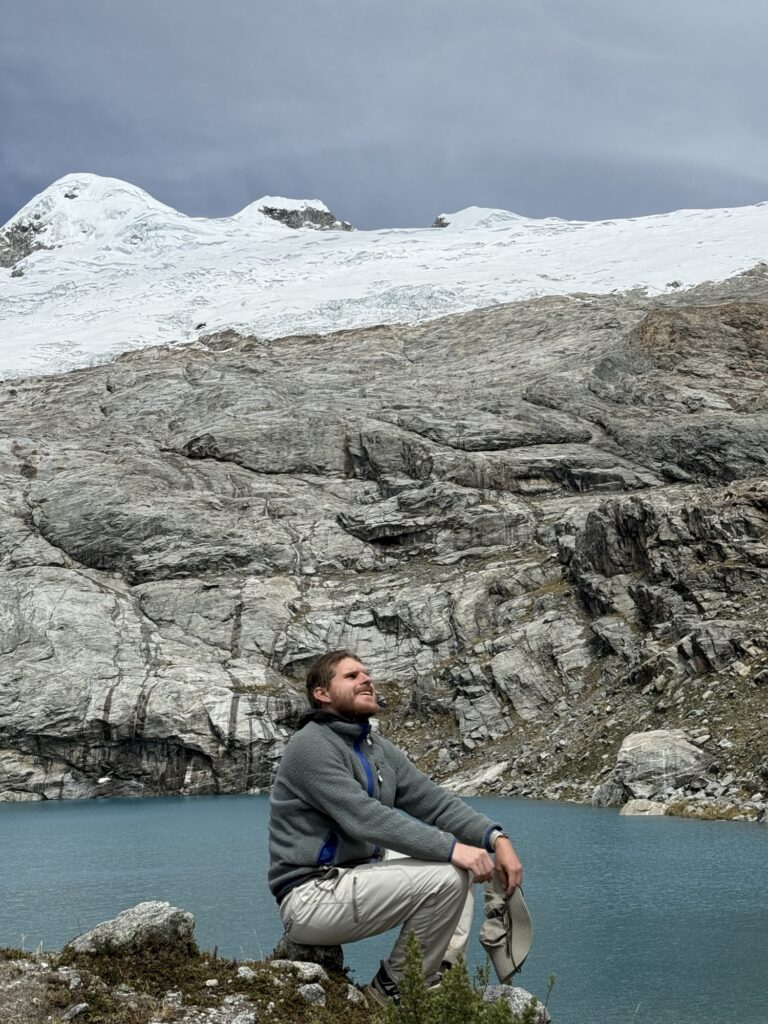
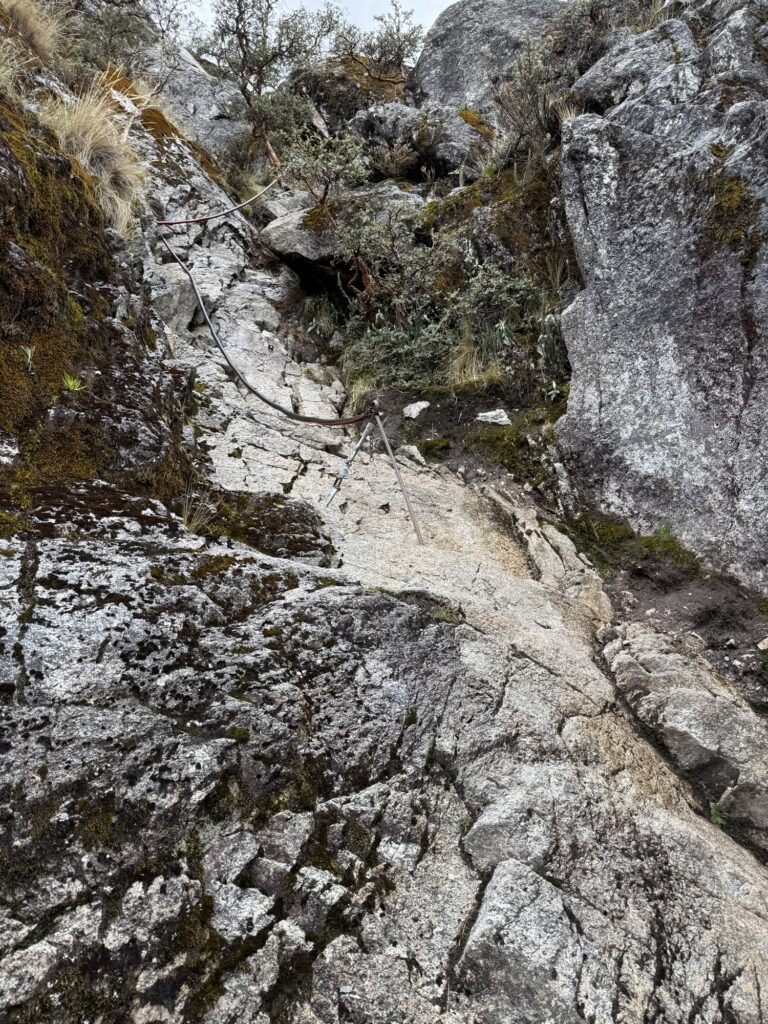
I want to share some of the views during those hikes. The first one was to Laguna Churup. It was a relatively short hike, but it contained technical parts of climbing with fixed ropes. A really cool adventure!
Steep climbing up the bare rock with help of chains.Views from the hike to Laguna Churup
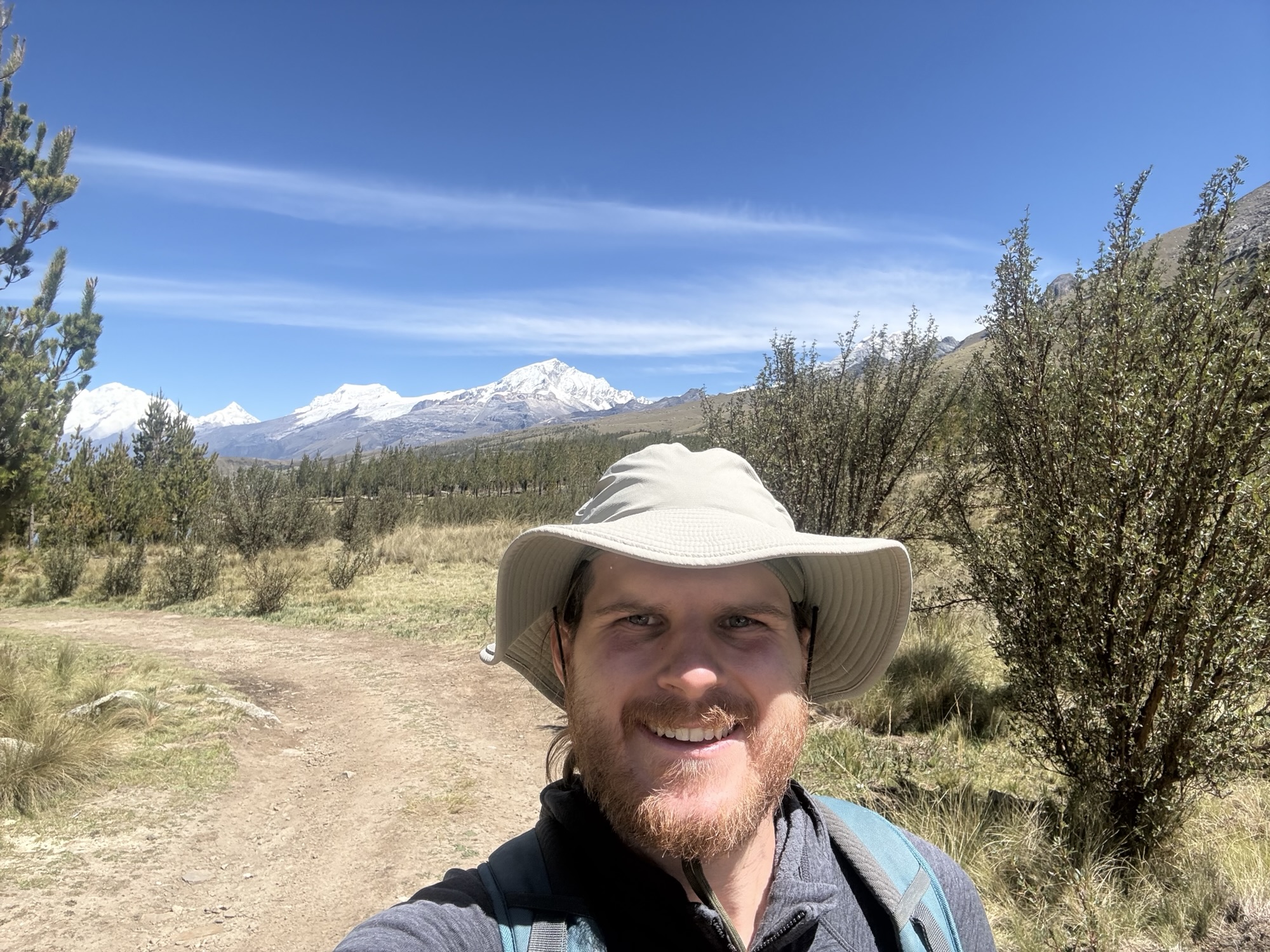
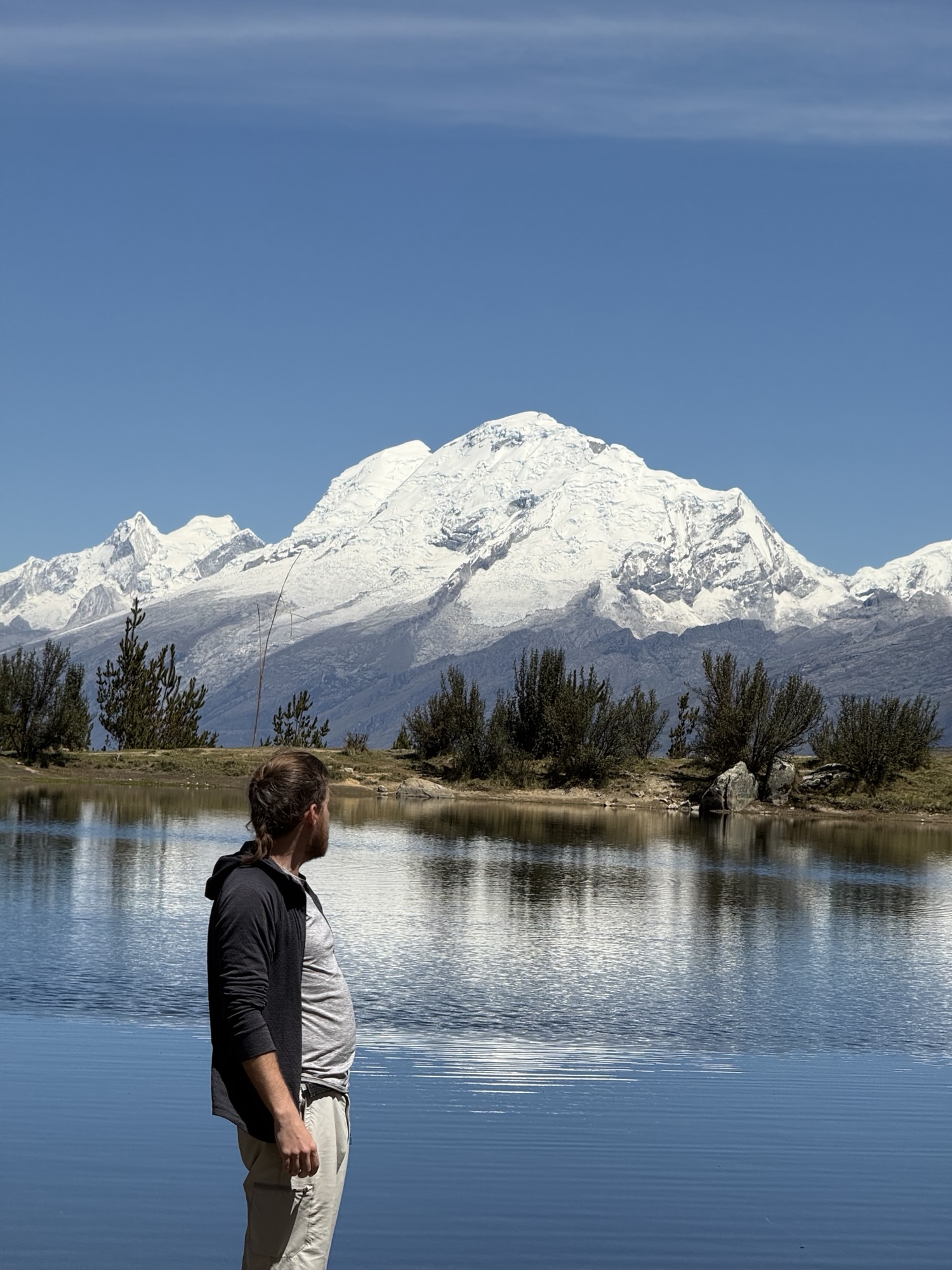
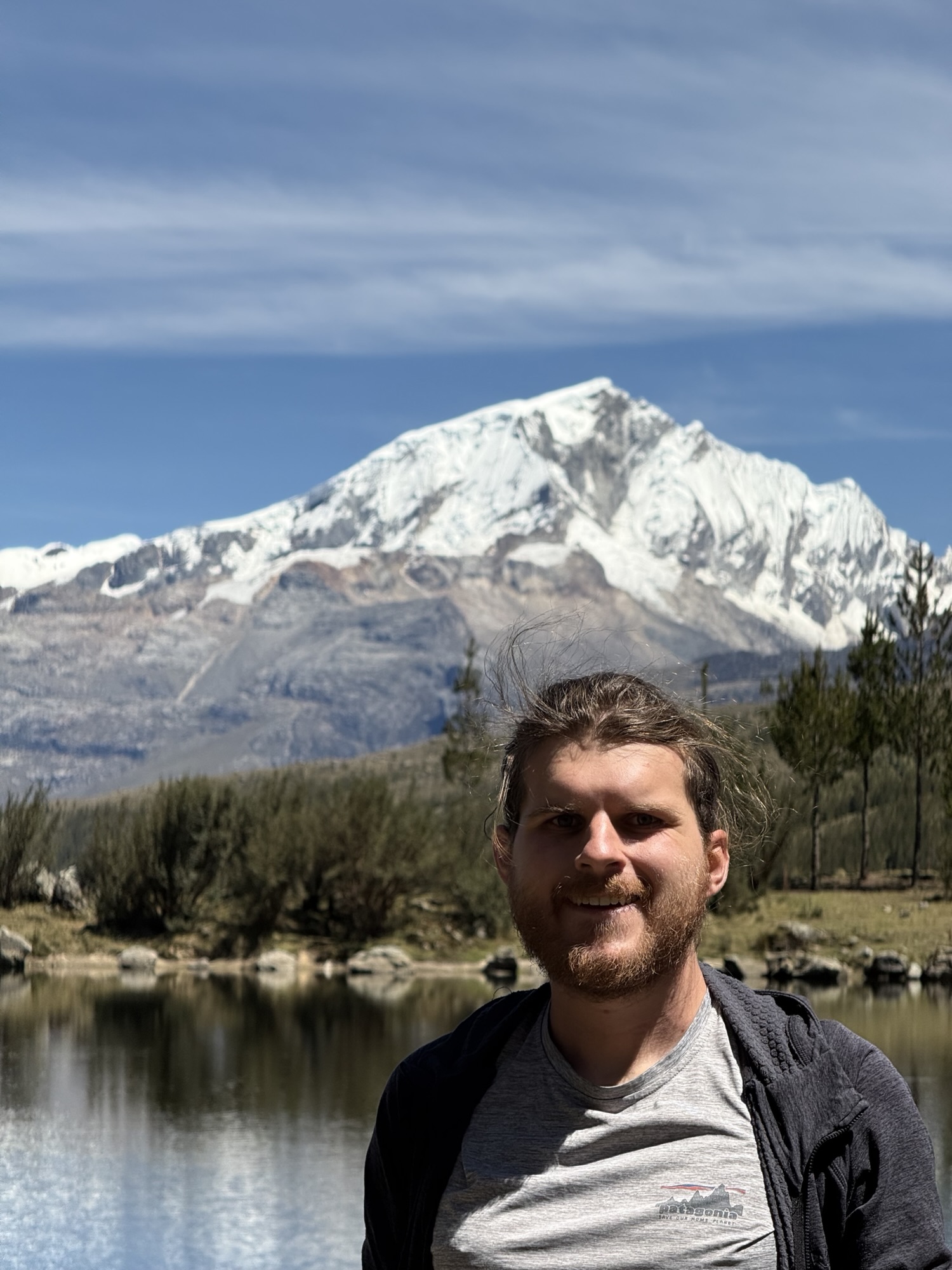
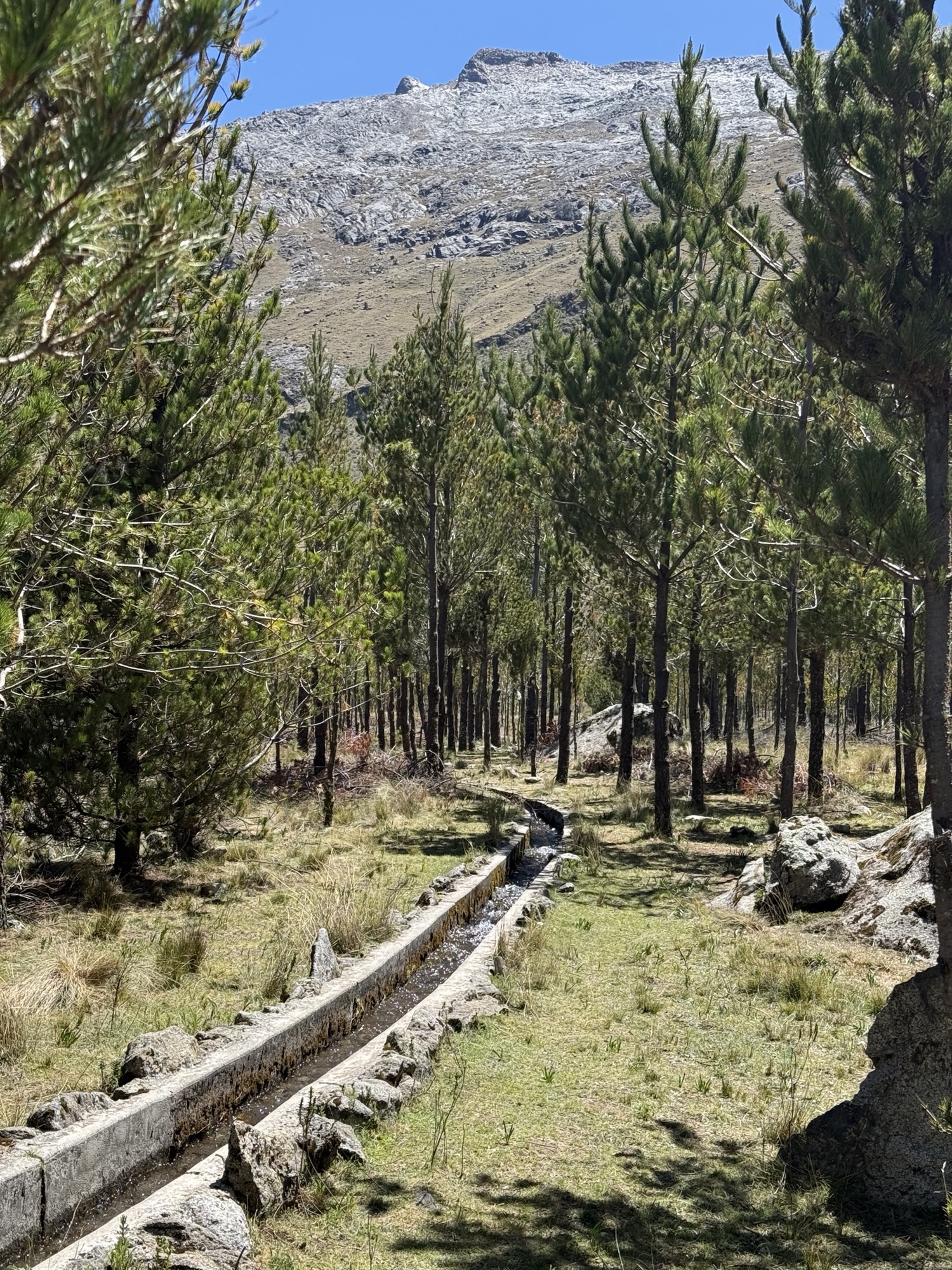
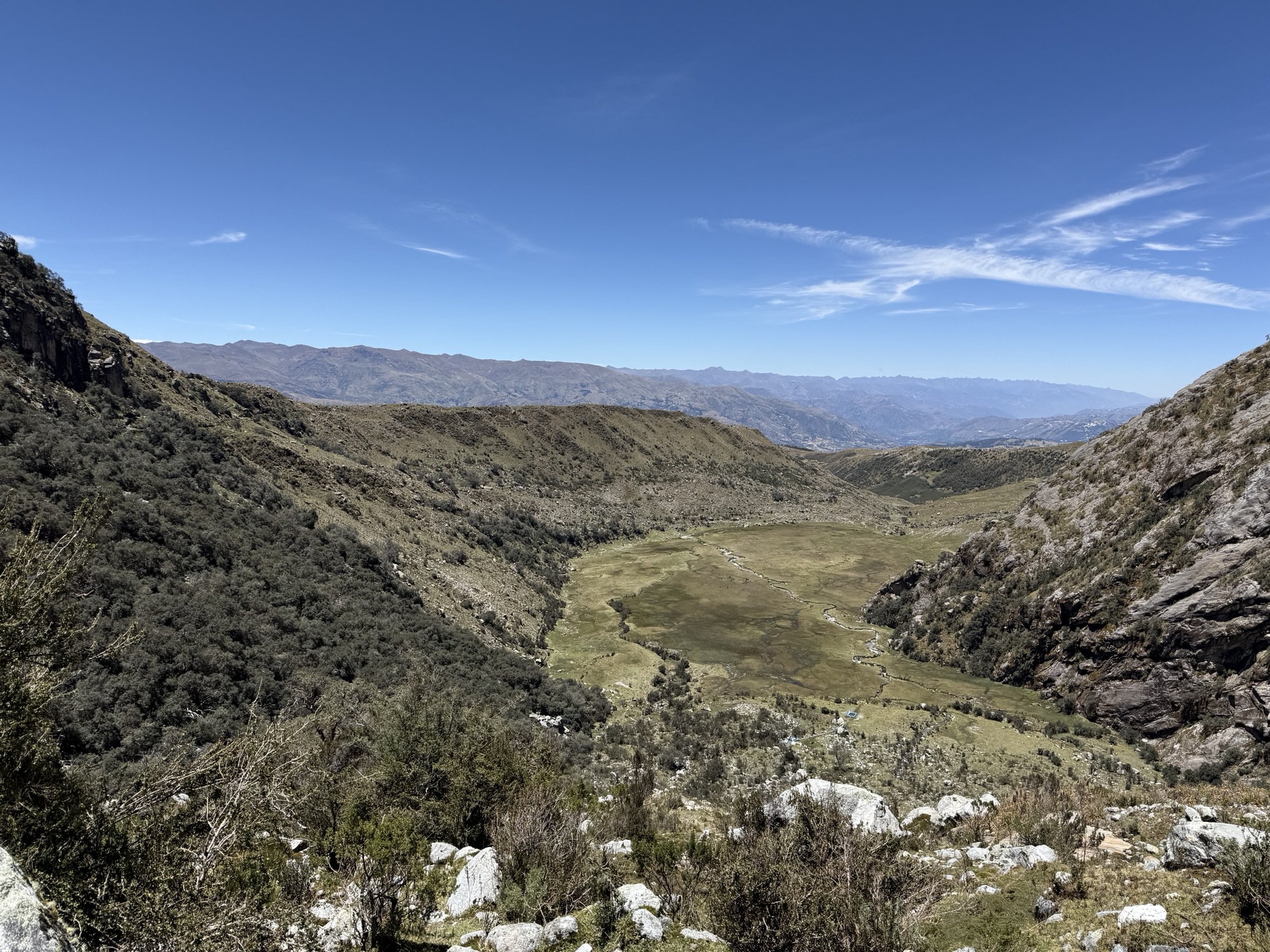
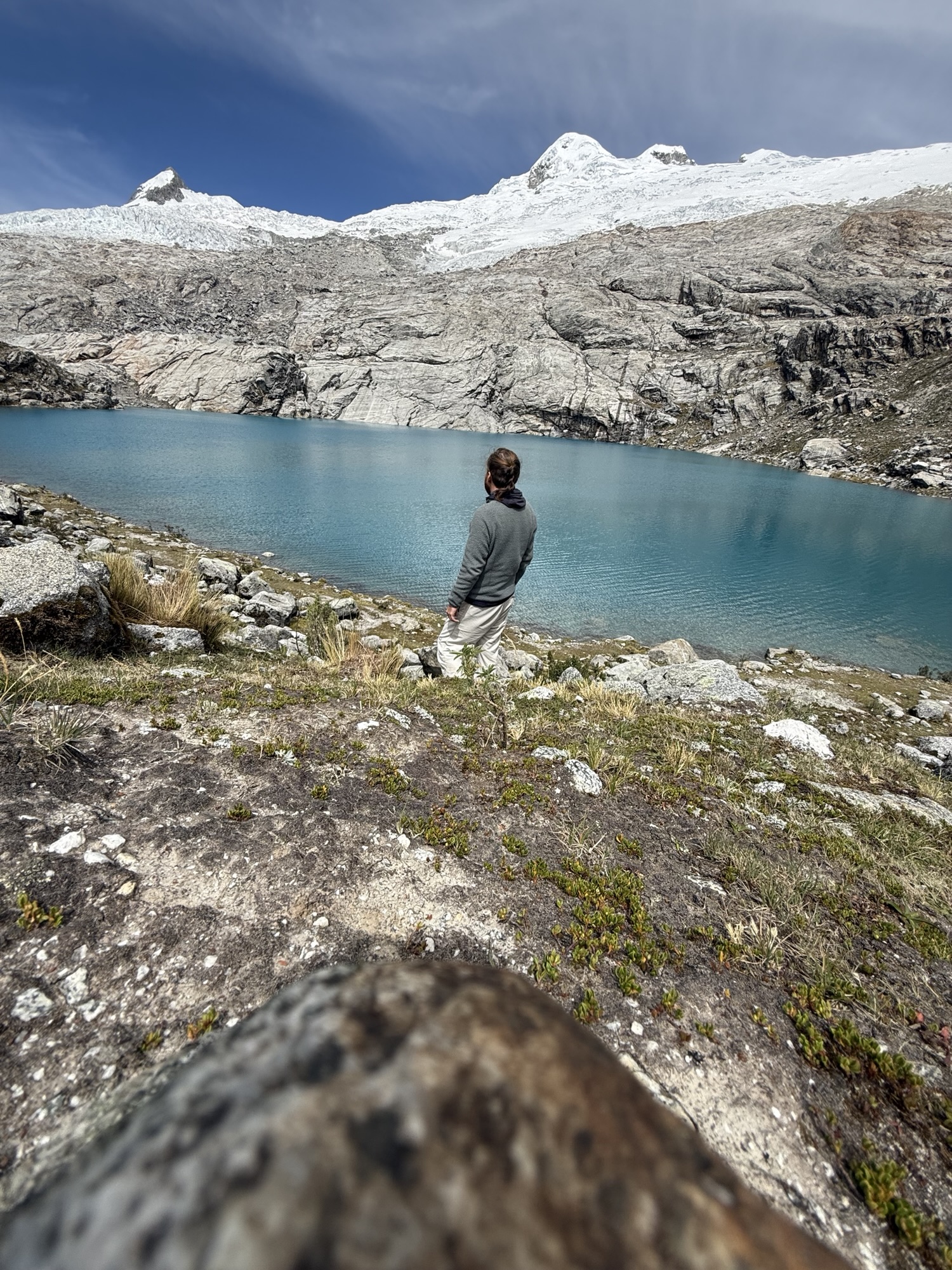
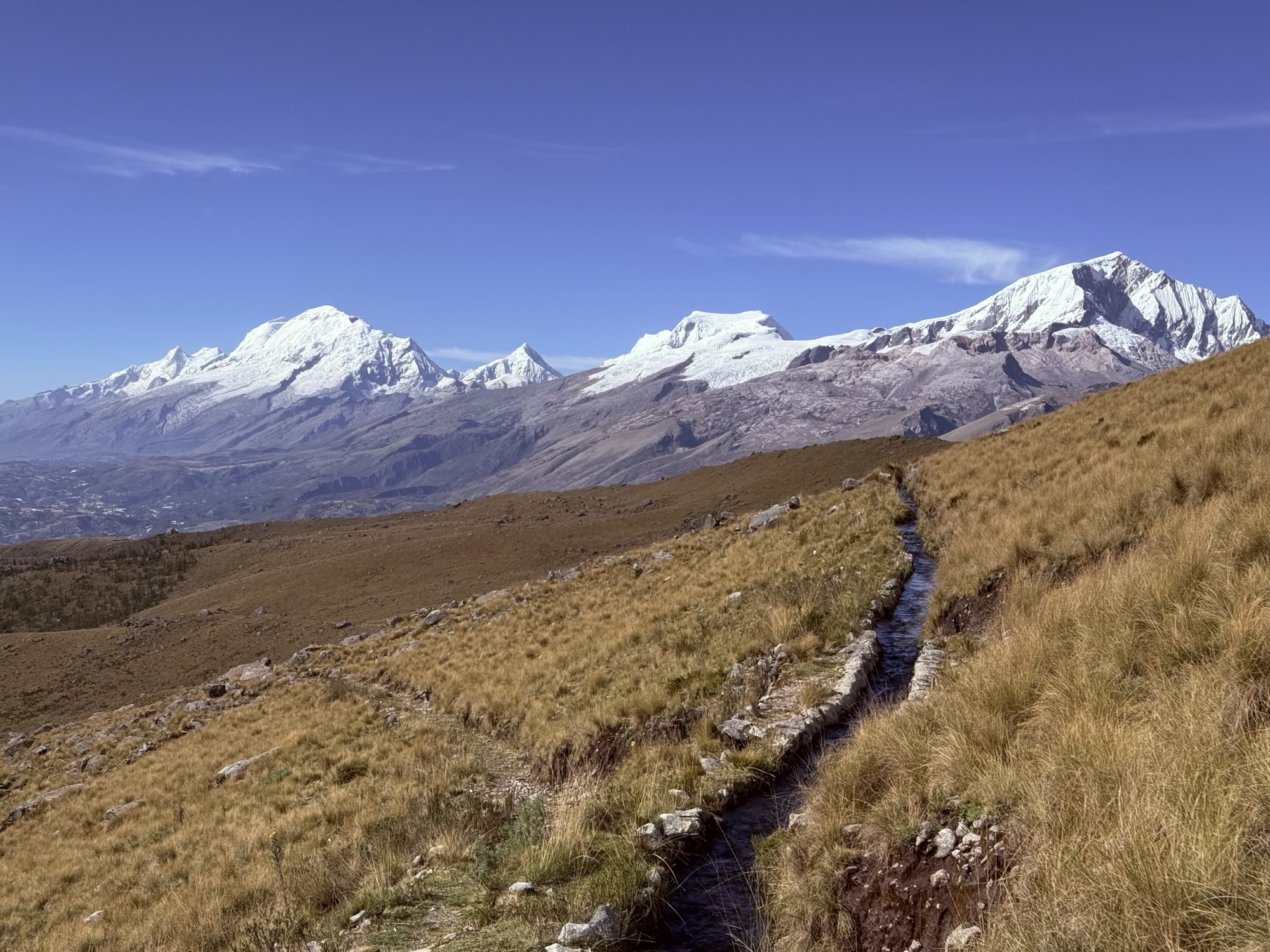
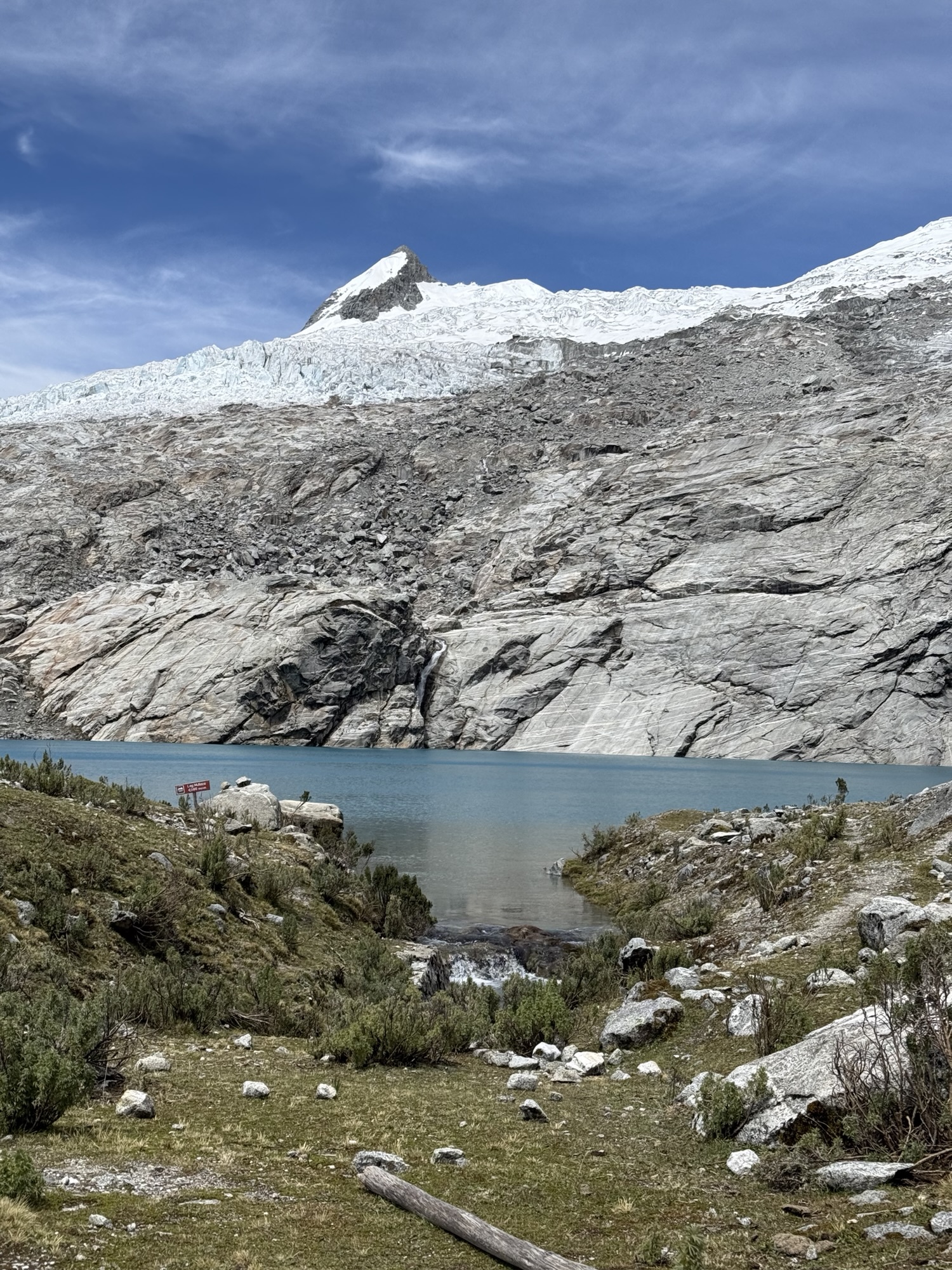
But on my last day in Huaraz I was really feeling a bit better. And I also felt I had finally properly acclimatized. So I dared to do an even more demanding hike. Climbing from Huaraz (3300 m above sea level) all the way to Laguna Mullaca (4600 m above sea level). This was a super intense hike and for most of it I was completely alone. It felt so peaceful, hiking along the small canals that were dug into the mountains centuries ago for water. And then finally reaching the lagoon Mullaca. Amazing!
Click the images to enlarge!
After this hike I was completely exhausted, I could barely walk up the stairs to my apartment anymore. But I felt very accomplished. It’s a shame that I already have to leave.
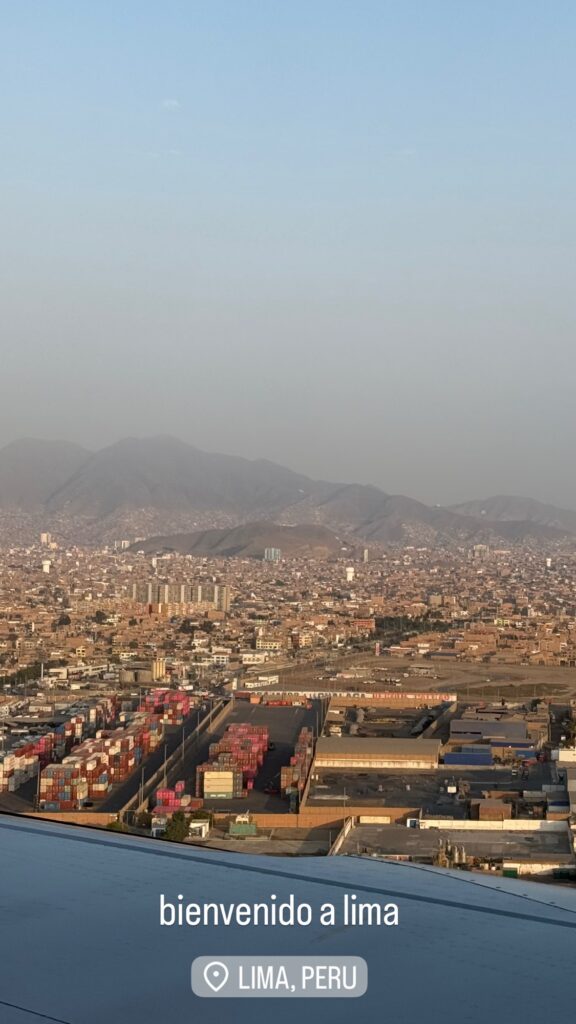
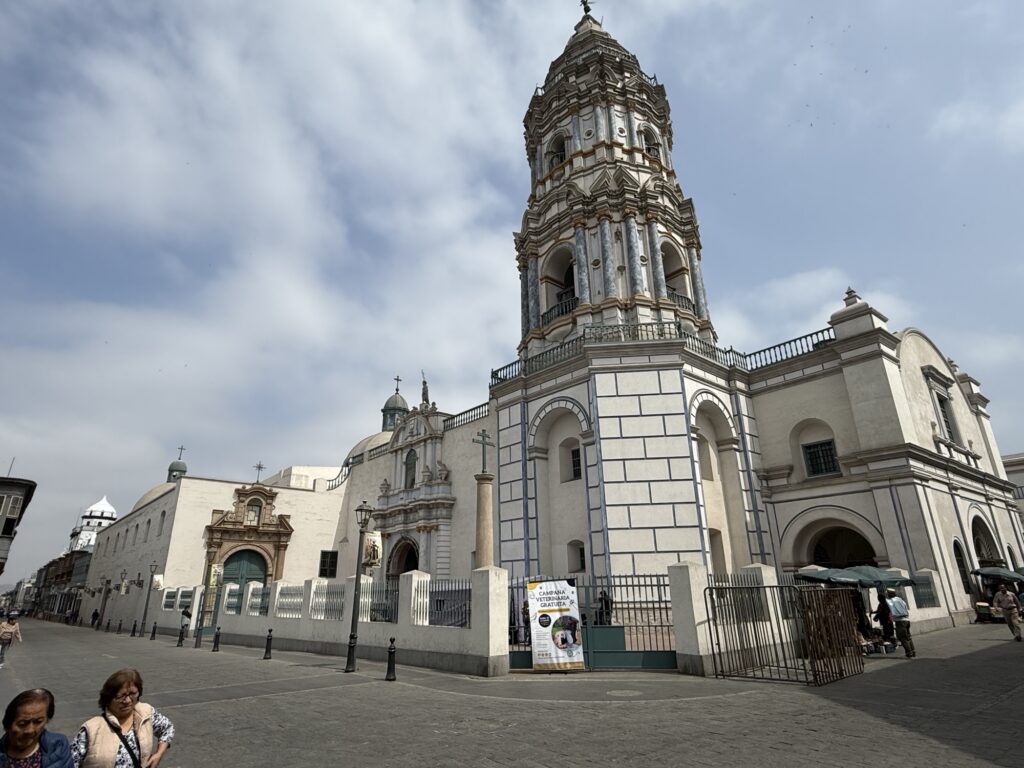
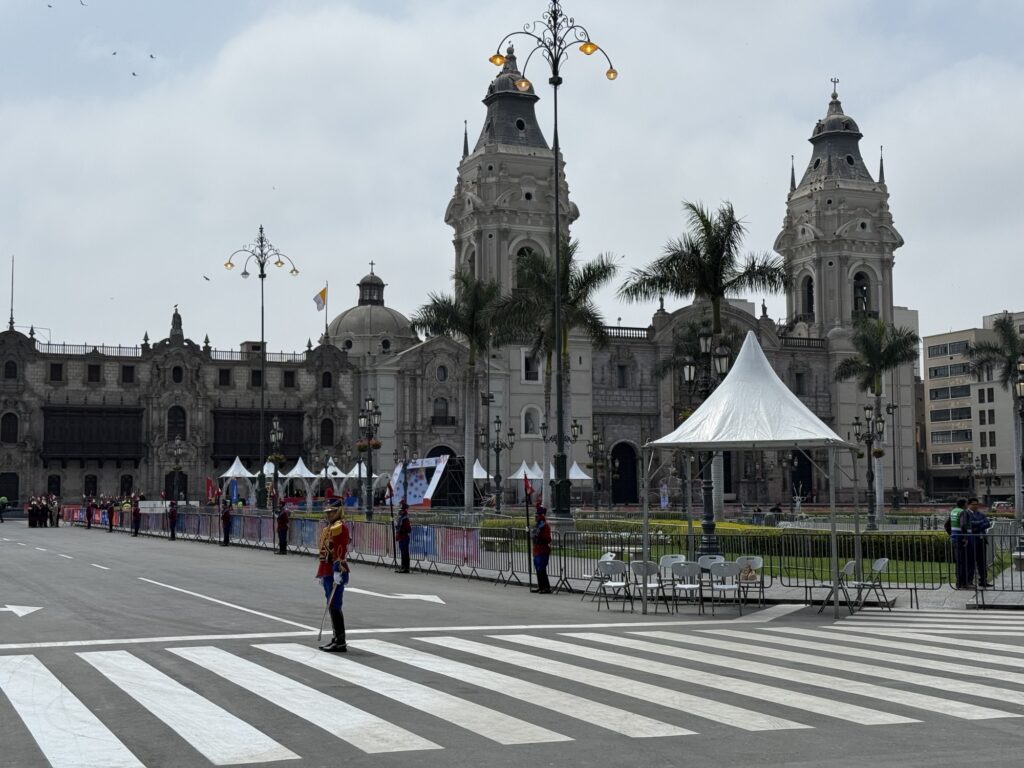
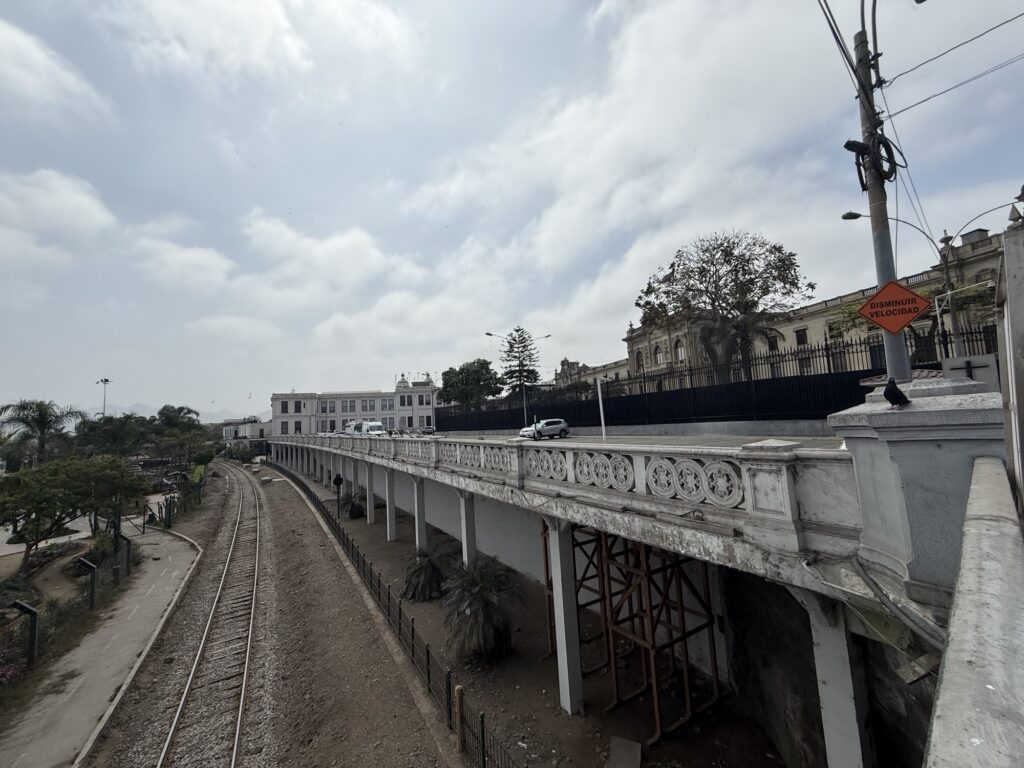
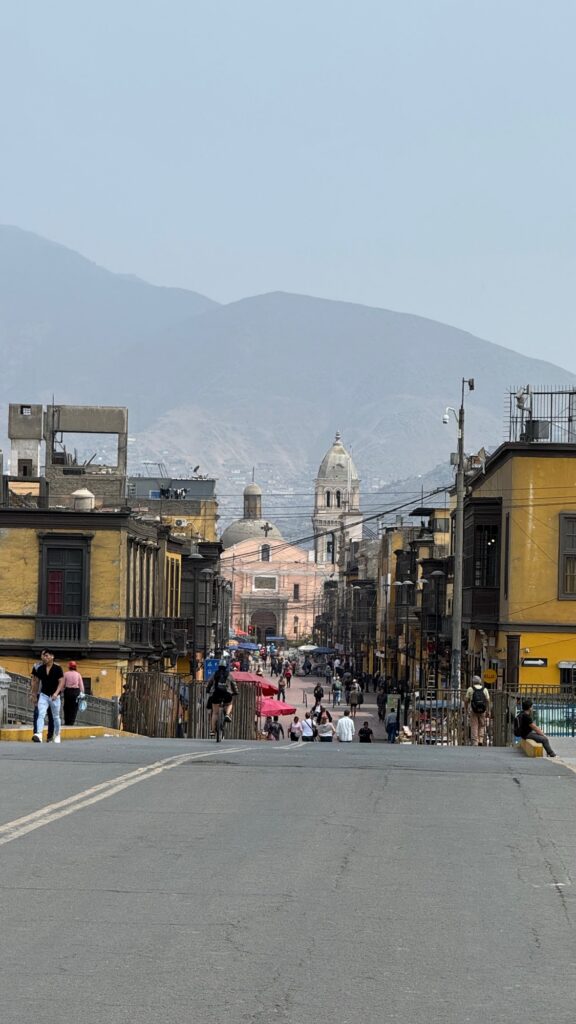
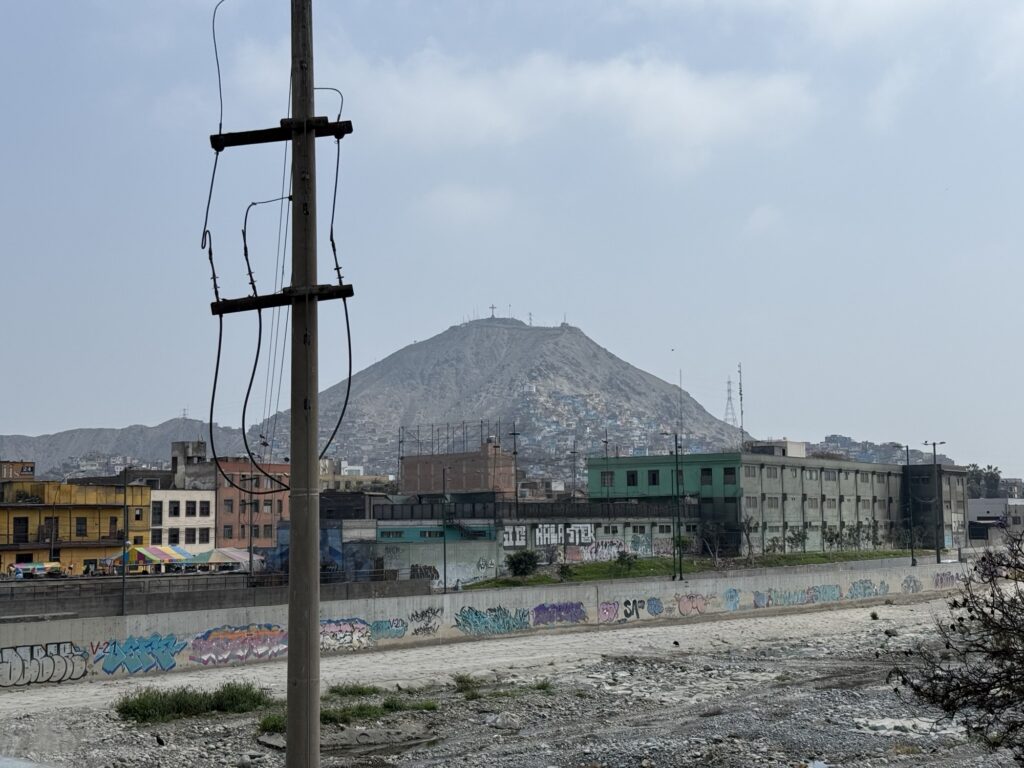
After my days in Iquitos, I fly to Lima, Peru’s capital. It’s an absolutely huge city and I enjoy exploring it. Below some impressions.
Lima is essentially located in the desert. It’s one of the driest cities in the world! What a change from the tropical rainforest in Iquitos.
I spend a few days in Lima, enjoying the delicious food, relaxing at the beach, and strolling through the boulevards. I definitely like this city.
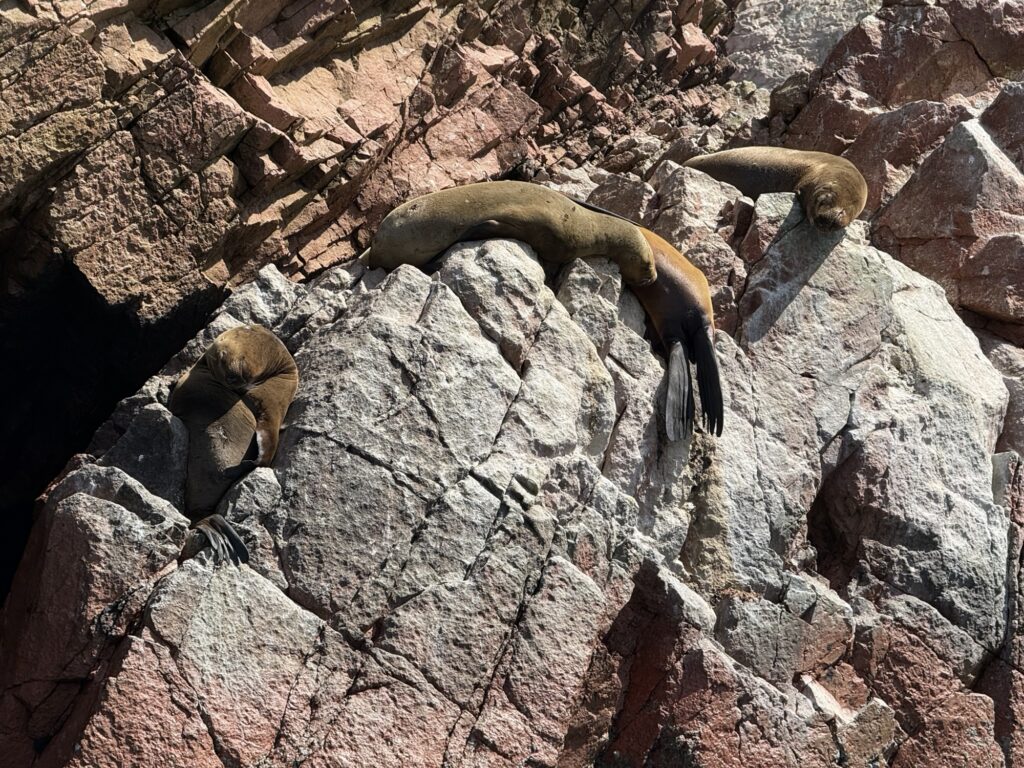
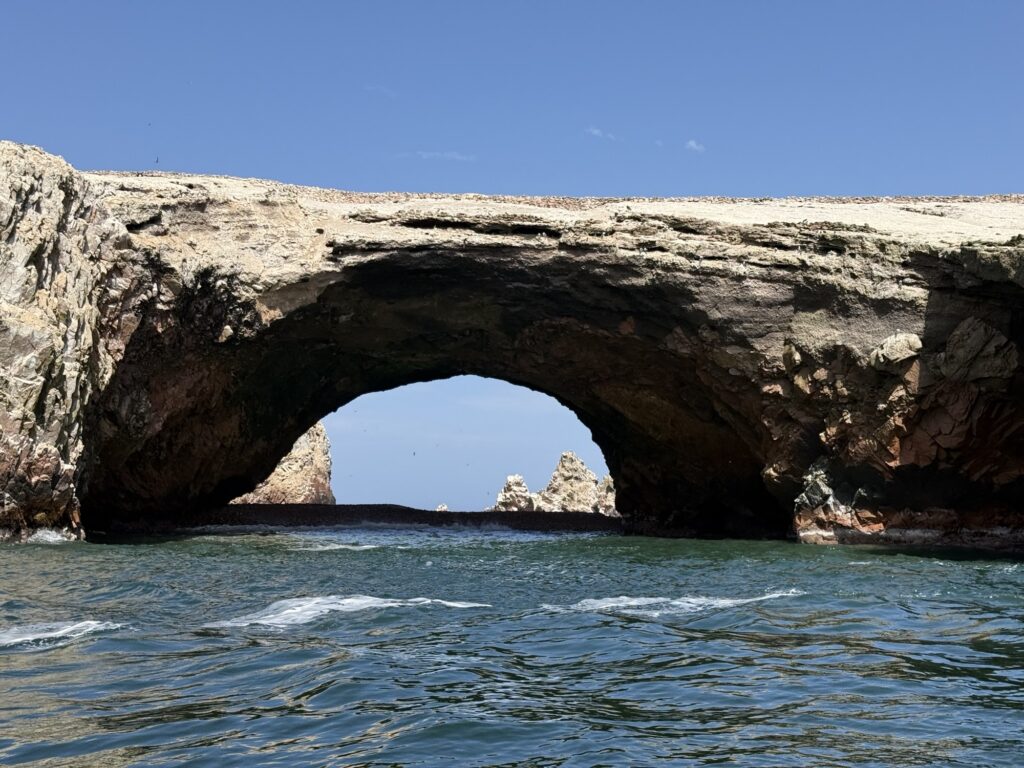
After those days, I head south to Paracas, a quiet little town on the beach. Its main attraction (besides the chill beach vibes) are the Ballestas islands. They offer a spectacular amount of wildlife.
Penguins on the Ballestas islands!
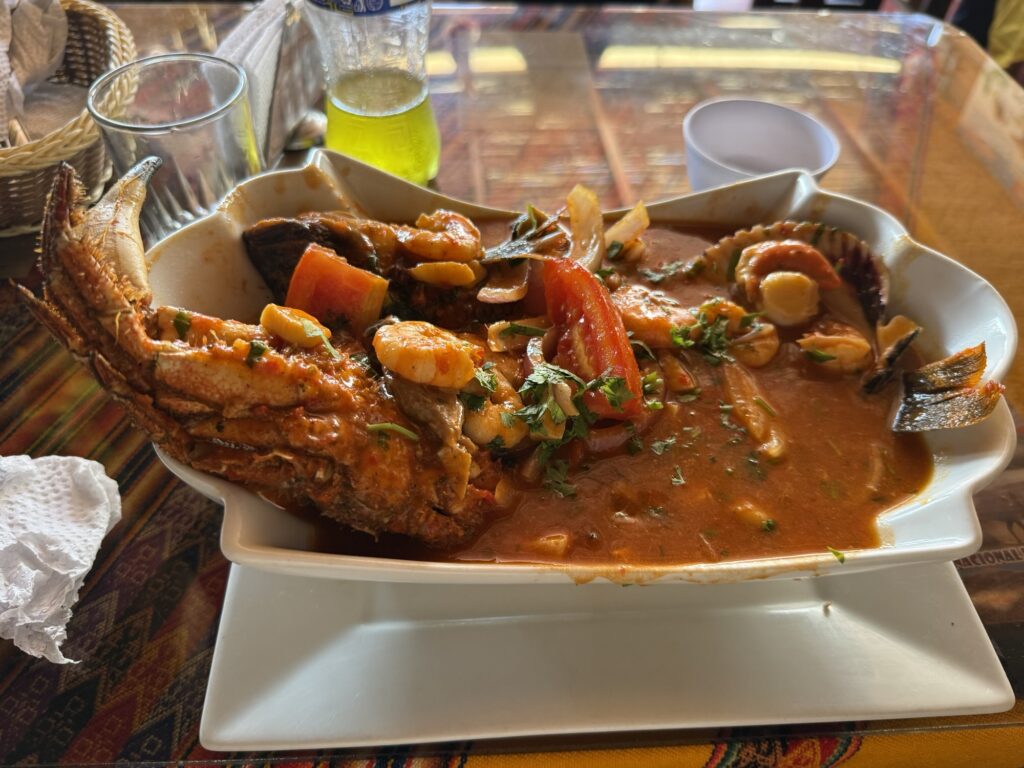
I find the time in Paracas super relaxing. I enjoy just sitting on the beach and reading as well as the incredible sea food at the local restaurants.
More impressions from Paracas
After Paracas I make another drastic switch. From the sunny and warm beach south of Lima to the cold mountains in the North of Lima. In particular, I am headed to Huaraz, a city 3000 meters above sea level in one of the most spectacular mountain ranges of the world.
Even though it is tropical climate, the altitude means it’s very cool at night but during the day the sun often burns down relentlessly.
Huaraz cannot be described as a beautiful city. It has its charms nonetheless and plenty of good restaurants and cafes. The true reason to come here is clearly hiking.
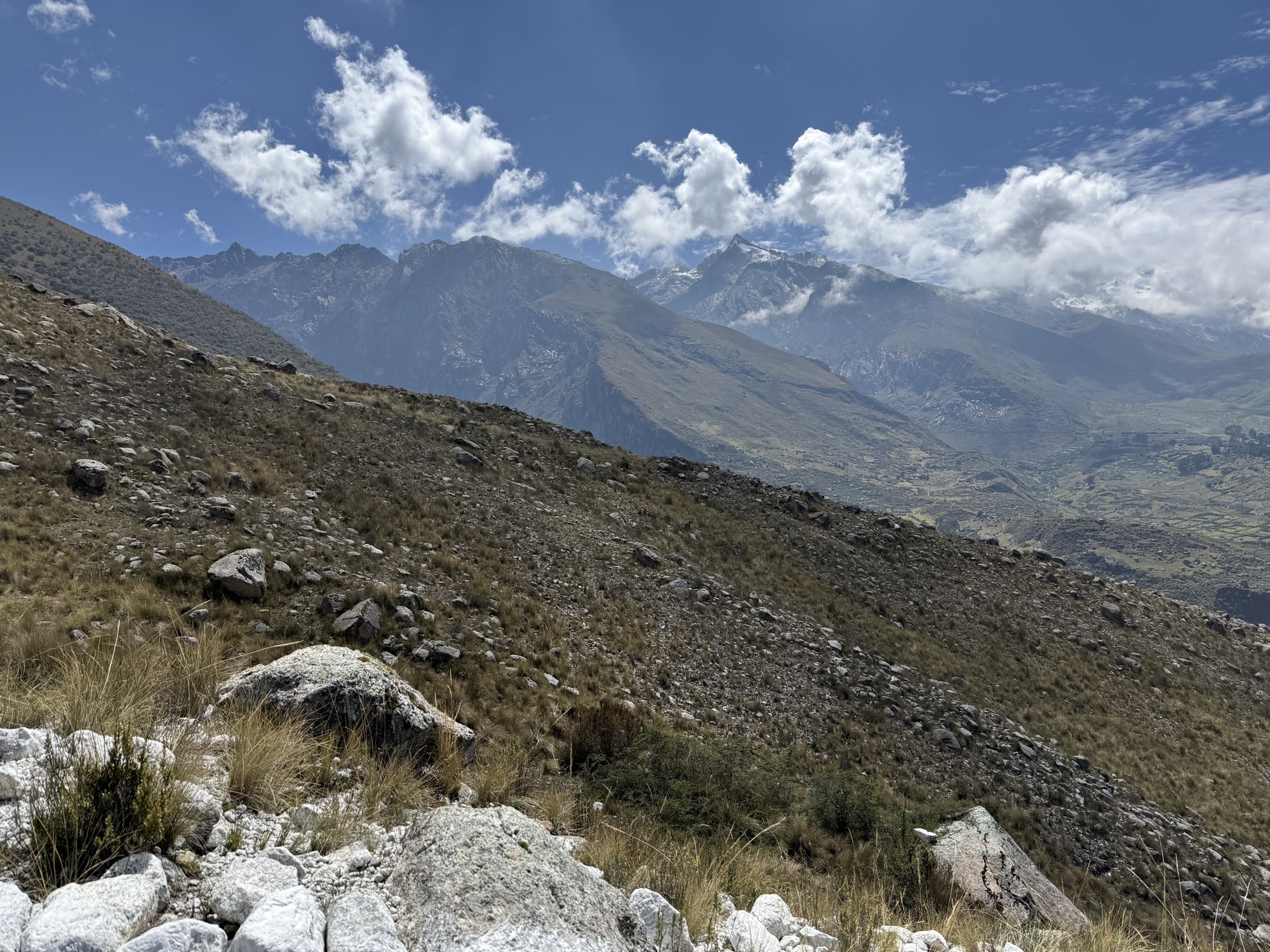
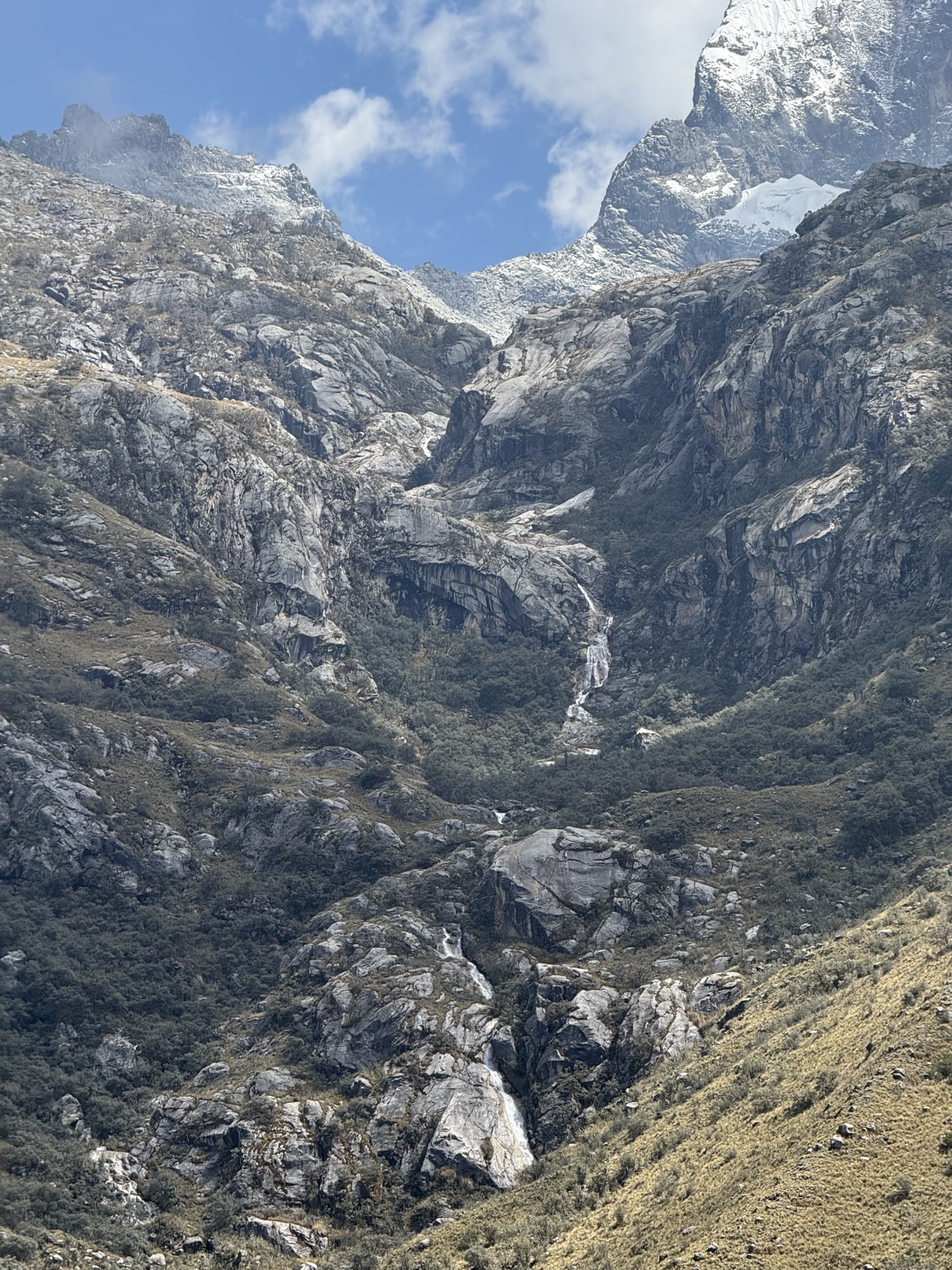
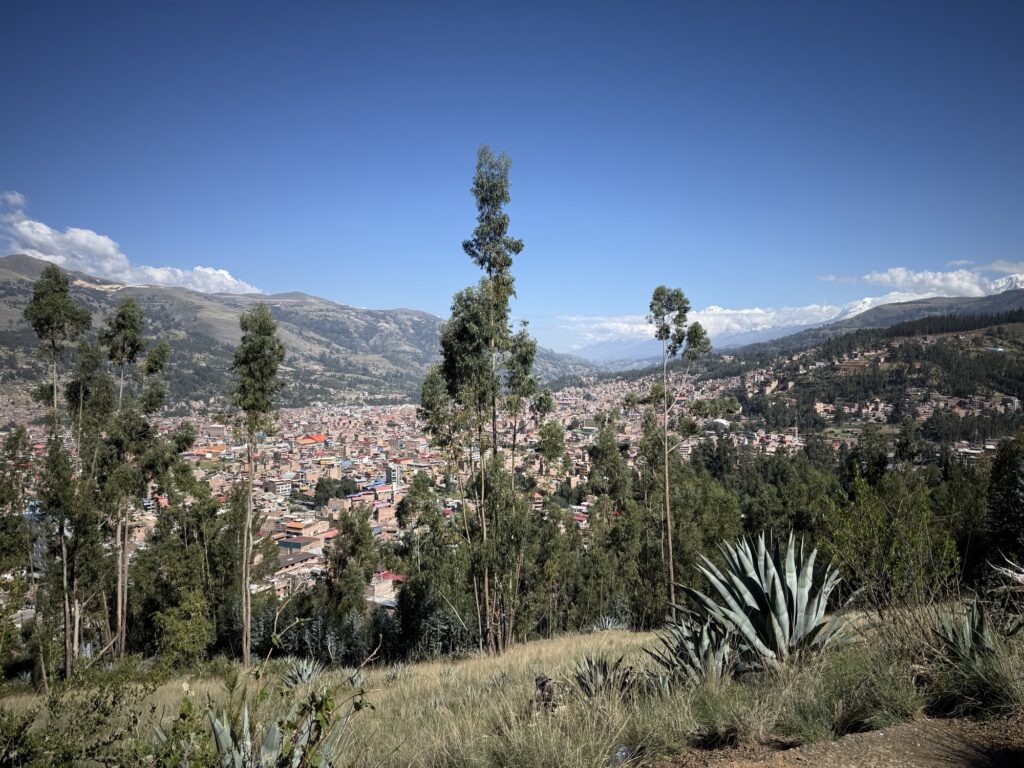
I begin my first day with a “relaxed” acclimatization hike. It’s good to take it slow to get used to the altitude. And I definitely notice the altitude. Even though the hike is not too difficult, every time there is a slight elevation I am completely out of breath. Fortunately, I am rewarded with absolutely spectacular views of the mountain scenery surrounding Huaraz.
I am breathless. From the altitude maybe but also, from seeing snow covered peaks of the mountains that are higher than 6000 meters. And this while being almost on the equator. The places of this earth…
From Bogotá, I fly to Leticia which is the Colombian gateway to the amazon region. It lies right in the three-country border region between Colombia, Brazil, and Peru. I already know Leticia from my previous trip to Colombia. It is a small town with not much to see. However, just a few kilometers outside Leticia the deep jungle begins which I am planning to explore.
The weather here is hot and humid. It feels like entering a greenhouse when I leave the airplane. I appreciate that after a few cold days in Bogotá. Of course, it also rains… a lot! It’s best to always carry a raincoat in case.
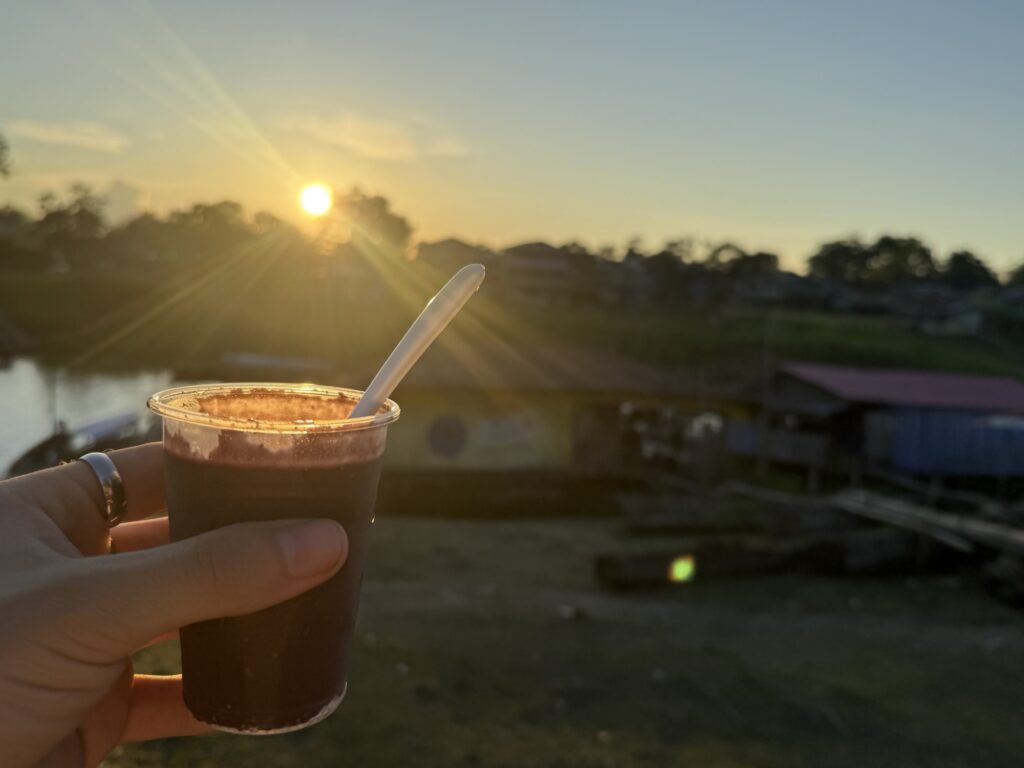
After settling into the hostel, the first thing I do is to grab a cup of Açai and watch the sunset.
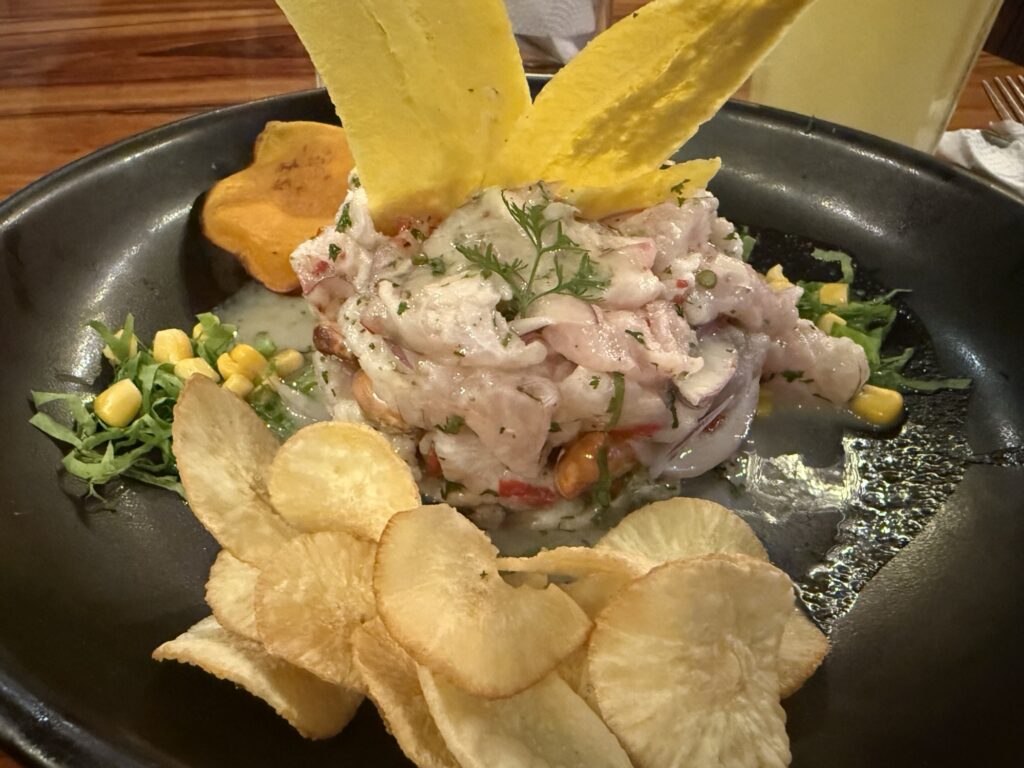
I spend a relaxed first day in Leticia. I need to prepare for tomorrow when I am going on a jungle hiking adventure for 4 days. In the evening after everything is packed, I head out to my favorite restaurant in Leticia for a delicious Amazon ceviche. Delicious! Then I go to bed early to be well rested for the hike.
Ceviche, a dish typical of Peru, is also found here in Leticia since I am right on the border with Peru.
The next day in the morning I meet my guide, Marcos. With him I am going to spend the next 4 days hiking through tropical rain forest far away from civilization. No phone coverage, no streets, just small unmarked hiking trails.
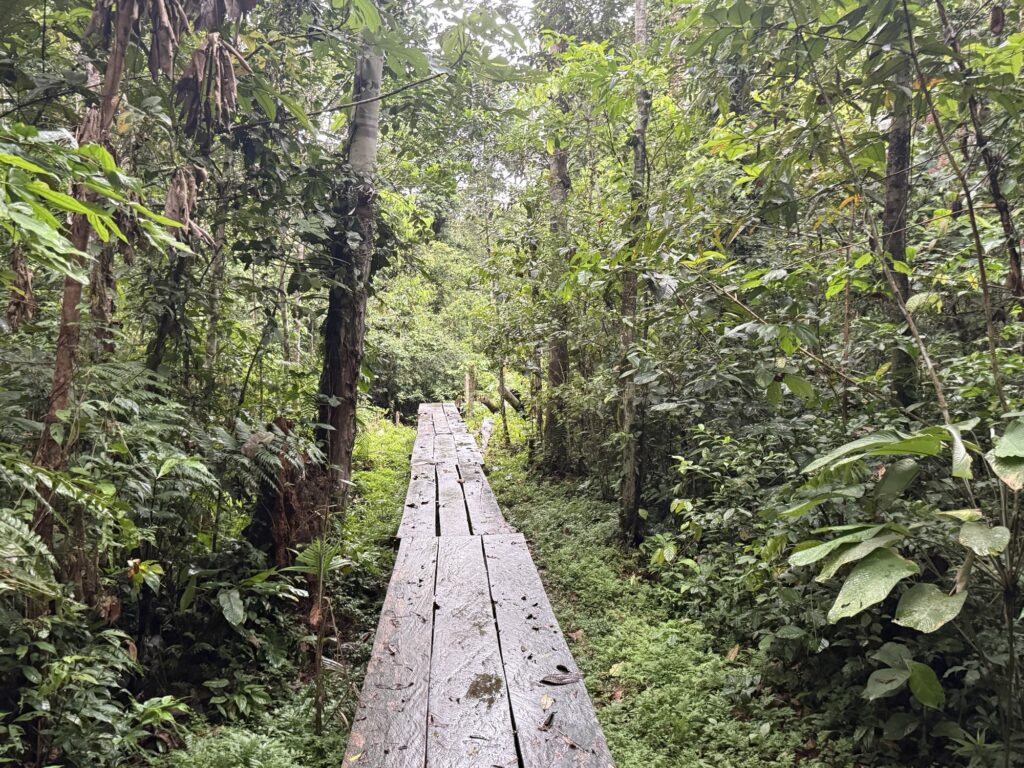
In the beginning, the trail is still quite built out. This will soon change.
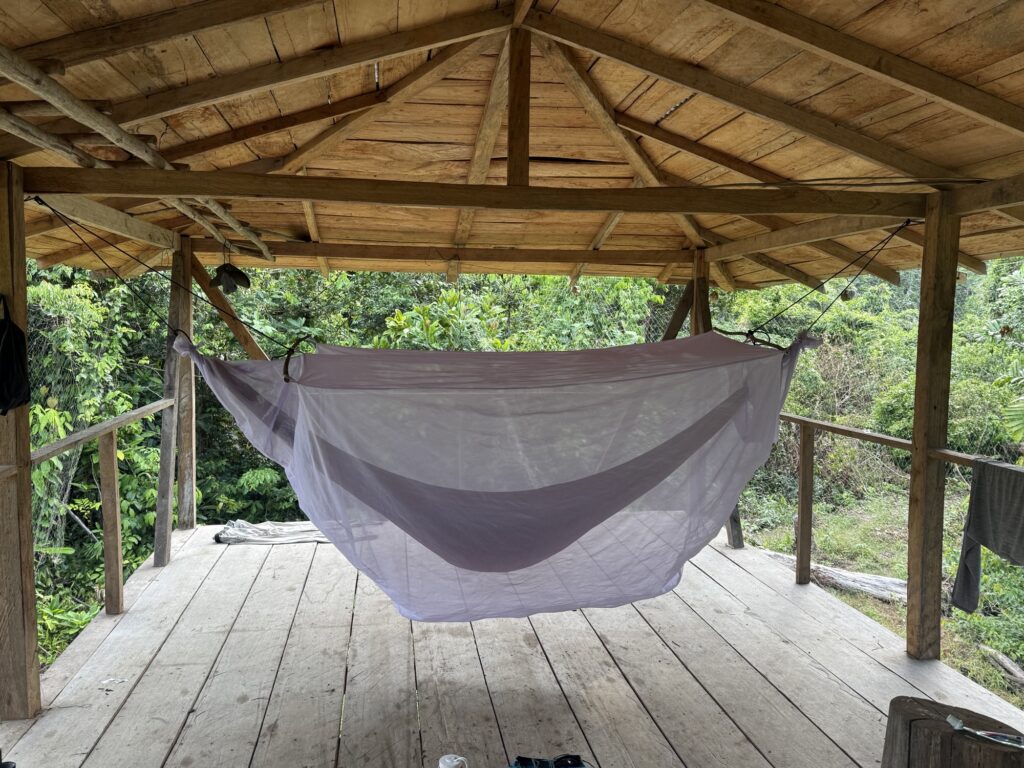
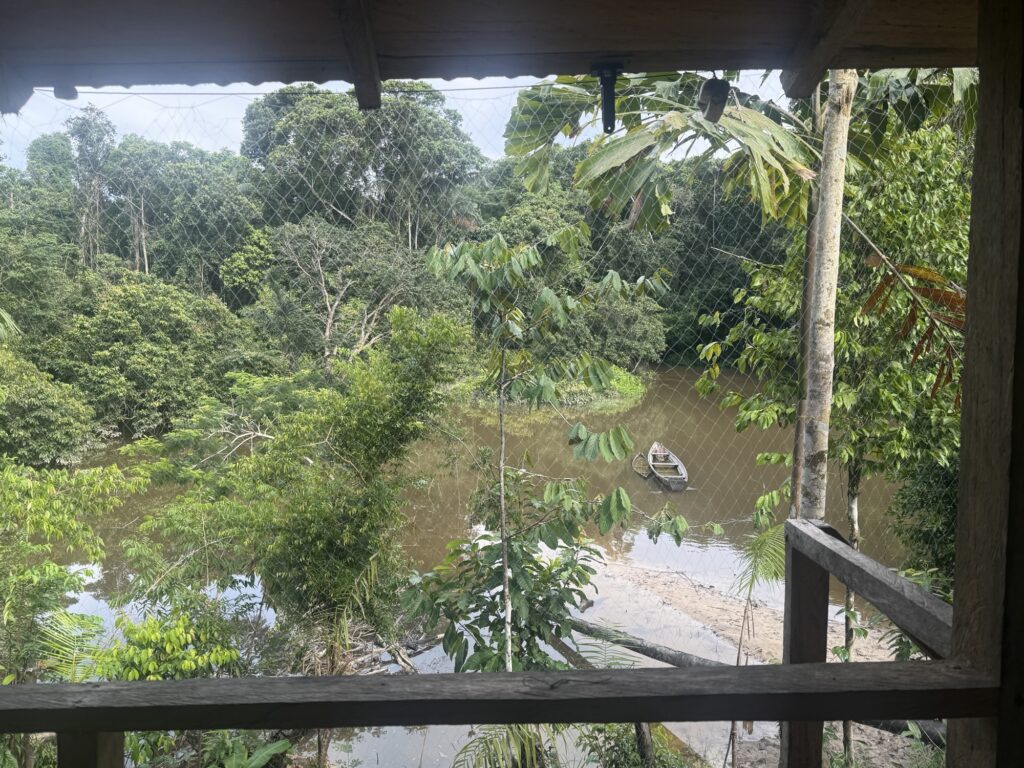
It turns out to be a wonderful adventure. The first day of hiking is quite exhausting as we walk 20 km, lots of it during heavy rainfall. We only arrive at dark at the destination which is the small house that Marcos and his father have built in the jungle. It is located beautifully next to a river and there are no neighbors anywhere close. It makes me wonder what it is like to live so secluded in the wilderness.
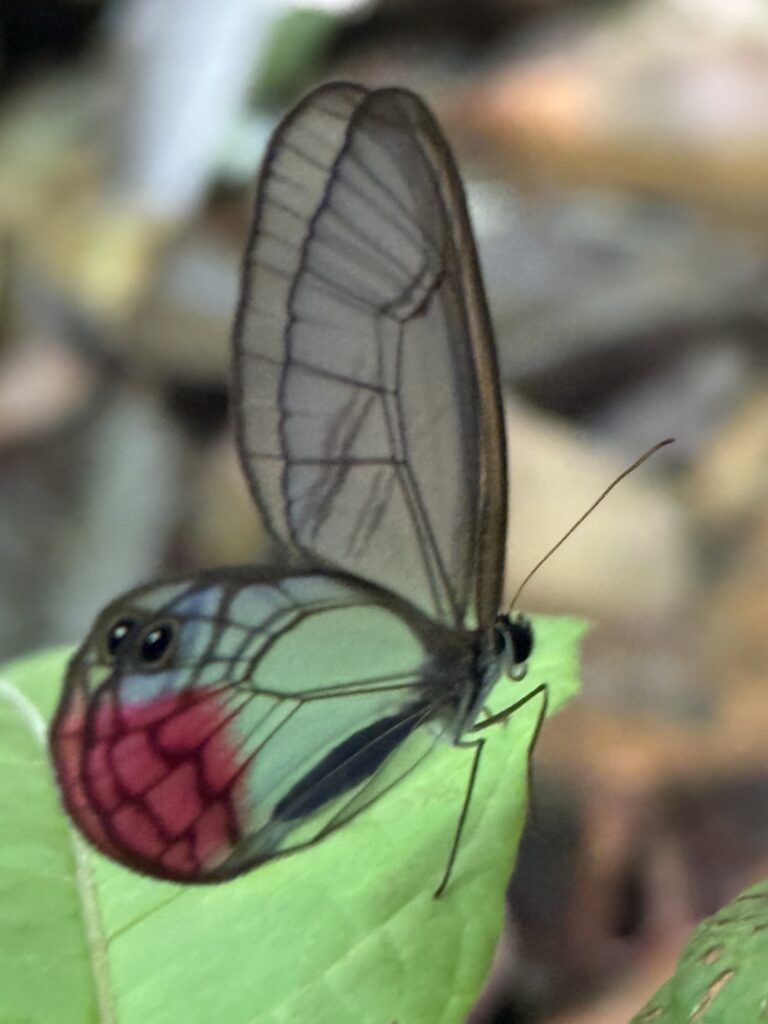
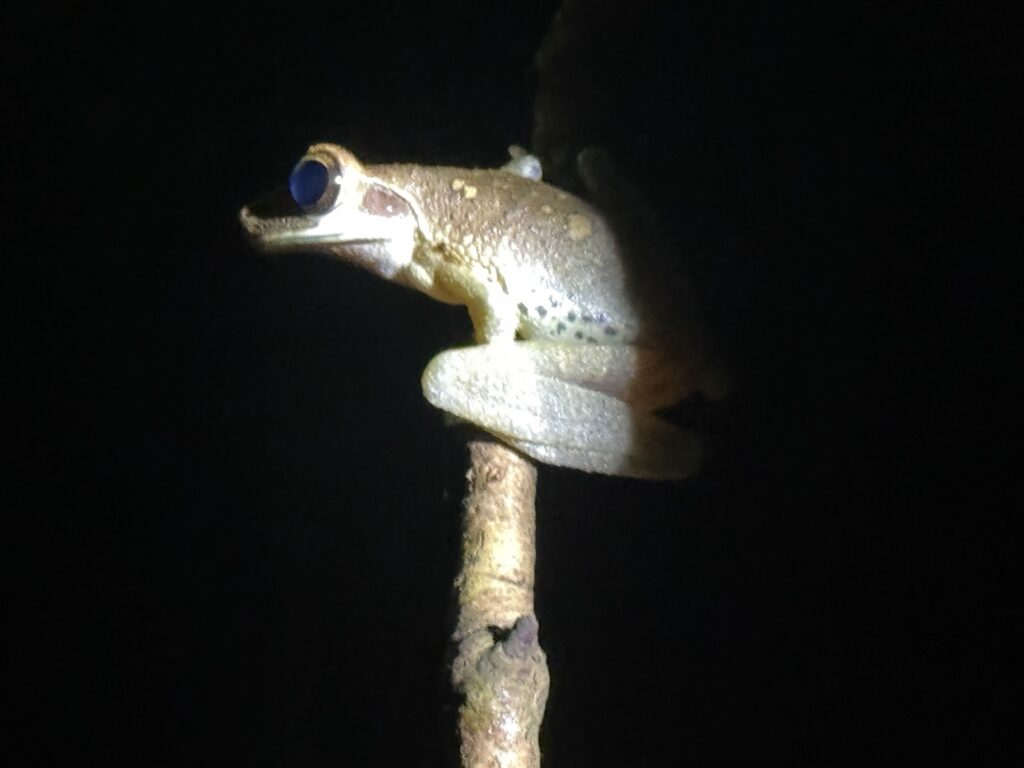
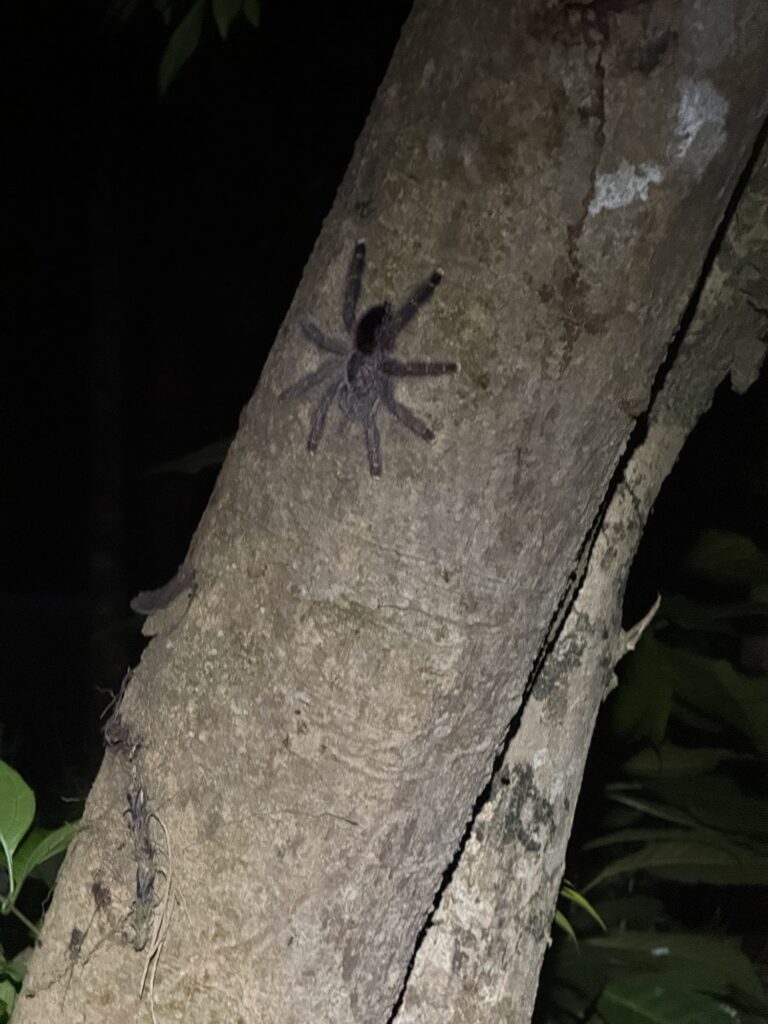
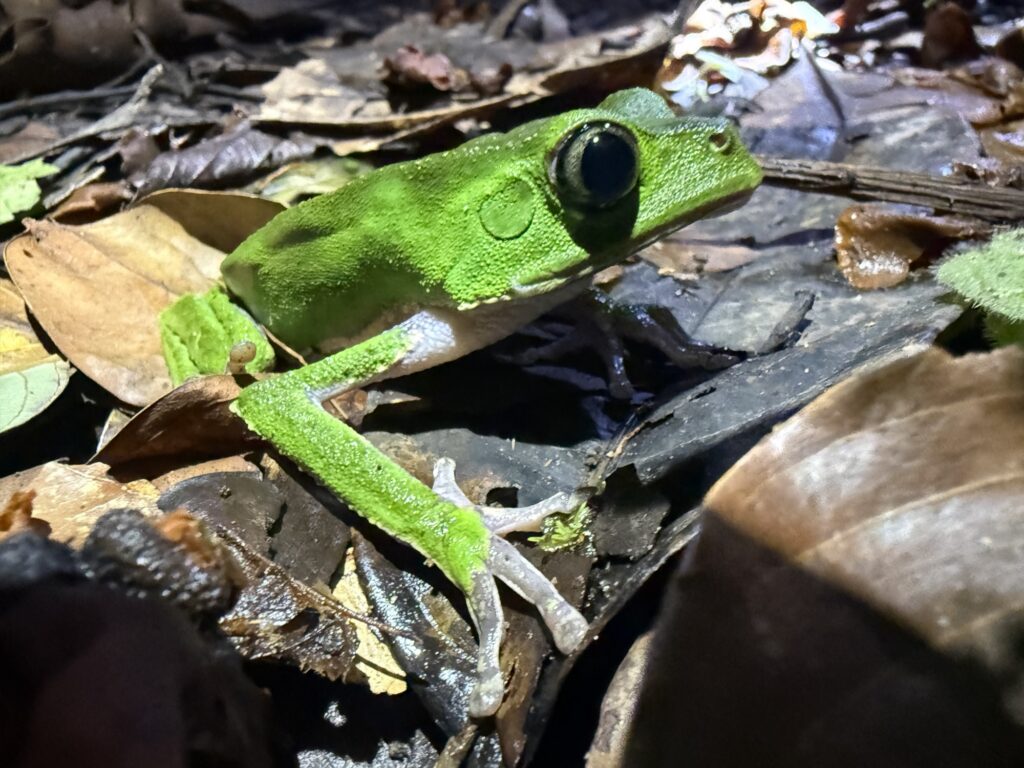
On the way we find many small animals.
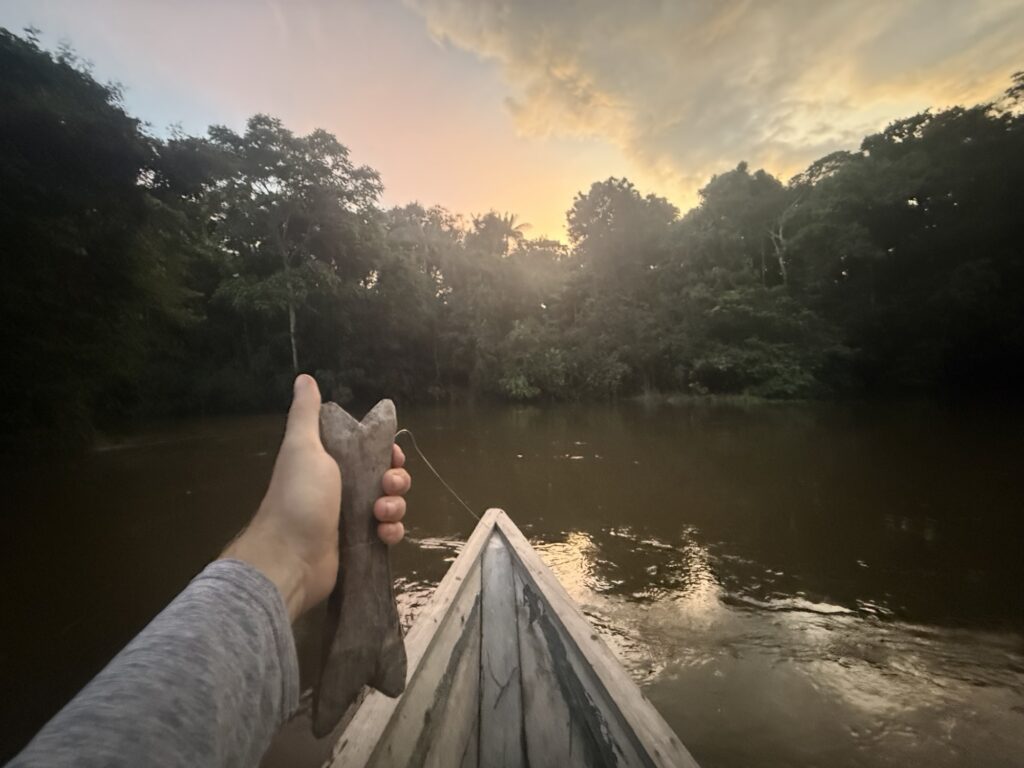
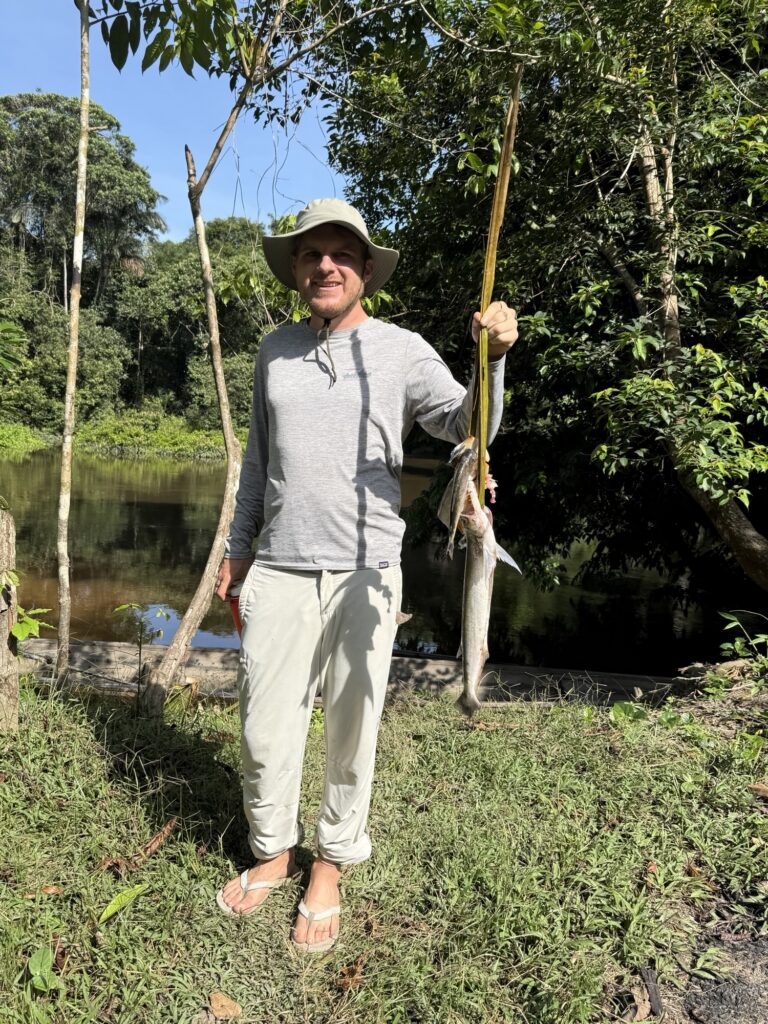
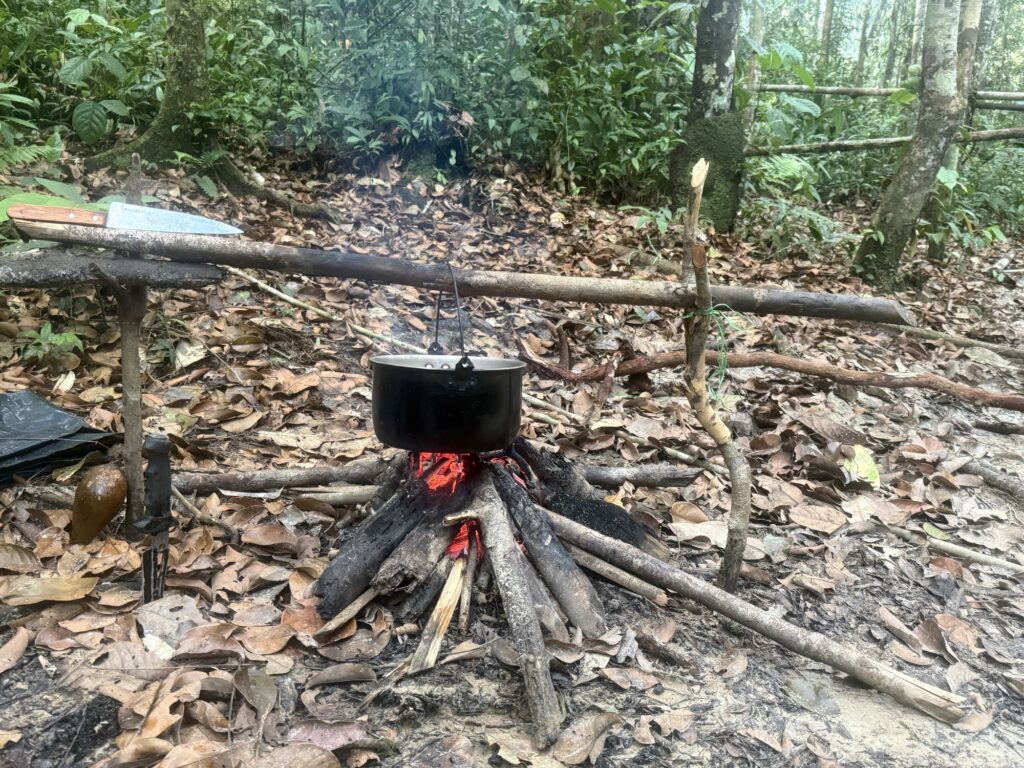
I spend two nights at their home where we eat together the fish that we catch and the fruit that we pick. Specifically they have the most delicious pineapple I ever had as well as incredible avocados. I also get to explore the river on a small boat and see many animals, including Monkeys, Guacamayas, and Piranhas. Moreover Marcos father tells many interesting stories about the hardship and beauty of a life in the jungle. He is already more than 70 years old but clearly in perfect health and very fit—I guess you have to be for a life here. To get anything from the city, you need to either walk 20km through the jungle or take a 2-day boat ride along the river, one way.
On the third and fourth day, we walk back to Leticia via a different path. We stay over night in a jungle camp which is a very cool end to the adventure. The next day we are back in Leticia. To finish the tour we walk to Brazil and enjoy a delicious Caipirinha.
This adventure also concludes my time in Colombia. The next day I am going to take a boat up the amazon river to Peru.
After continuously heading south in Colombia towards the Ecuadorian border I decided to change plans. I heard from various travelers that the vibe in Ecuador is less comfortable than in Colombia with more problems such as theft or feeling unsafe.
Therefore, I decided to take a long bus ride back to Bogota (about 20 hours) and fly to the Amazon region from there. The plan is to travel via the river to Peru.
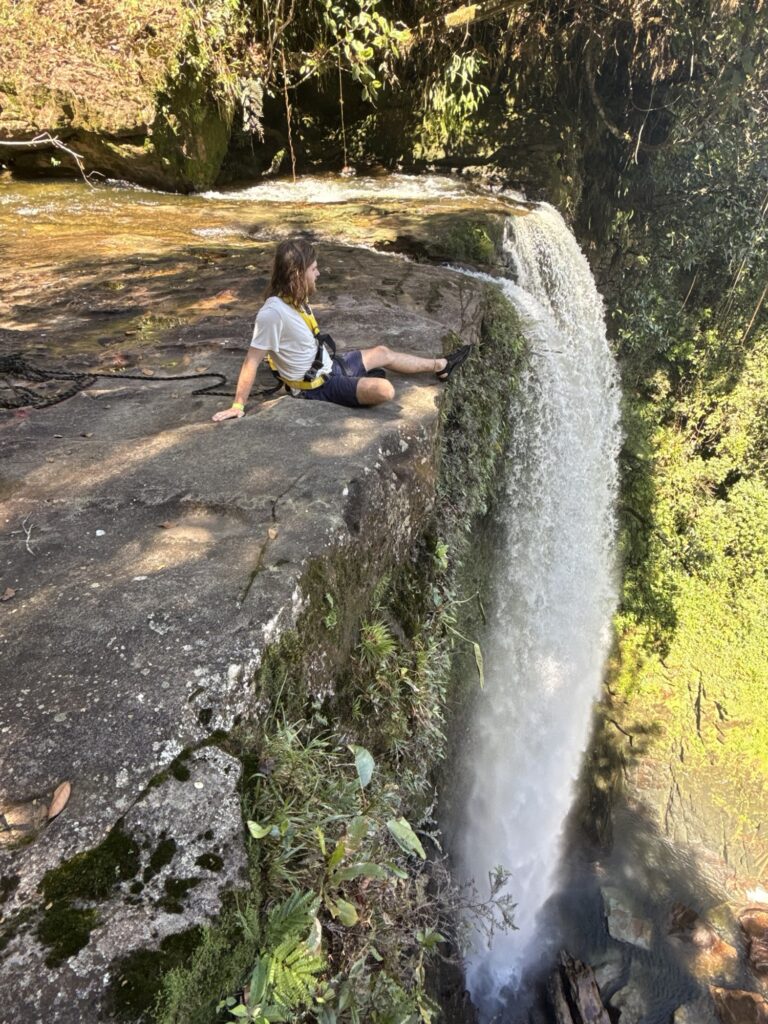
It is hard to judge from the picture, but the water drops 75 meters here! This place is known as fin del mundo (end of the world).
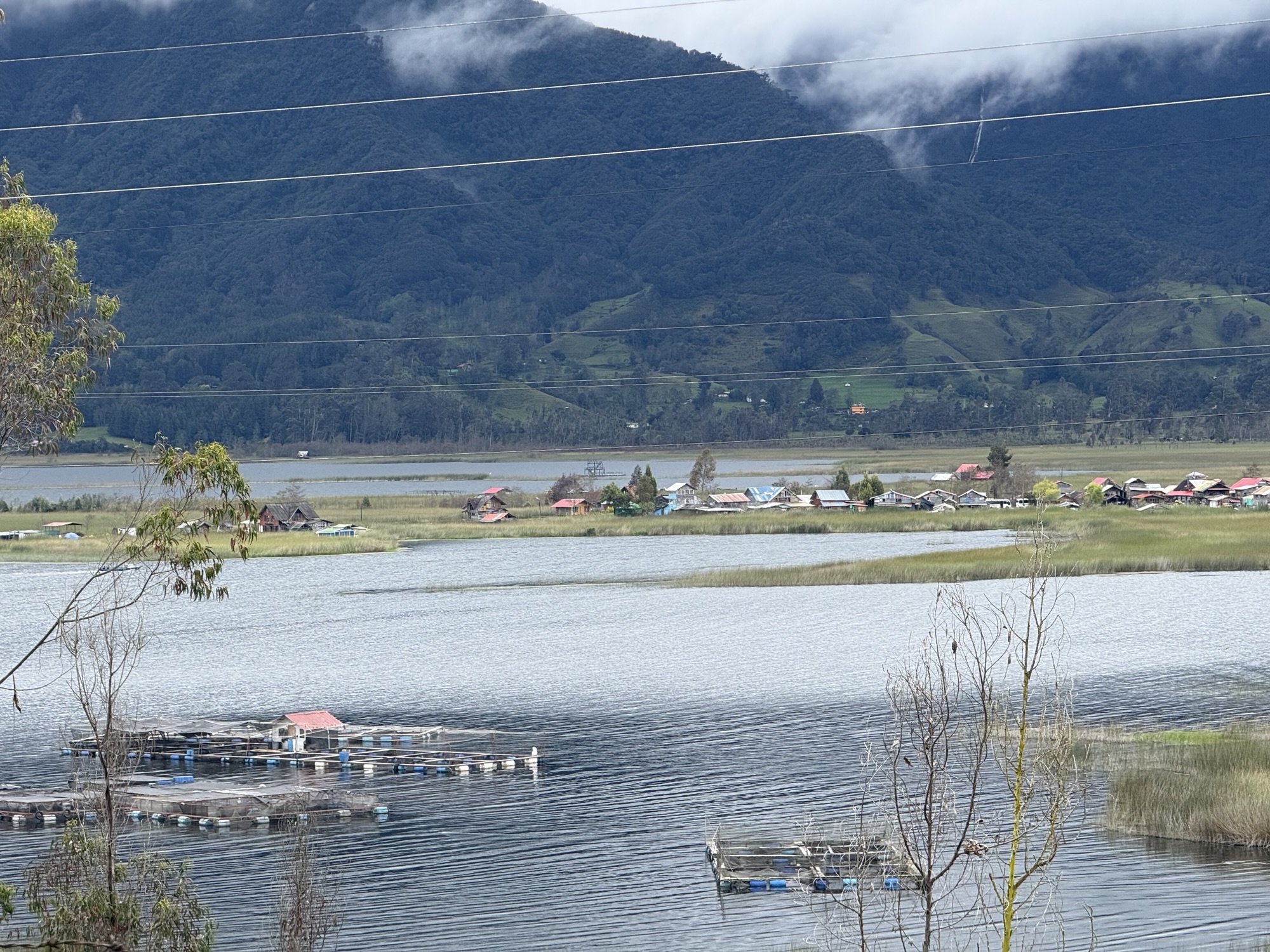
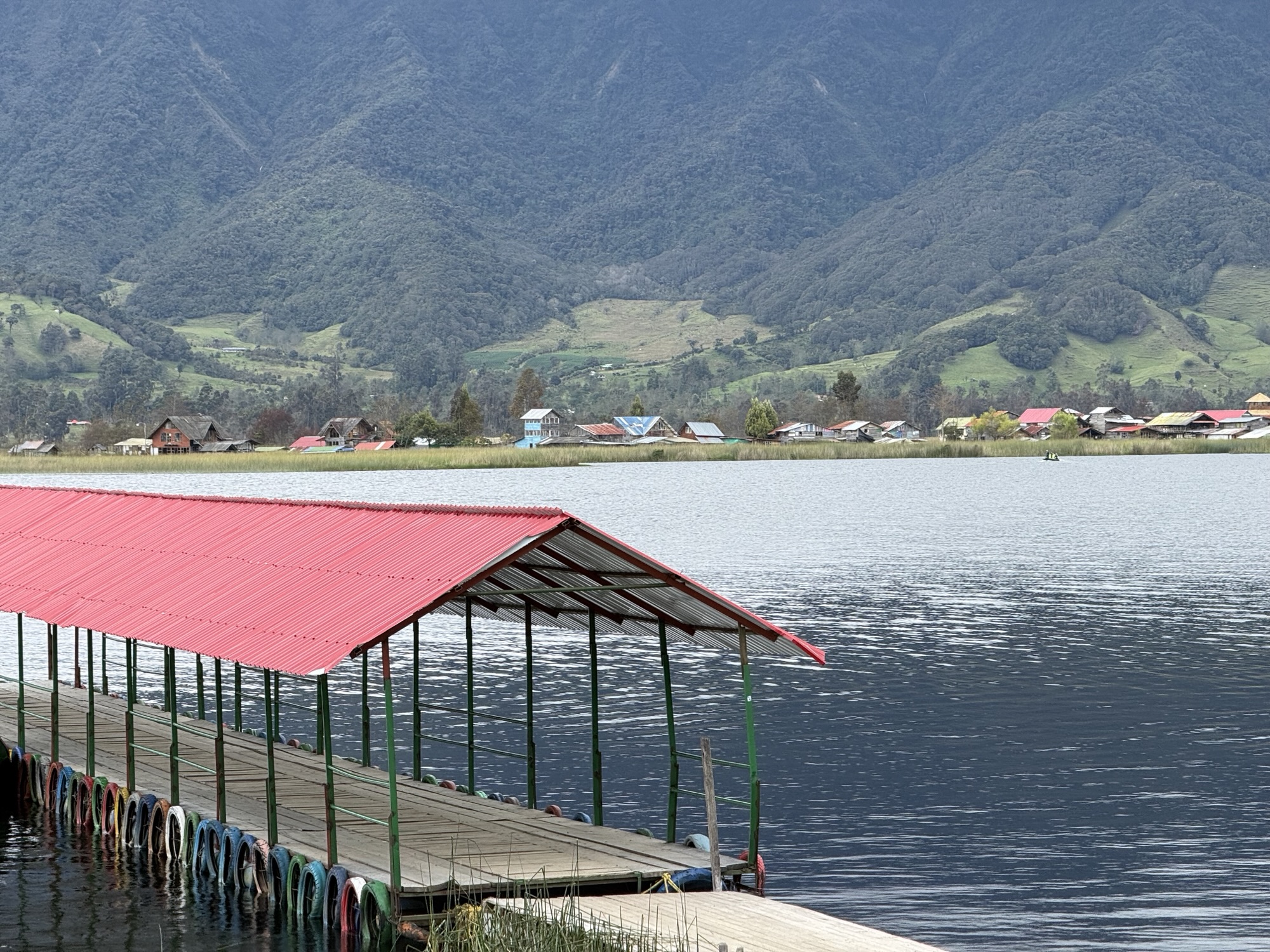
My next travel destination is Mocoa im the state of Putumayo. This province is adjacent to the Amazonas region and features both mountains and rain forest. Moreover, it is a region with very strong indigenous roots and many intact communities. A great place to connect with nature—physically and spiritually.
Luckily I found a wonderful accommodation: Posada Kauai. Kauai means to look inward in the indigenous Inga language. I was welcomed by Taita Nora, an indigenous medicine woman and her husband Alberto. They made me feel like part of the family. I learned a lot about indigenous culture and medicinal plants from them.
My stay in Mocoa was very comfortable
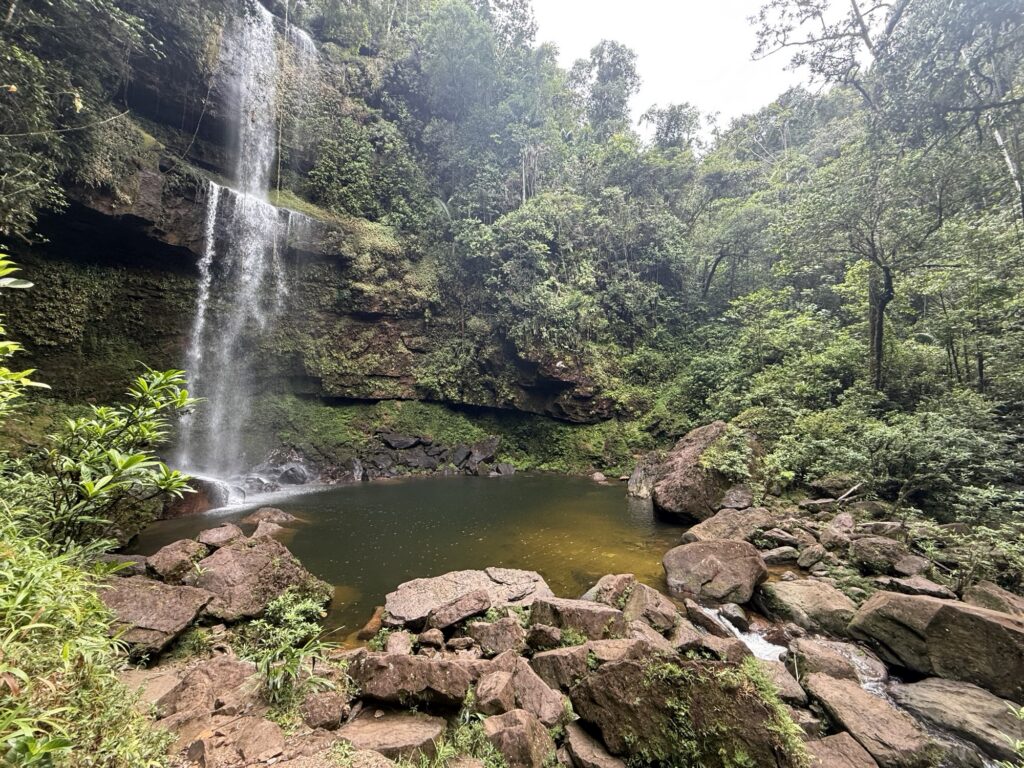
They also recommended beautiful places to visit which are walking distance from their home. I am grateful that I got to visit Ornoyaco, a waterfall which bears a lot of importance to indigenous culture.
This is Ornoyaco. Such a beautiful place and yet I was there all by myself.I was even lucky enough to see some Monkeys!
After a few days, I leave Mocoa via the trampolín de la muerte, supposedly Colombia‘s most dangerous road. It is extremely narrow and winds steeply through the jungle. Taking this road is an experience in itself. I agree with Nora however, that this road should be renamed to trampolín de la biodiversidad. A name that better reflects the beauty and appeal of this route.
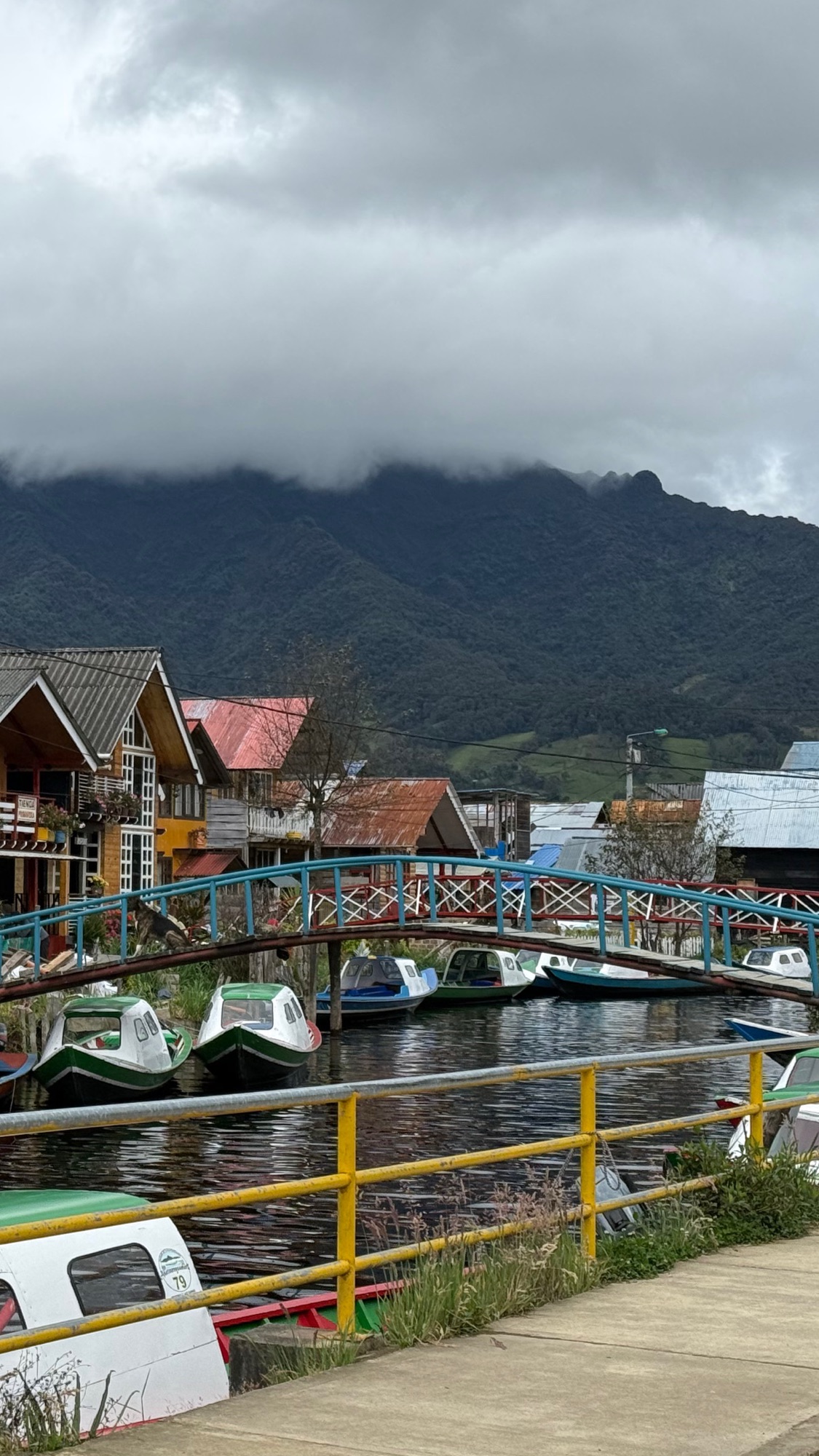
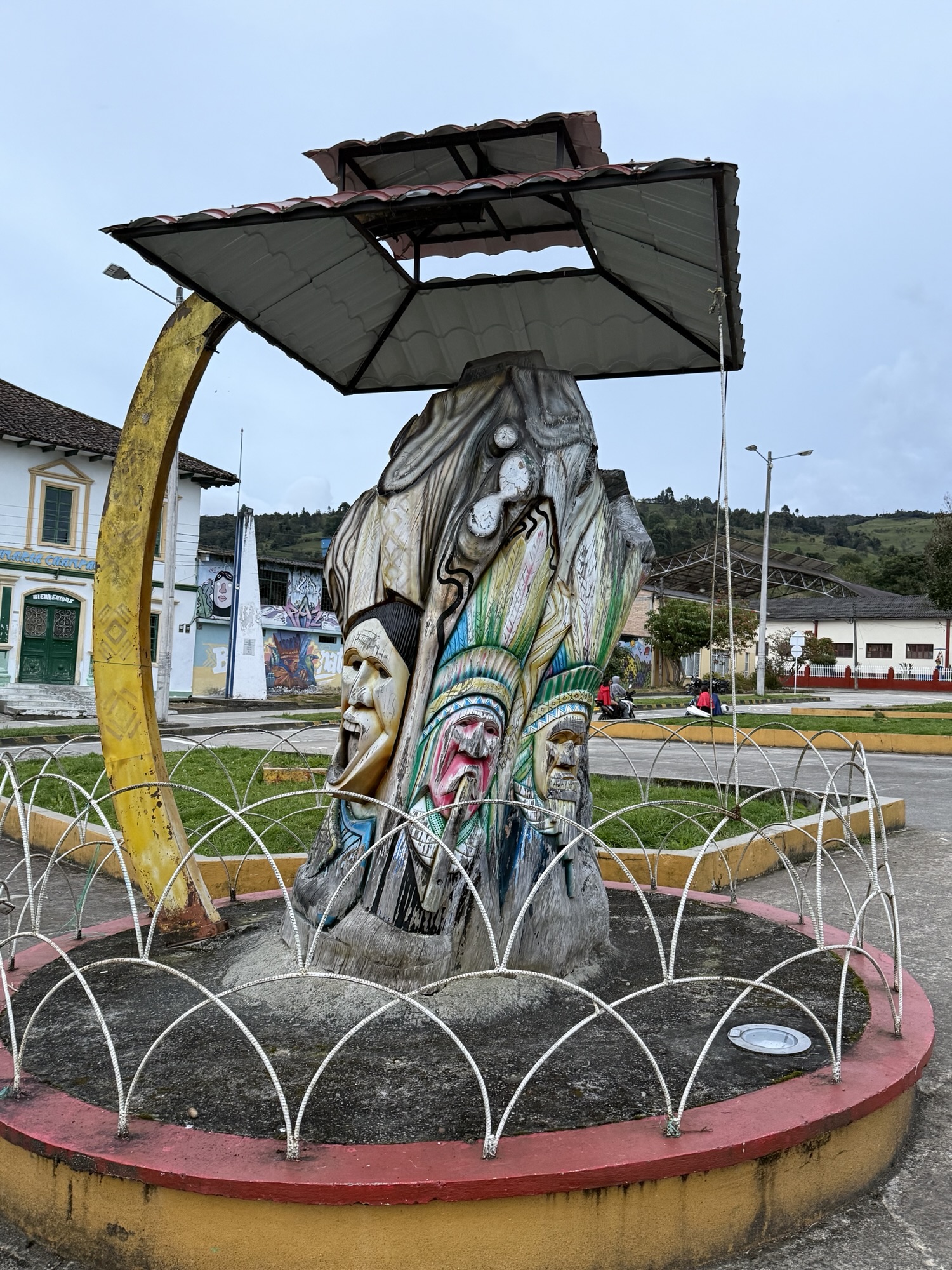
The road leads to another beautiful place, the valley of Sibundoy, an important cultural center of indigenous people in Colombia. To be continued!
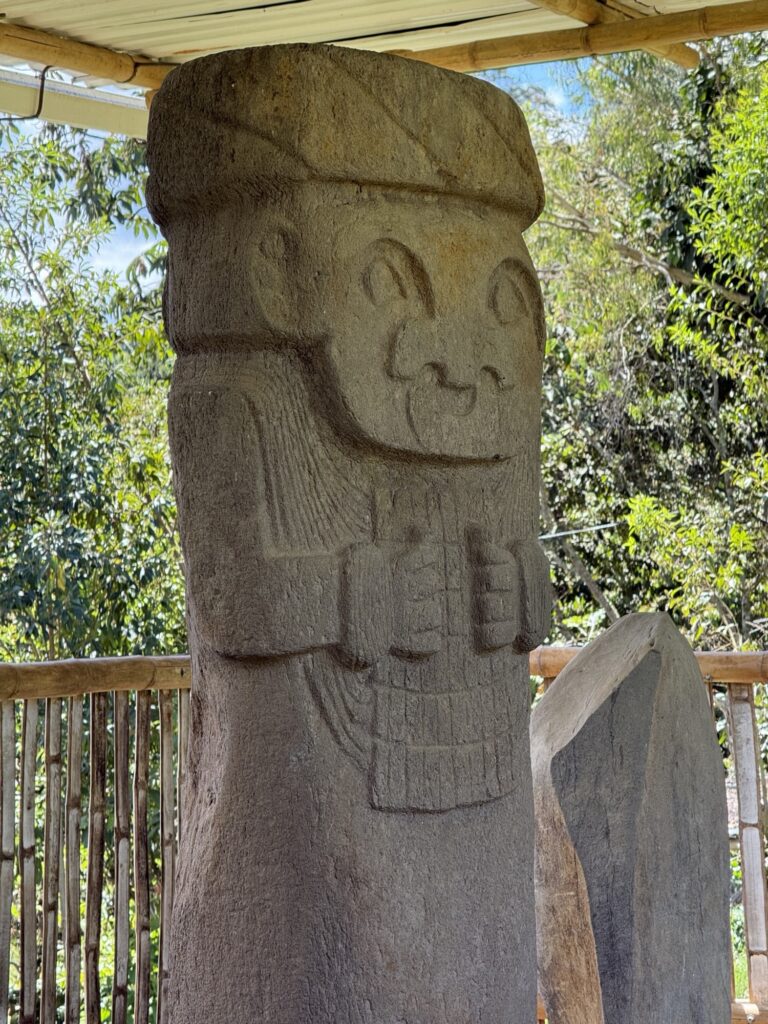
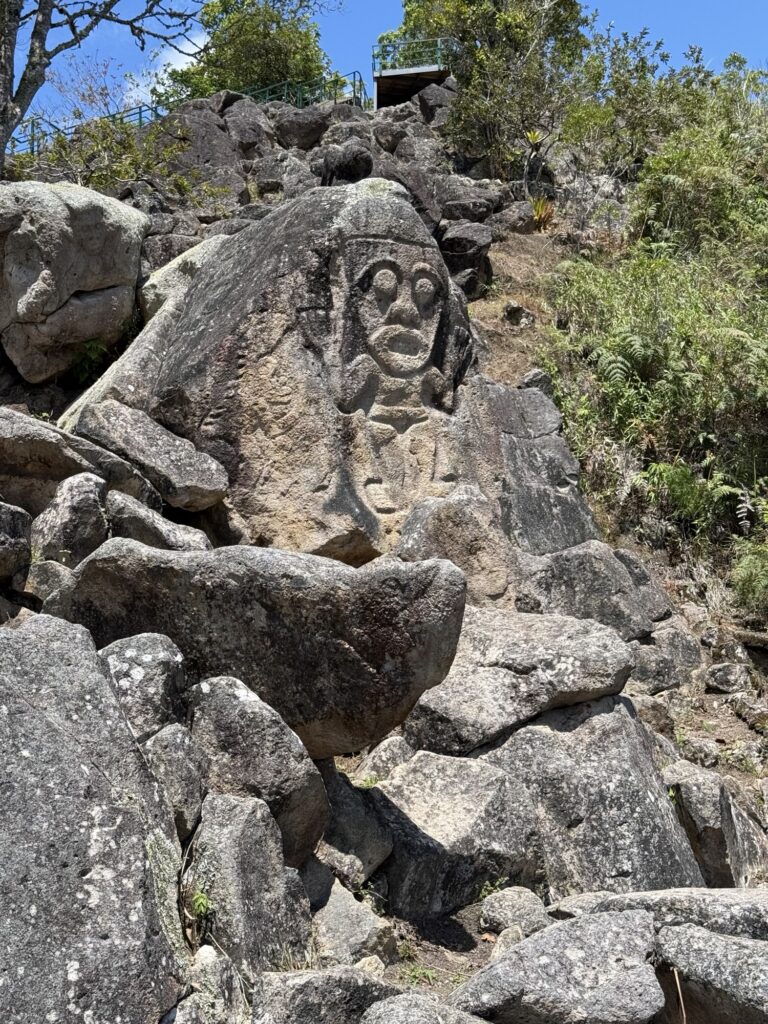
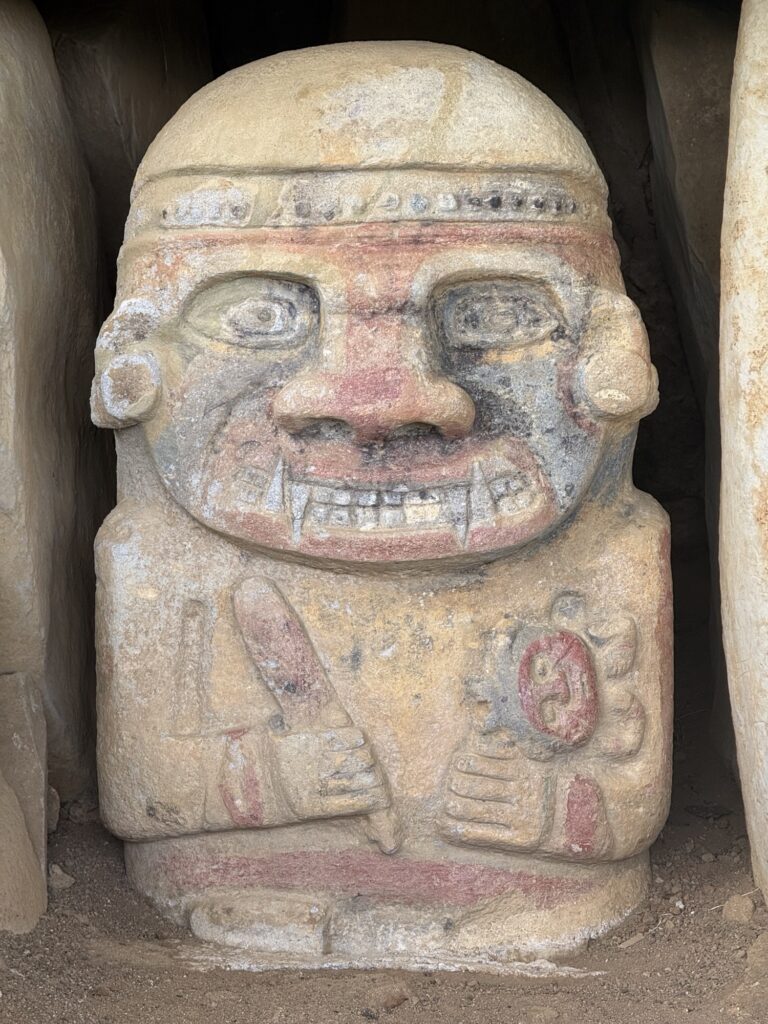
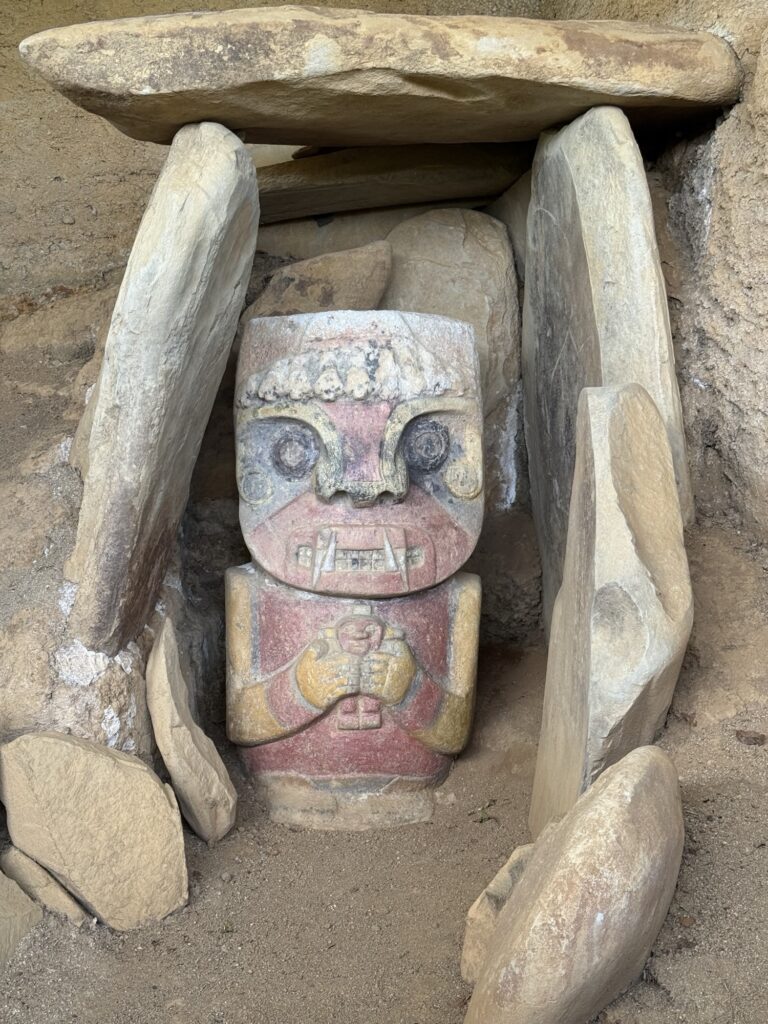
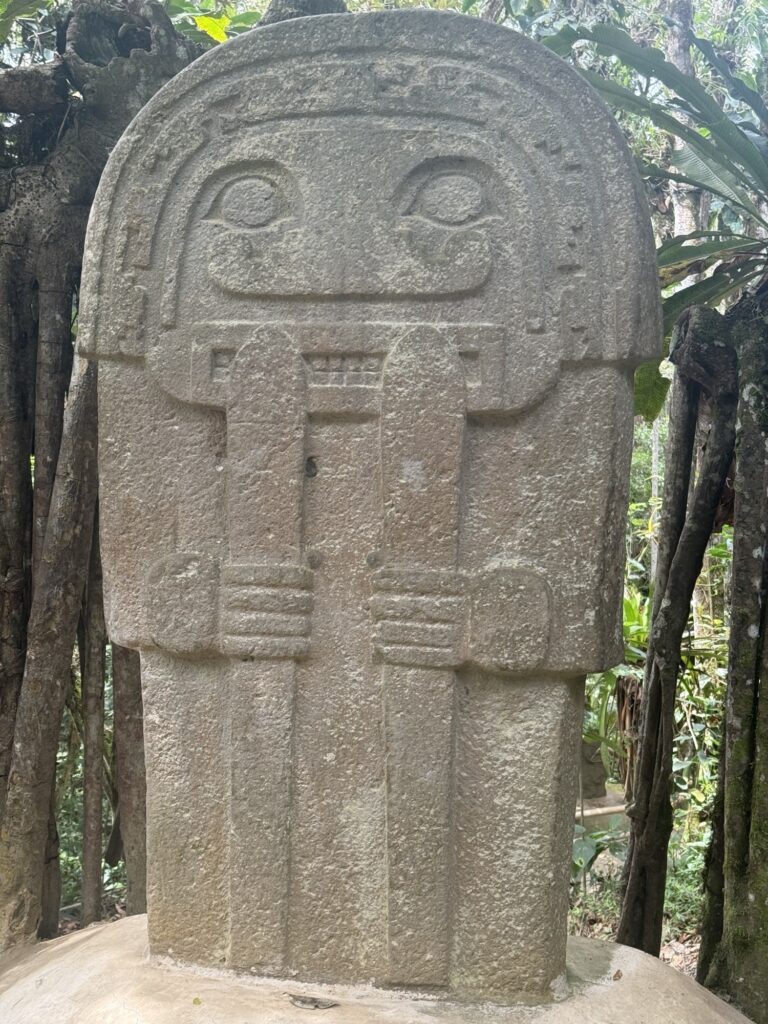
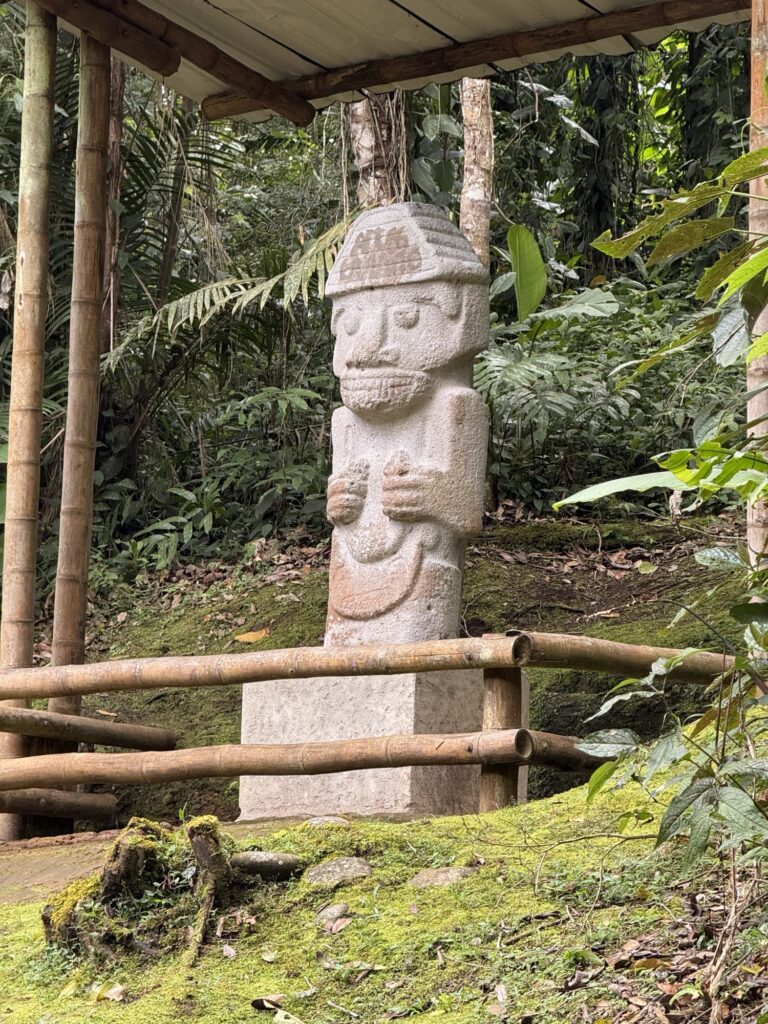
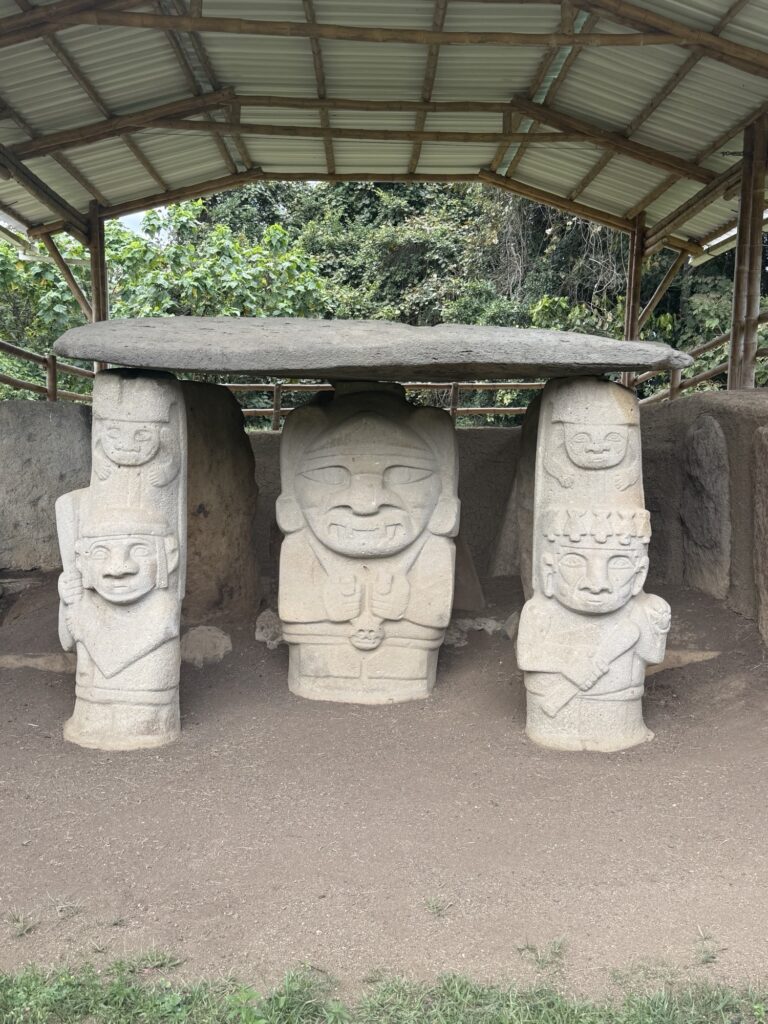
San Agustín is well know for its archeological zone. It contains a large collection of ancient statues (some more than 2500 years old). They are all different from each other but most of them seem to be holding something. I especially like the one that is holding what looks to be a little doll.
While I enjoyed San Agustín, it’s time to move on. Next stop, Mocoa!
In my itinerary so far I have been slowly going South. To recap: After leaving Bogotá, I first headed to the Eje cafetero, an important coffee growing region where I stayed a couple of weeks to enjoy the beautiful nature.
So, after leaving the coffee zone (gray area in the map), I traveled onward to Cali, a hot and humid city in the valley. It’s a beautiful and in places quite hectic place. In the San Antonio neighborhood where I stayed, life is very tranquil however. I walked around a lot and enjoyed the small cafes and crafts shops.
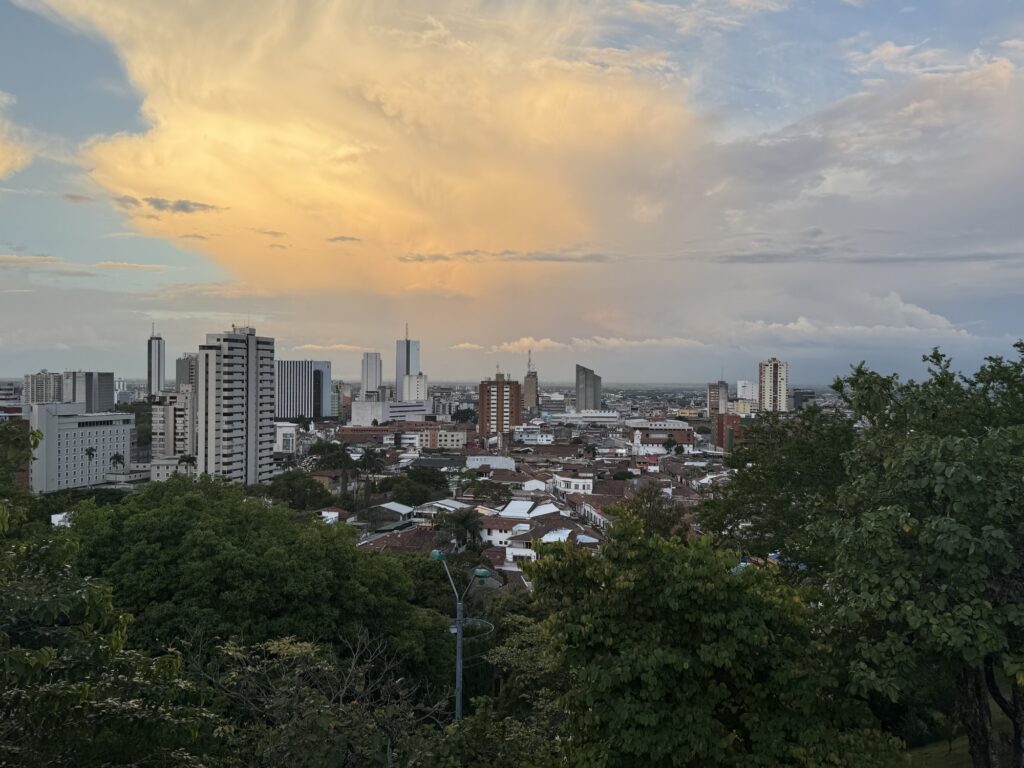
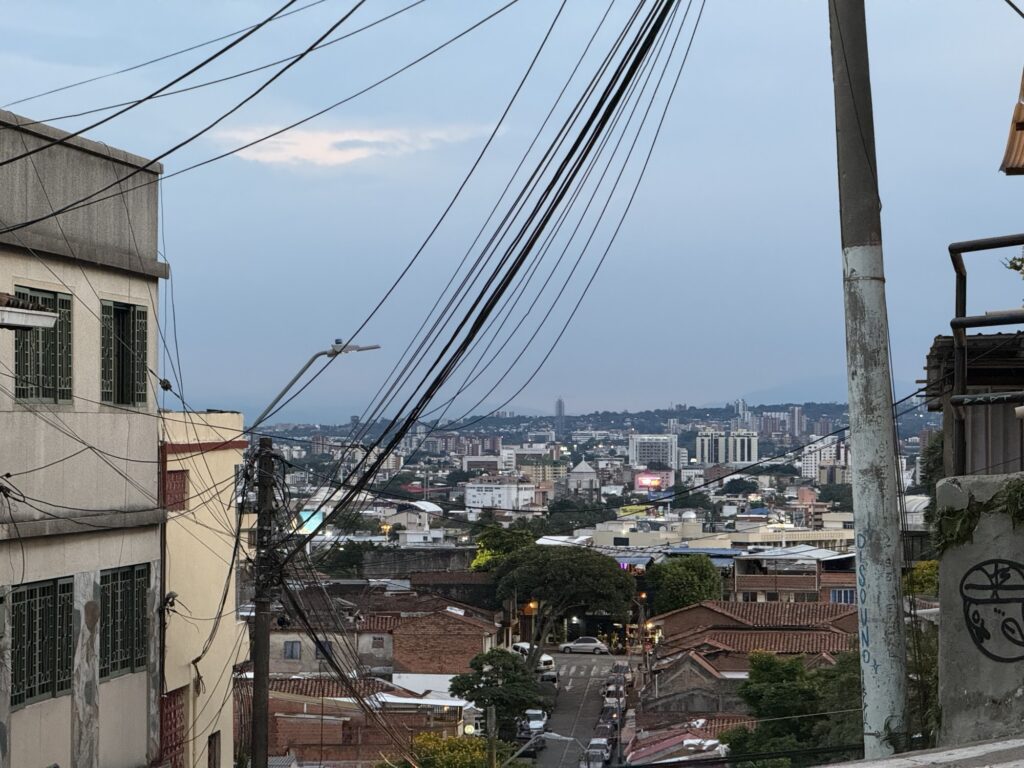
The skyline of Cali in the evening sun
In the city center things are quite different. In the old town it is very hectic. It is essentially one big “shopping center”. Street vendors are everywhere and try to aggressively sell their wares. It is fun and also a bit exhausting. I did not feel unsafe, fortunately.
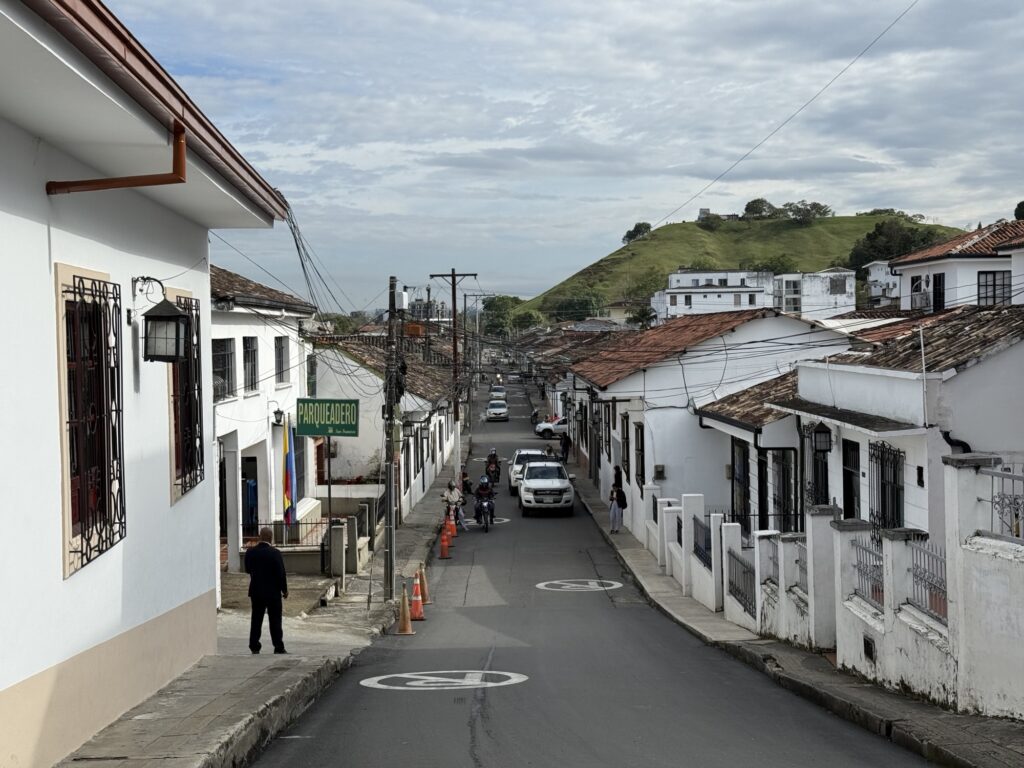
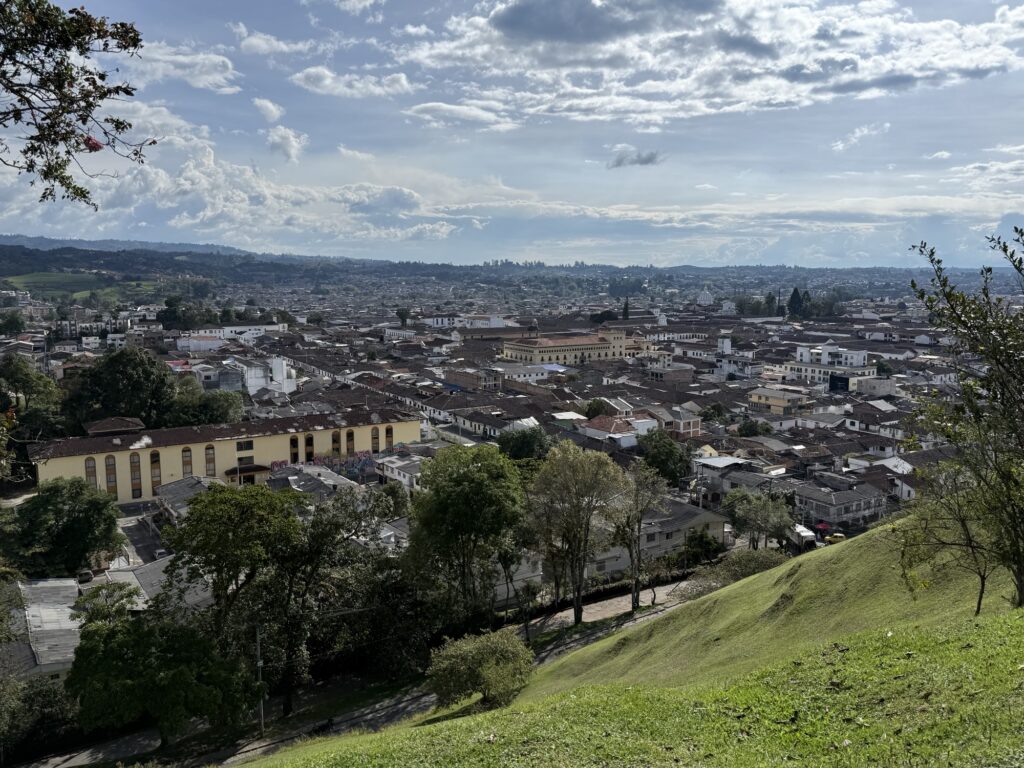
After my weekend in Cali, I head further south towards San Agustín. To break up the otherwise long bus trip, I stay a night in Popayán. It is a beautifully preserved colonial small town with white facades ind picturesque streets.
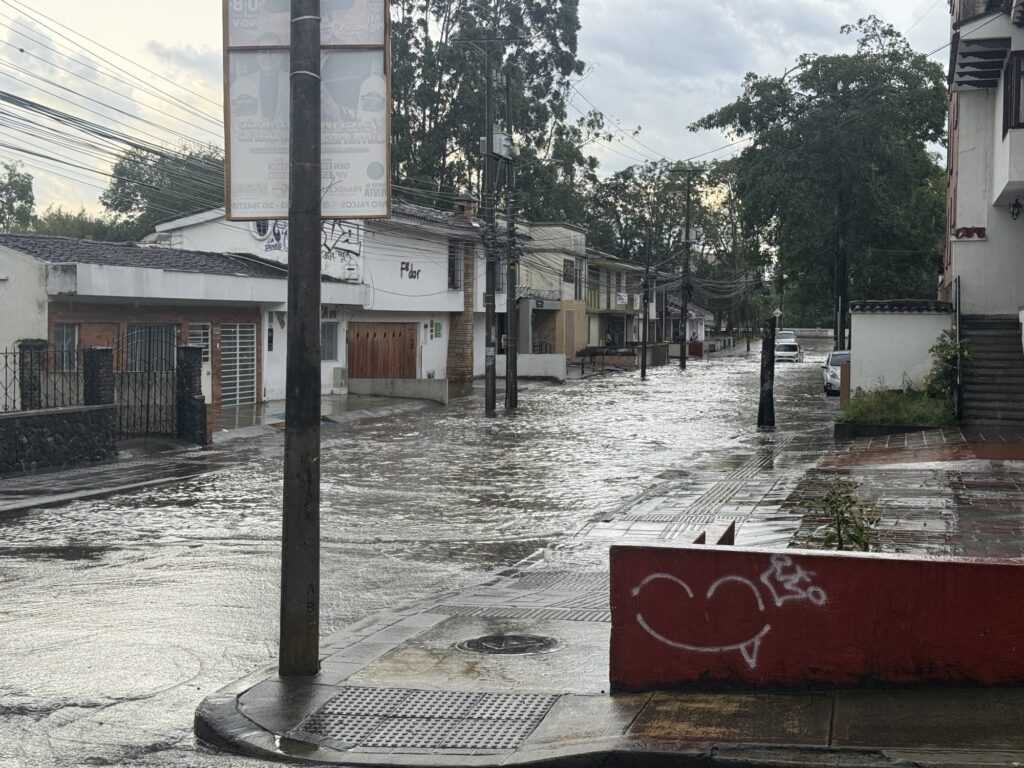
I also experienced some proper rain in Popayán. From one minute to the next all streets were converted into rivers. The climate is very unpredictable in the mountains.
The trip to San Agustín on the next day is also quite the adventure. You travel on a minibus over the Andes on a largely unpaved road. Surprisingly, this dirt path seems to be an important connection road for Colombians and there is lots of traffic. The ride is long and strenuous but you are rewarded with beautiful views and a traditional lunch.
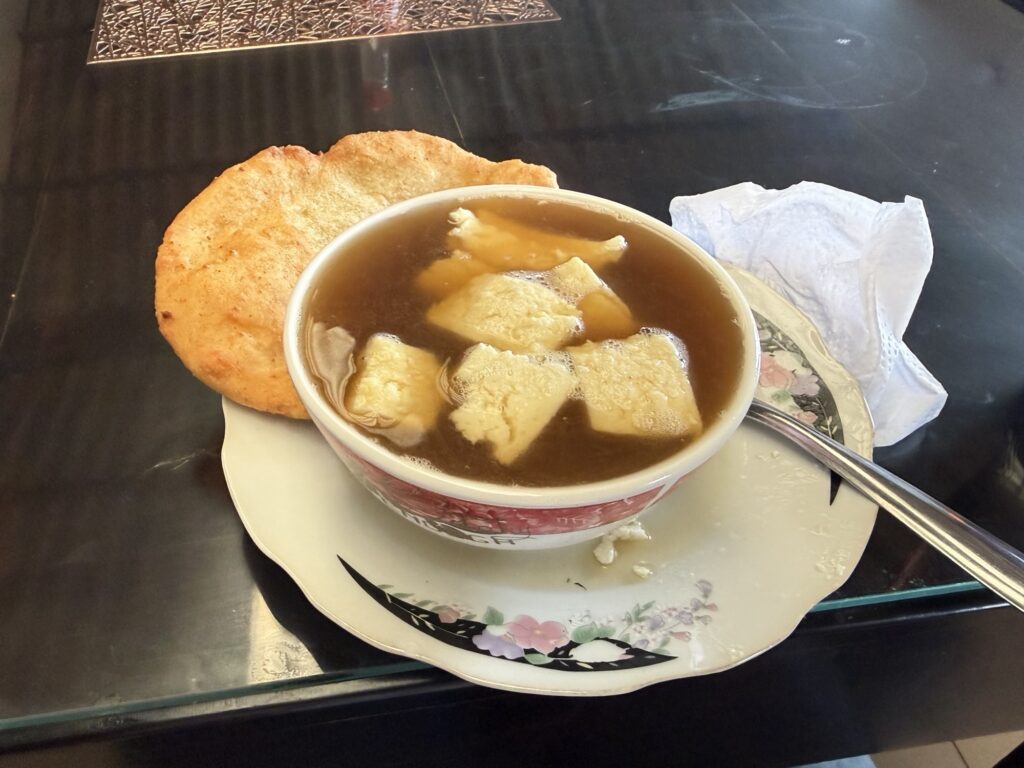
A typical Andes meal: Agua panela con queso. You put the Feta-like cheese into hot sugary water until it becomes soft. The flavor combination of the hot sweet water and the cheese is fascinating and not at all bad. An alternative is to put the cheese in hot chocolate (which I like less). A great way to warm up after a cold morning in the mountains.
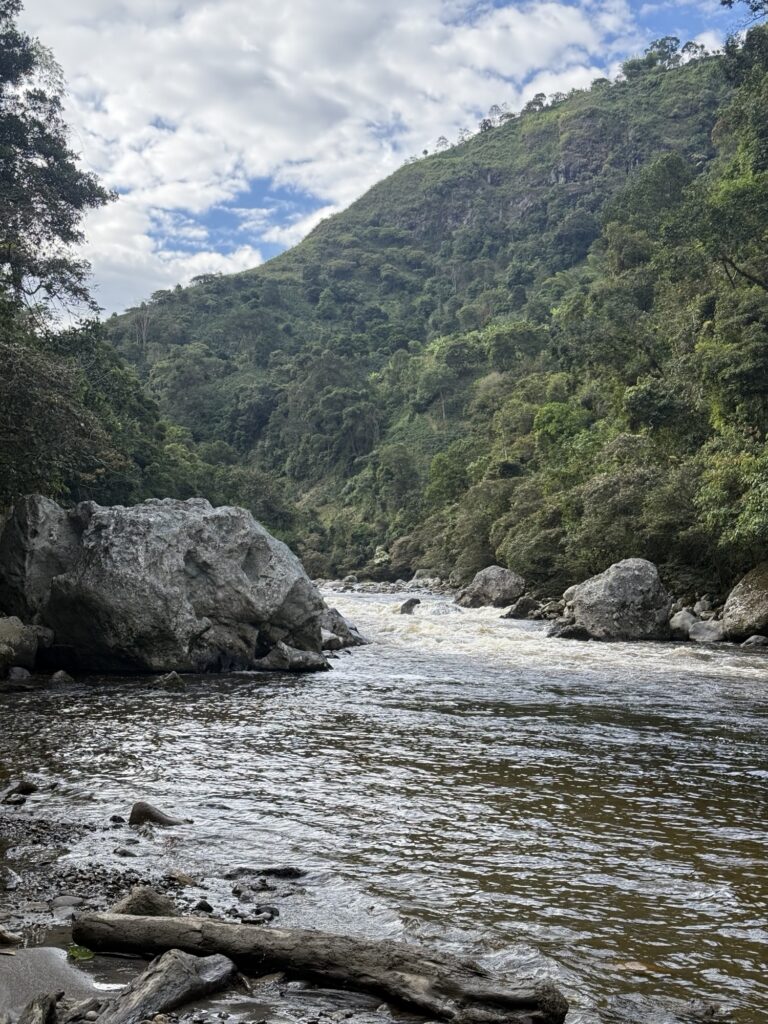
And then, I finally reach San Agustín. As it is located near the source of the Magdalena river, the landscape is spectacular. The river has carved a deep canyon into the land. I enjoy a swim in the fresh water.
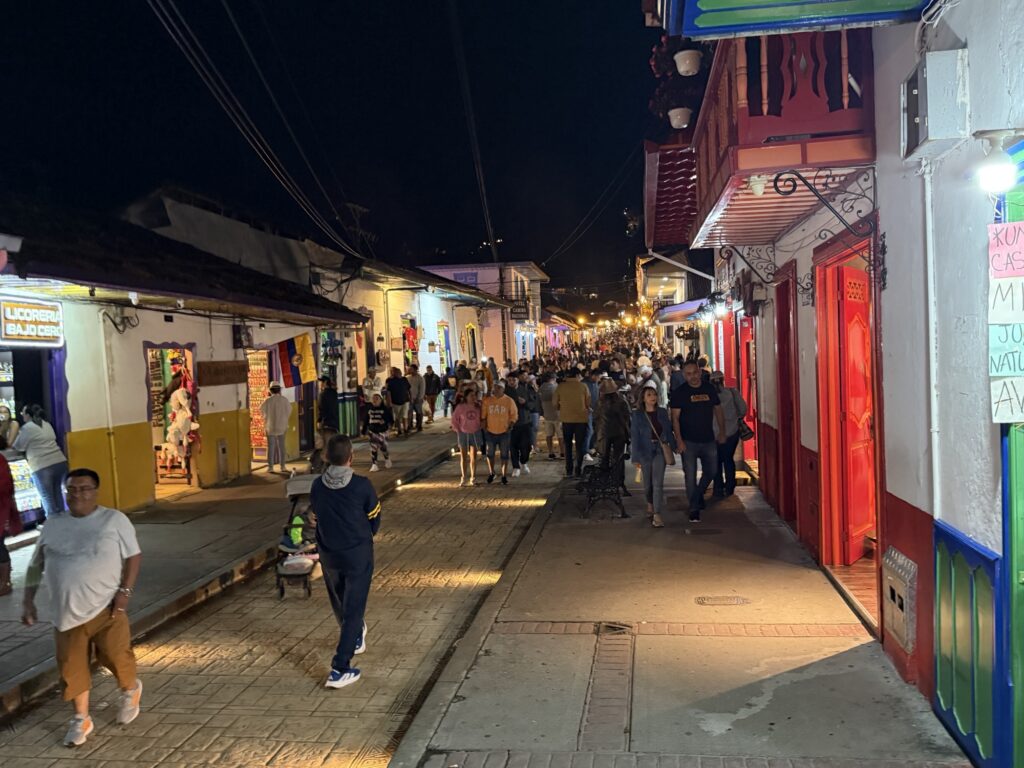
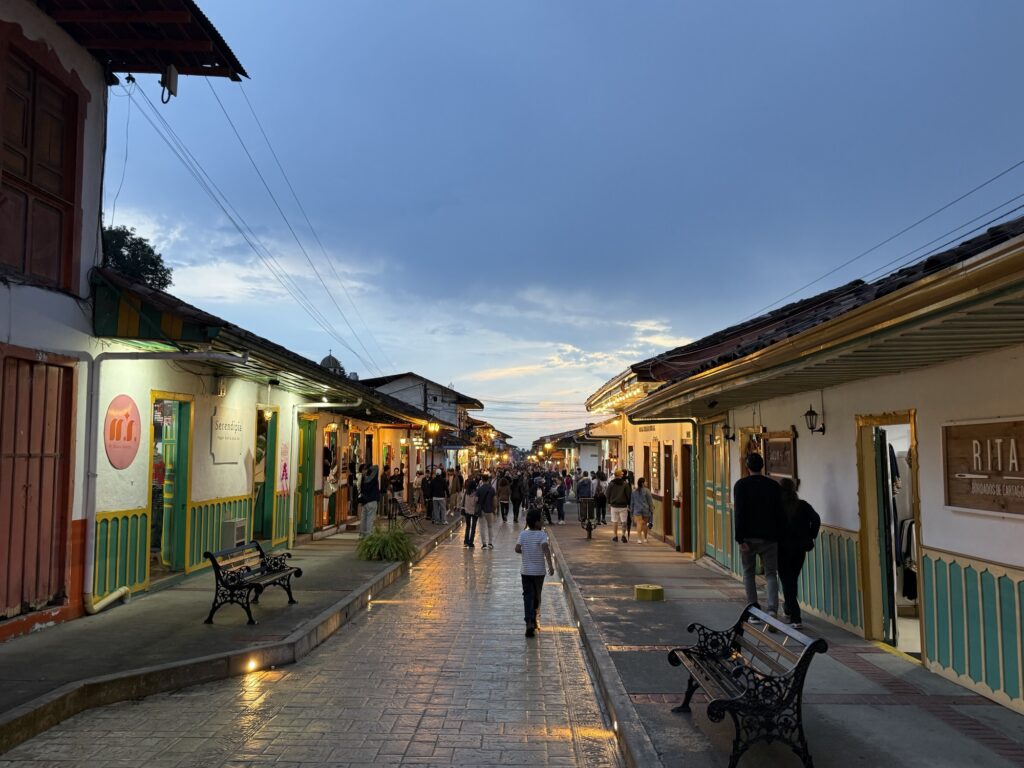
I continue my journey to Salento, a traditional coffee village which has developed into a well-known tourist destination. Once I arrive, I am greeted by hip coffee houses, souvenir shops, and large crowds of people.
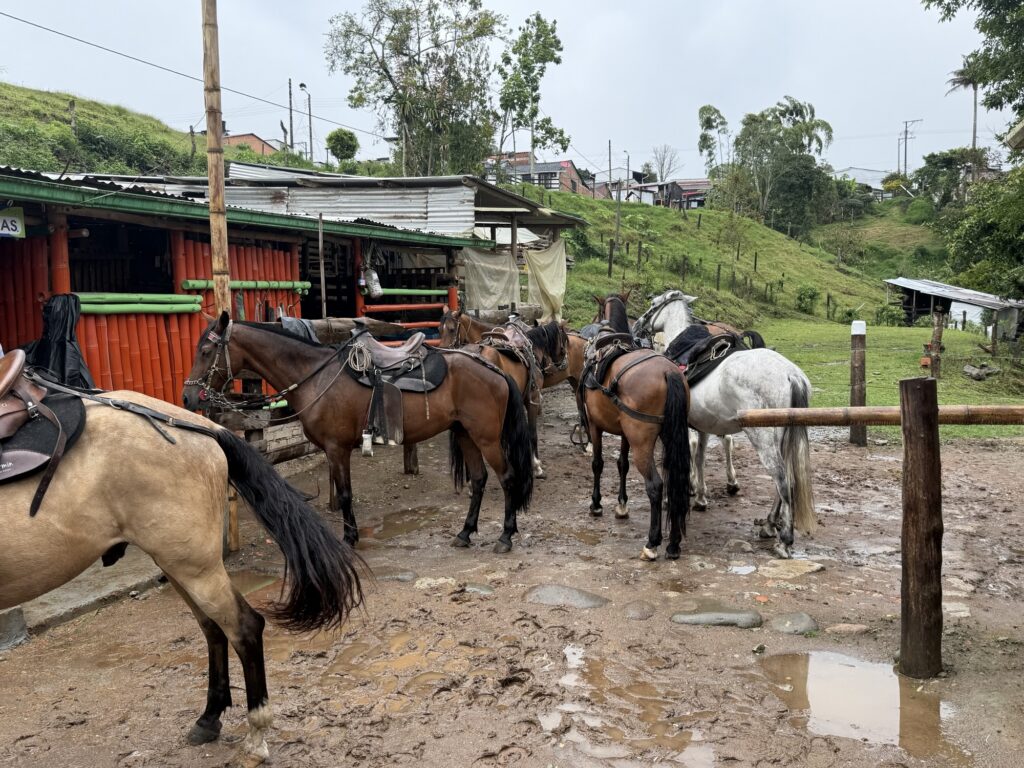
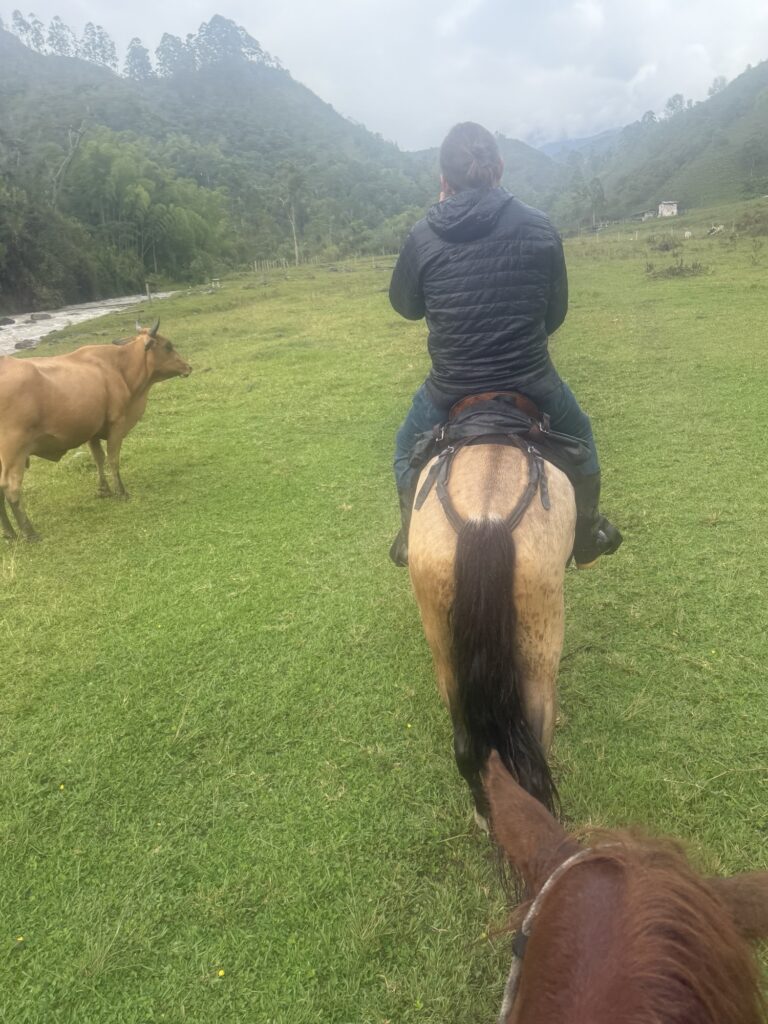
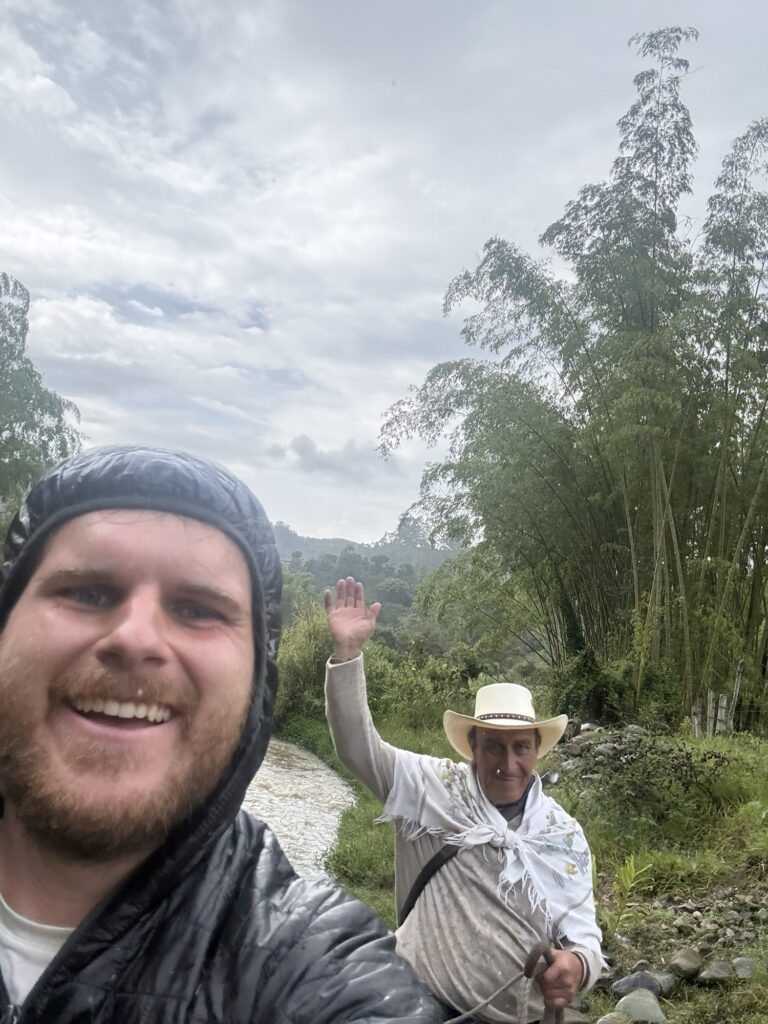
Before I explore town, however, I decide to escape into nature. But not by myself. I find a little horse ranch not far from the village that offers horseback tours through the nearby rivers.
I had a lot of fun even though it rained a little. This turned out to be a consistent pattern in Salento: sunny mornings and rainy afternoons.
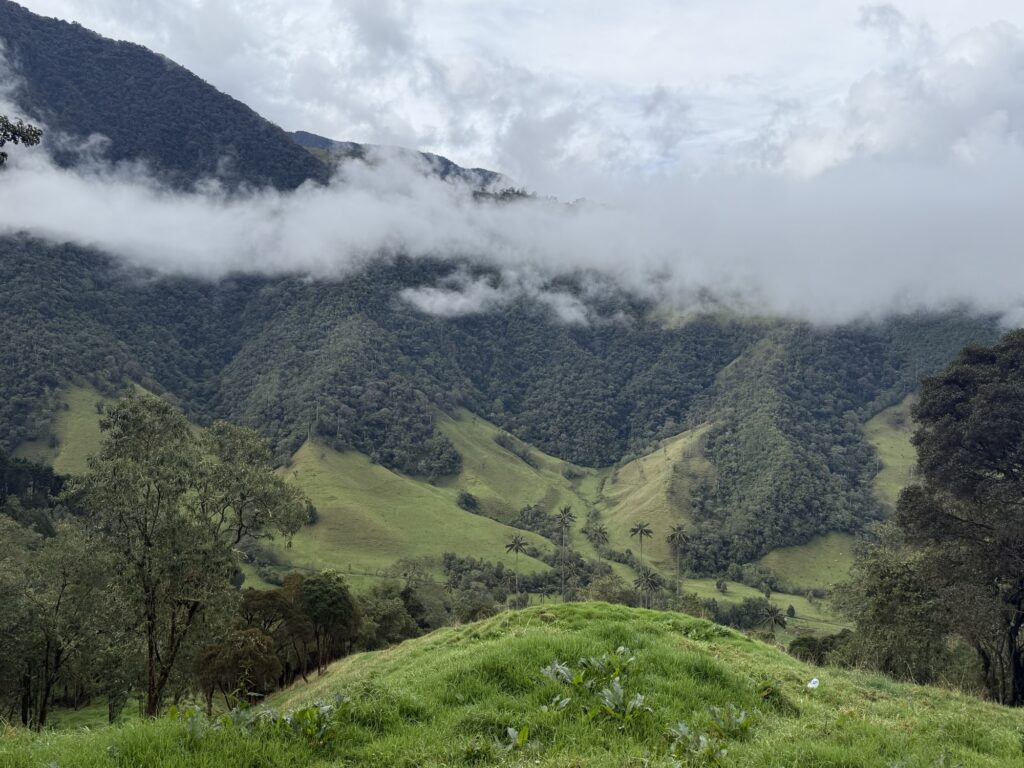
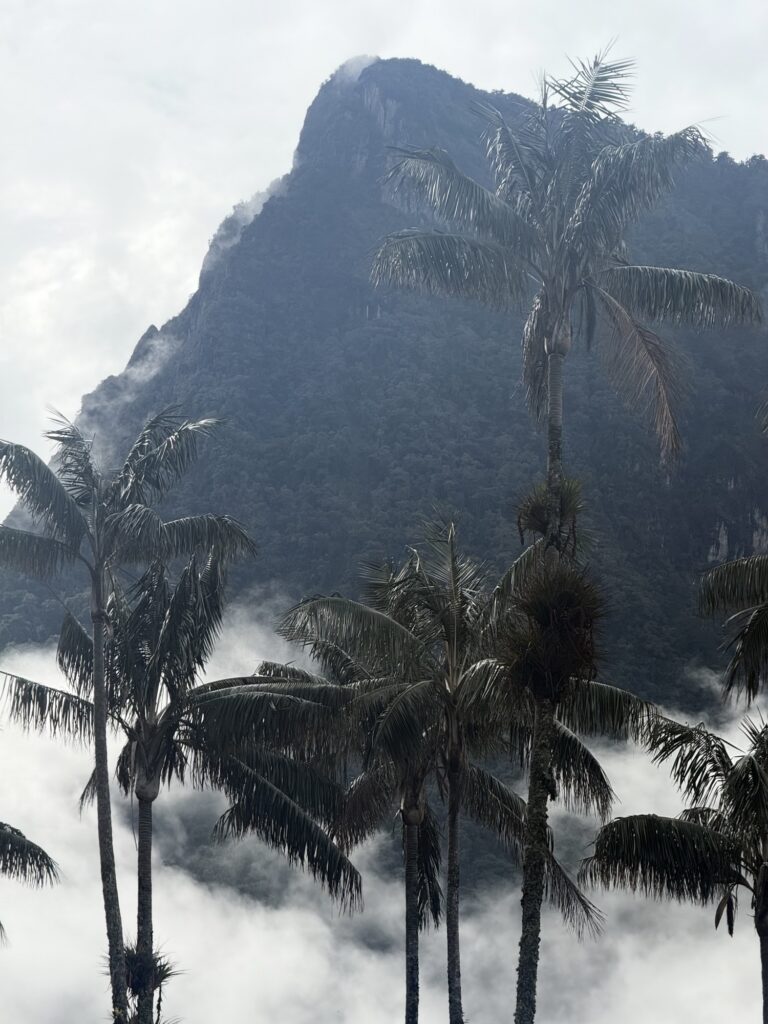
Thus, I decide to start early the next morning, partially to beat the crowds and partially to have more sun.I take a jeep to nearby Cocora valley, where one can hike amongst the wax palms traditional for this region. The views are absolutely spectacular.
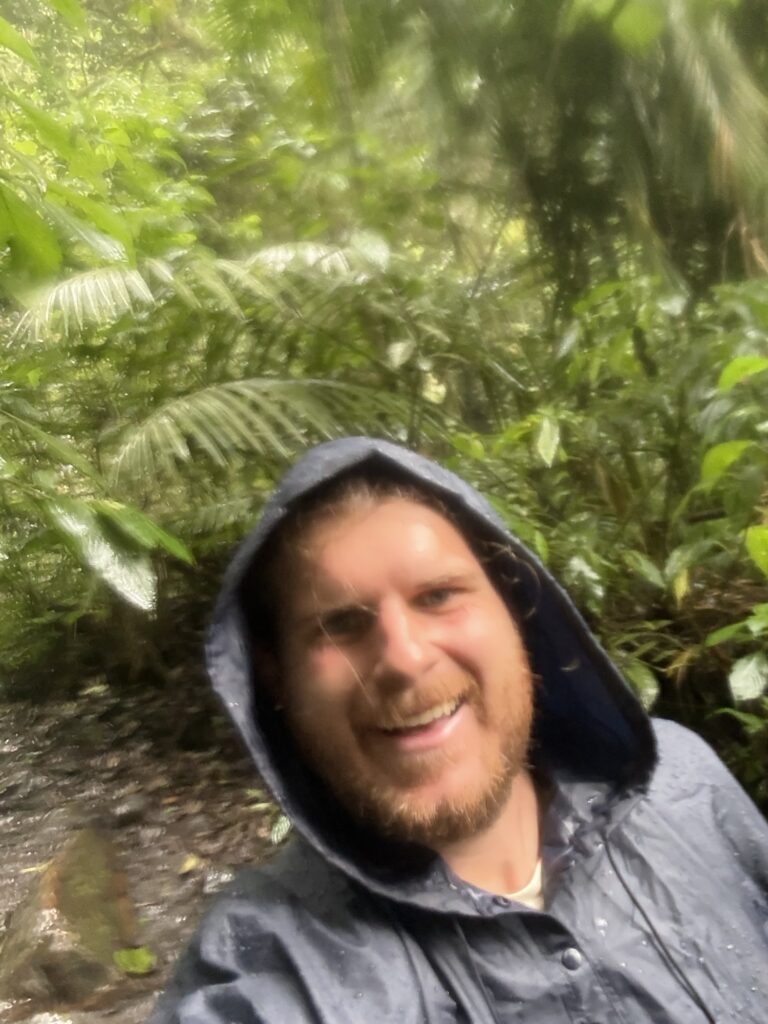
So beautiful! I enjoyed hiking so much that I ended up going much further than anticipated. Of course that meant I was still out there in the afternoon and I got totally rained on. Everything was completely soaked.
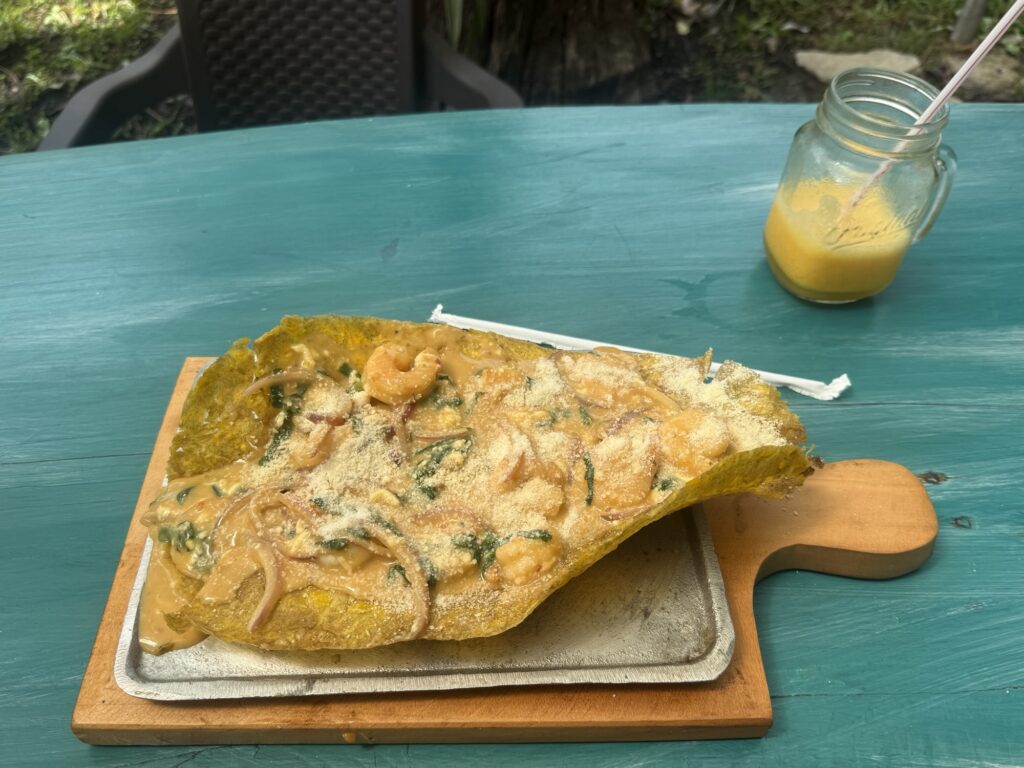
After the hike I enjoyed a traditional meal, a so-called Patacón. This is one of my favorite foods so far in Colombia.
Patacón, a plantain “pizza” that is typical of the region.
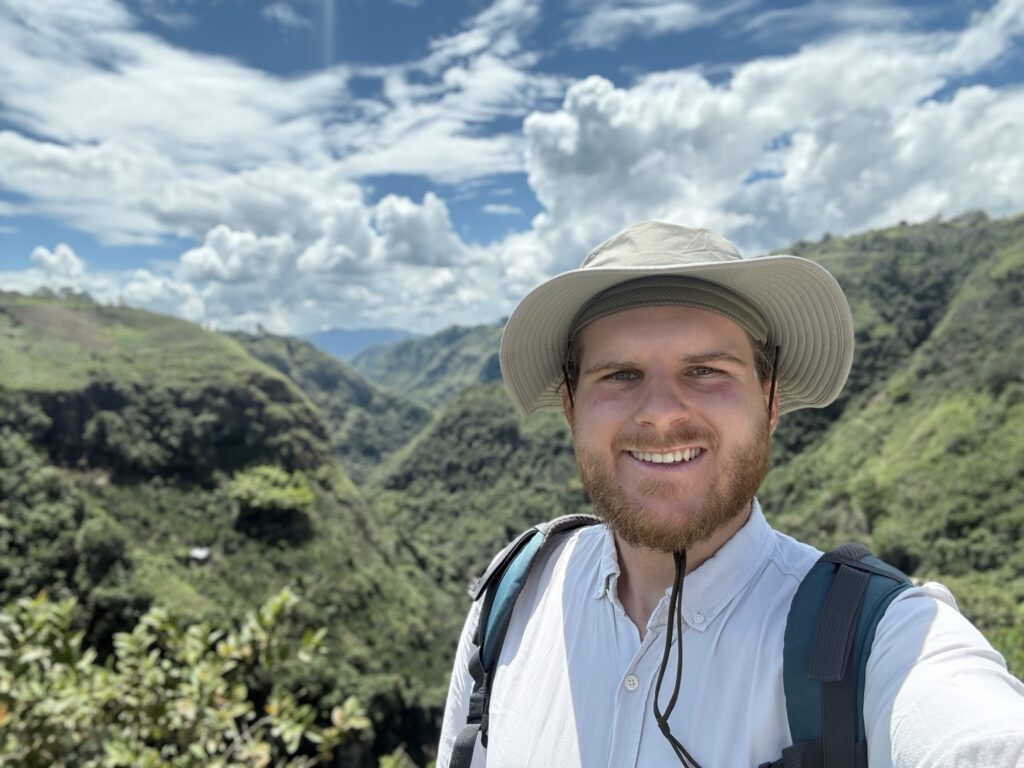
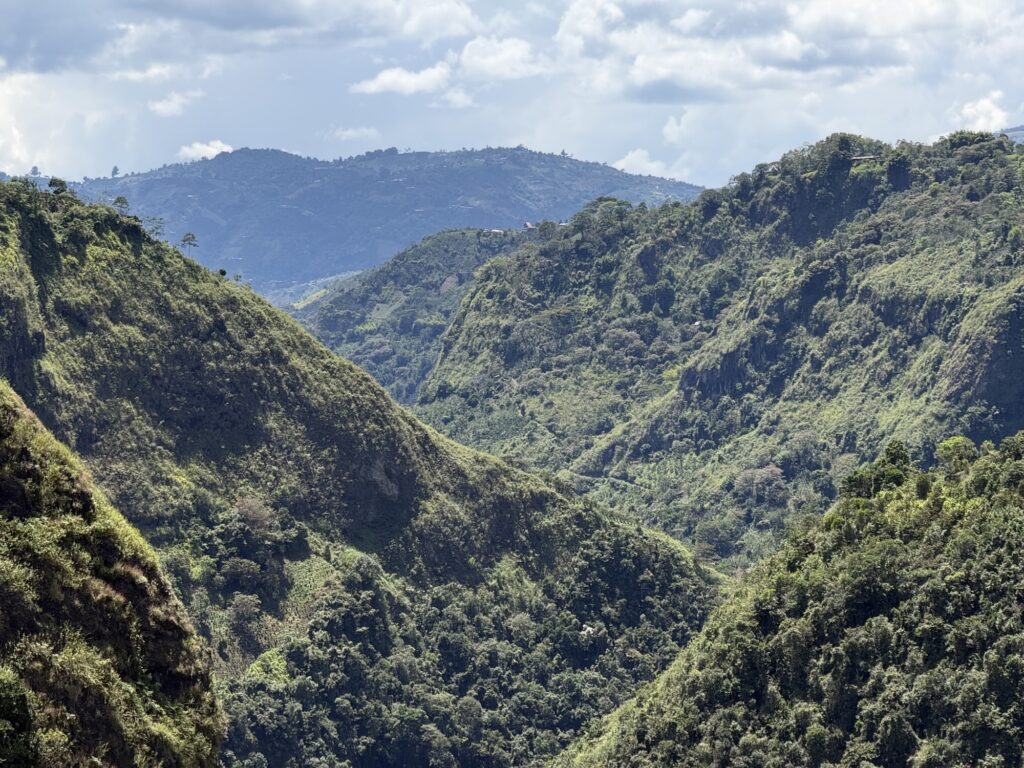
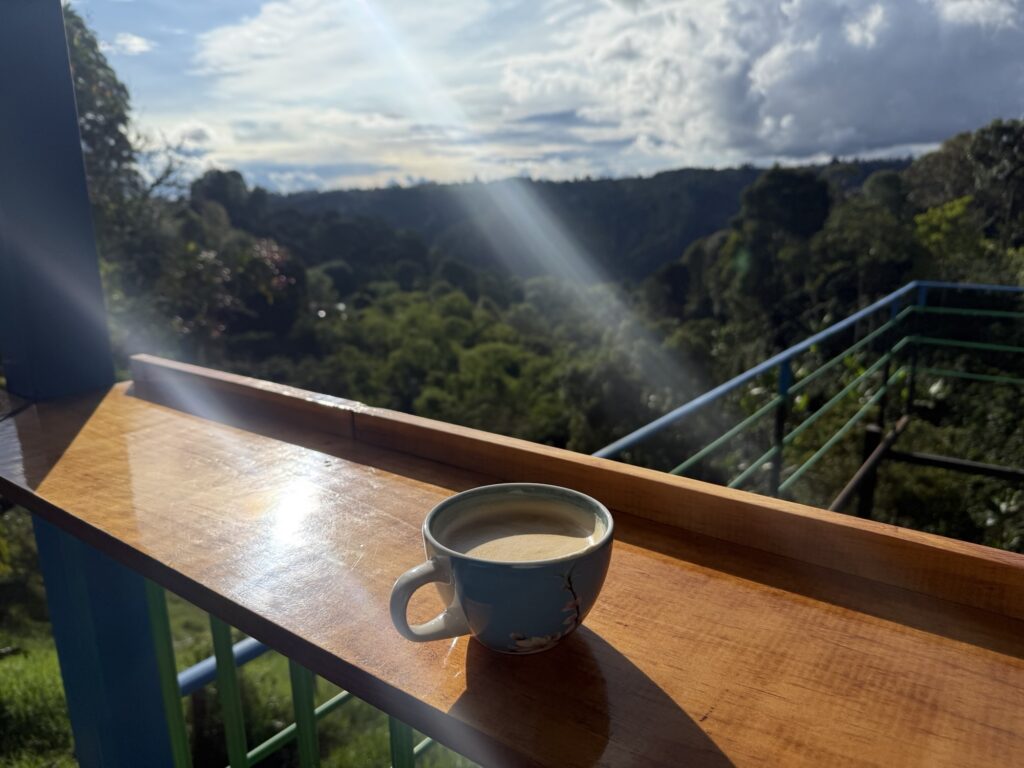
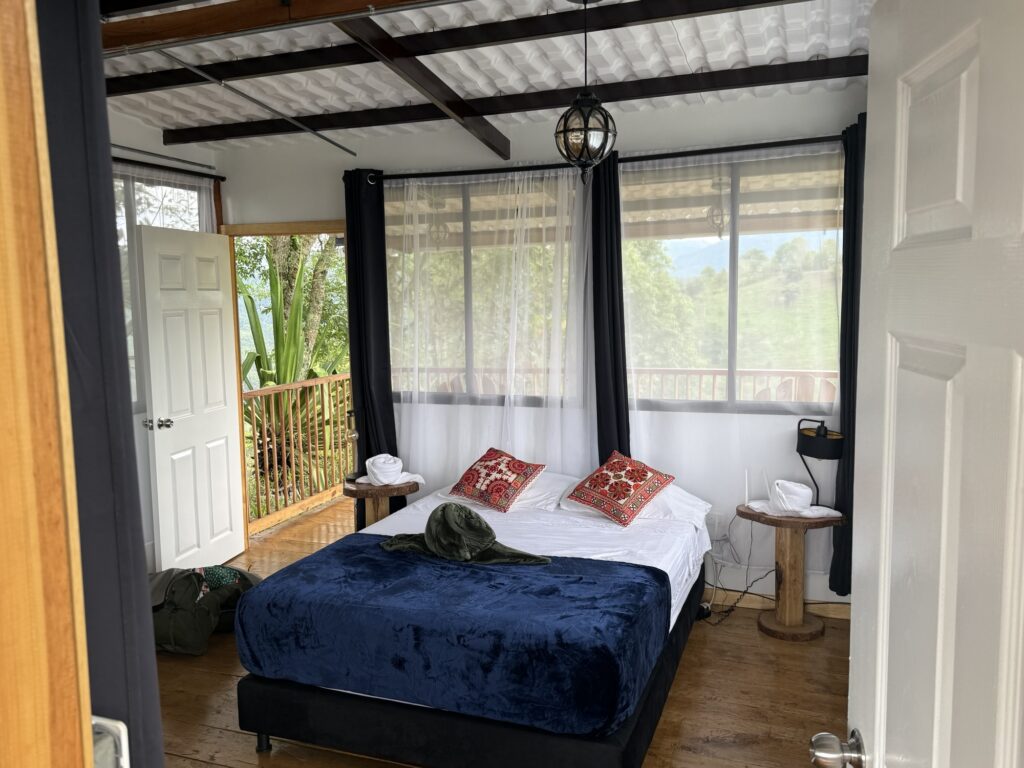
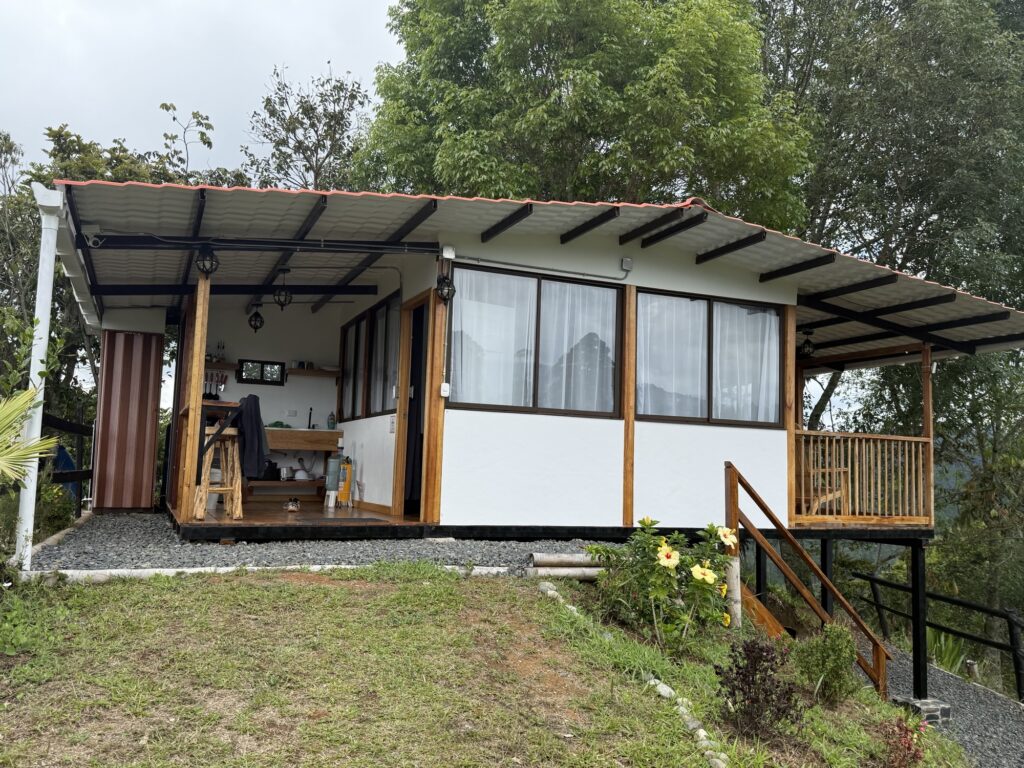
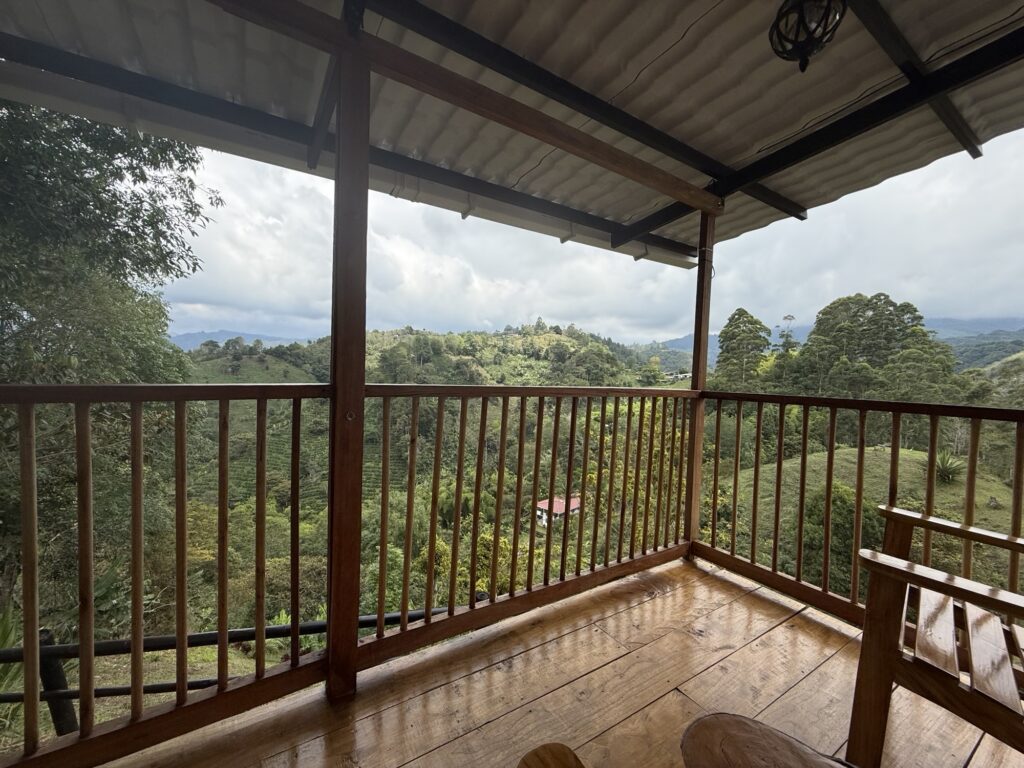
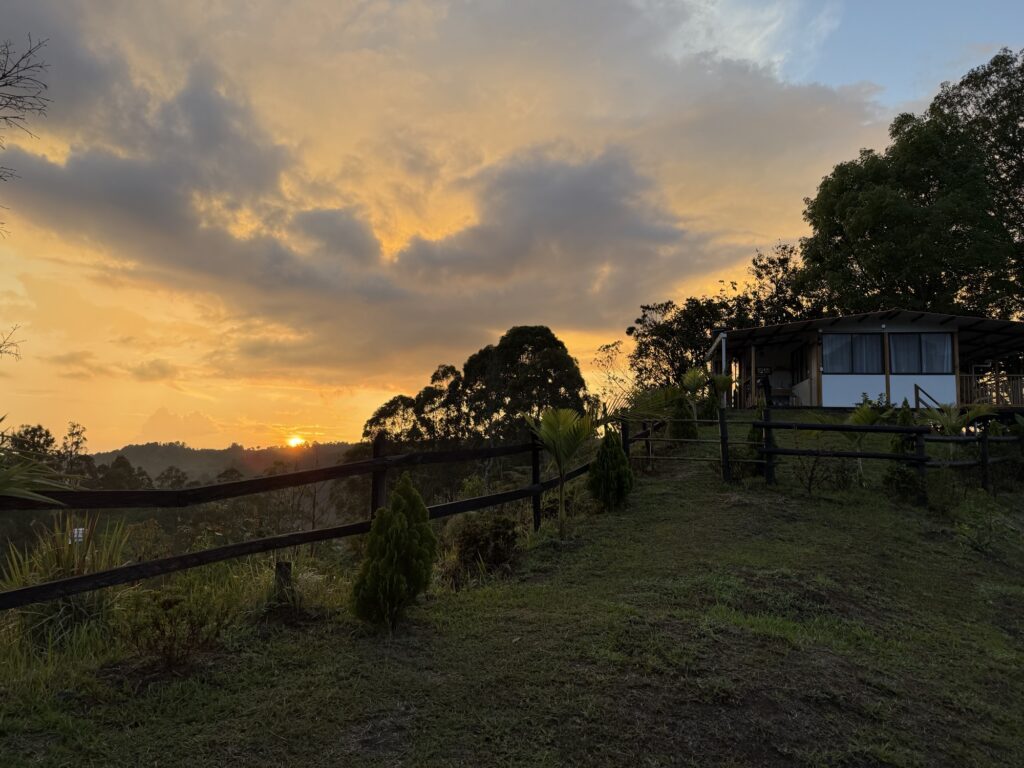
In Salento I first stayed in an OK but overpriced Hostel. Fortunately, I found an absolutely amazing Cabin near Salento to which I moved after two days. It is nestled in the coffee hills and I had it all to myself. I enjoyed the beautiful views in the morning.
I have been spending the last few days in the Colombian coffee triangle, a region with lots of traditional coffee plantations.
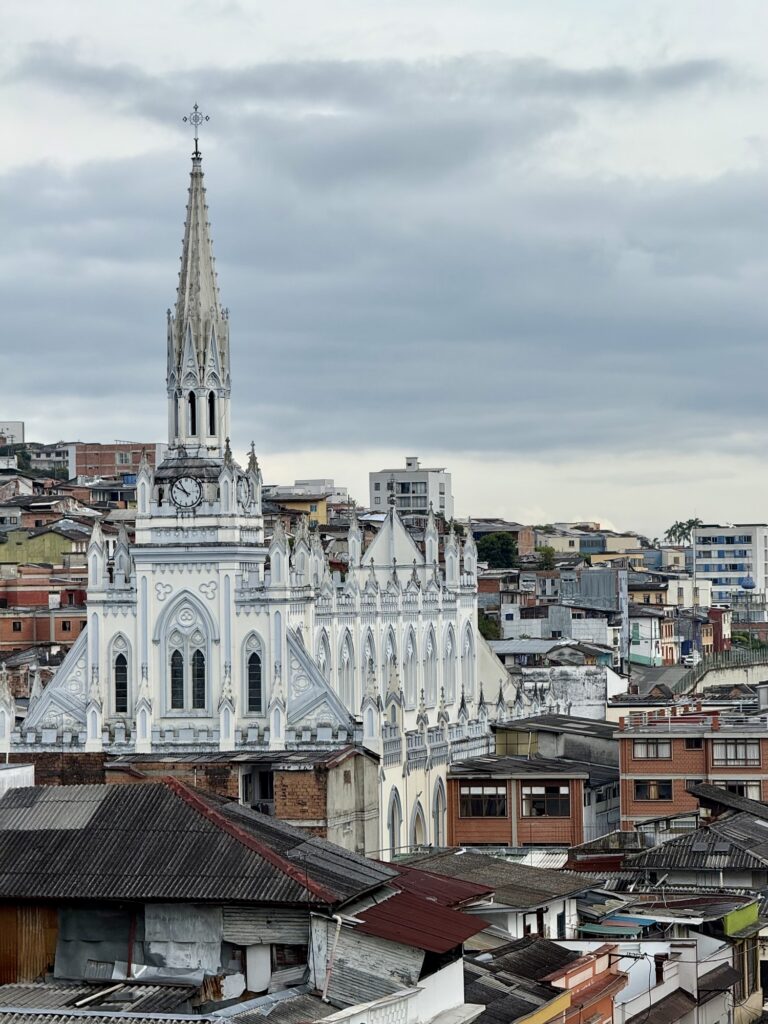
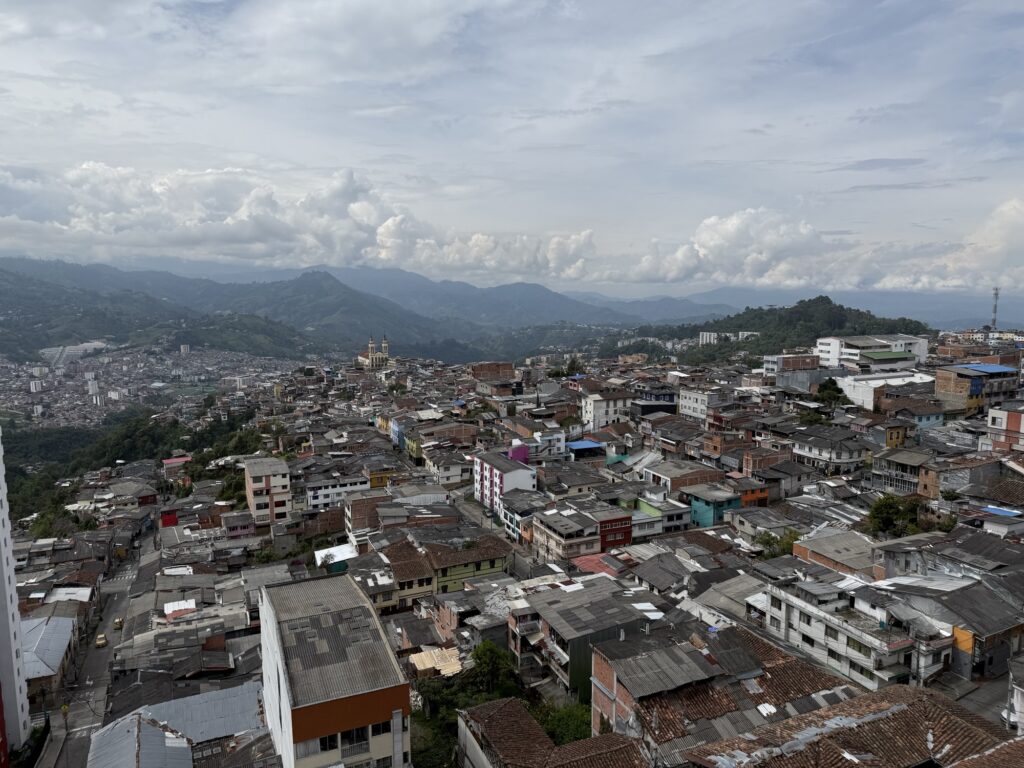
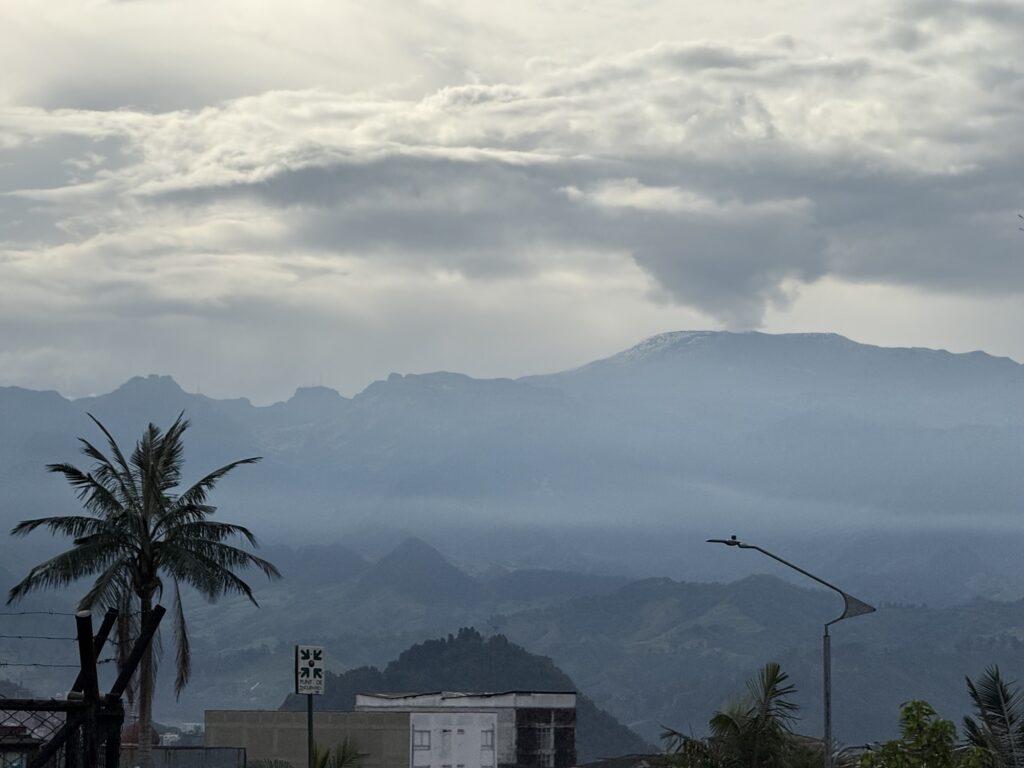
The largest city of the region is Manizales, a laid-back town in the mountains, great for hiking. i also enjoyed roaming the streets here.
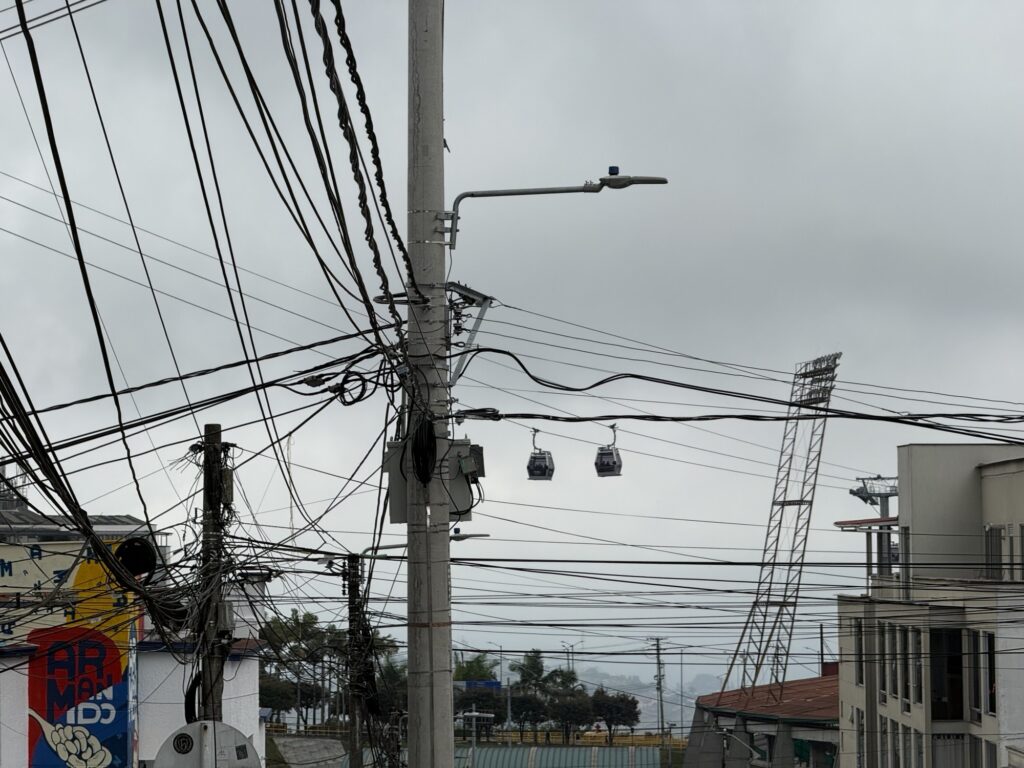
In Manizales you get around via cable car!
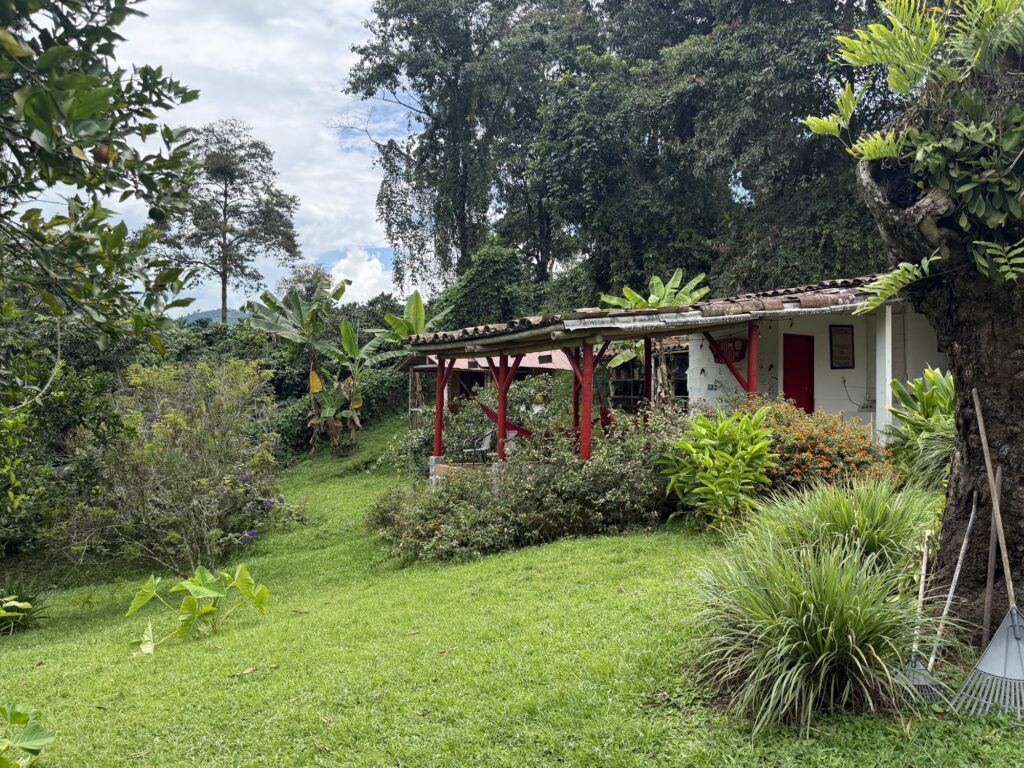
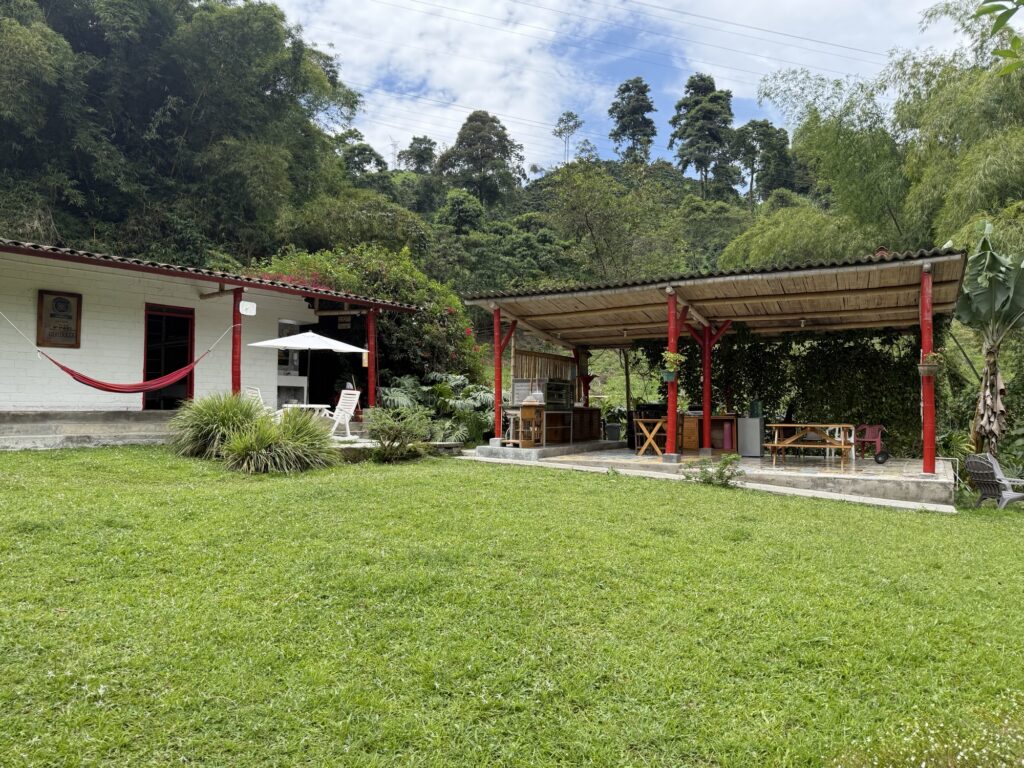
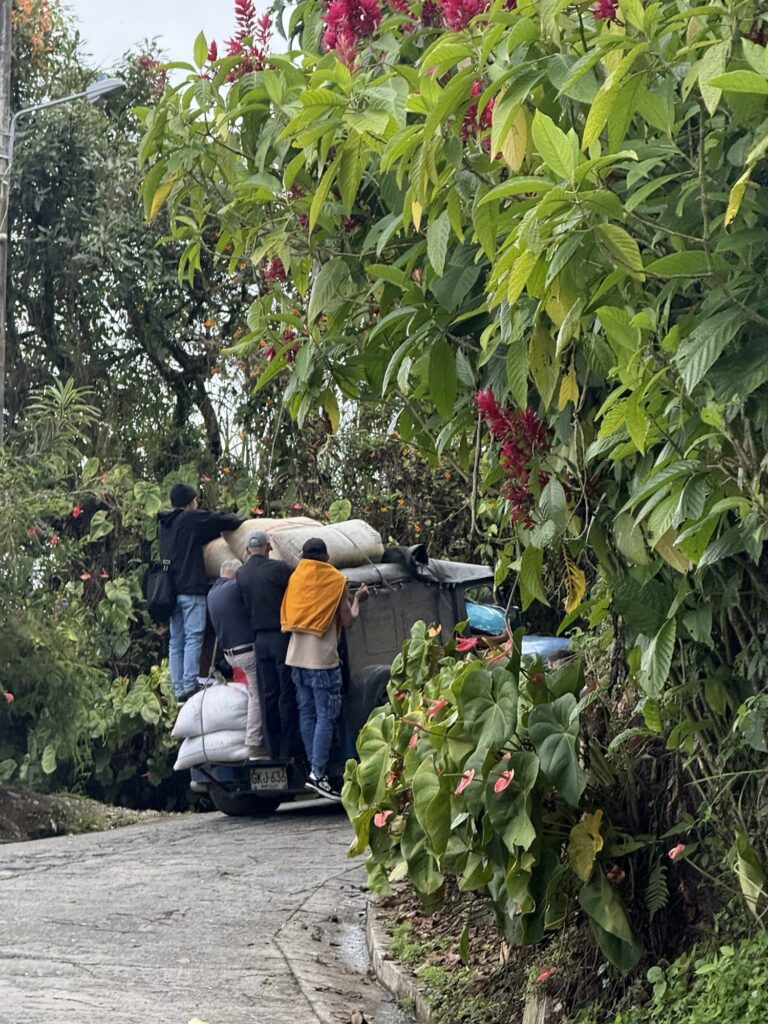
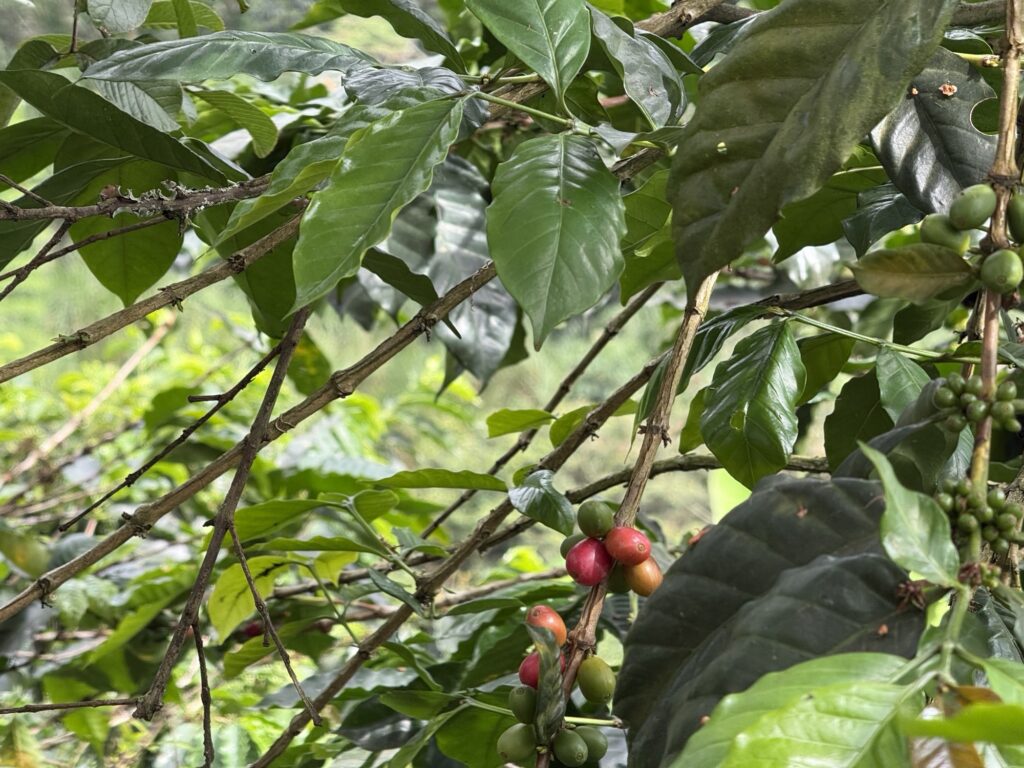
After a few days in the city, I longed for a more rural experience. Since I am in a region known for its coffee, I was looking for a stay at a coffee farm. I found a nice place at Hacienda Venecia, a large coffee farm, that also specializes on tourism. They have a wonderful hostel on their land that used to be accommodation for the farm workers.
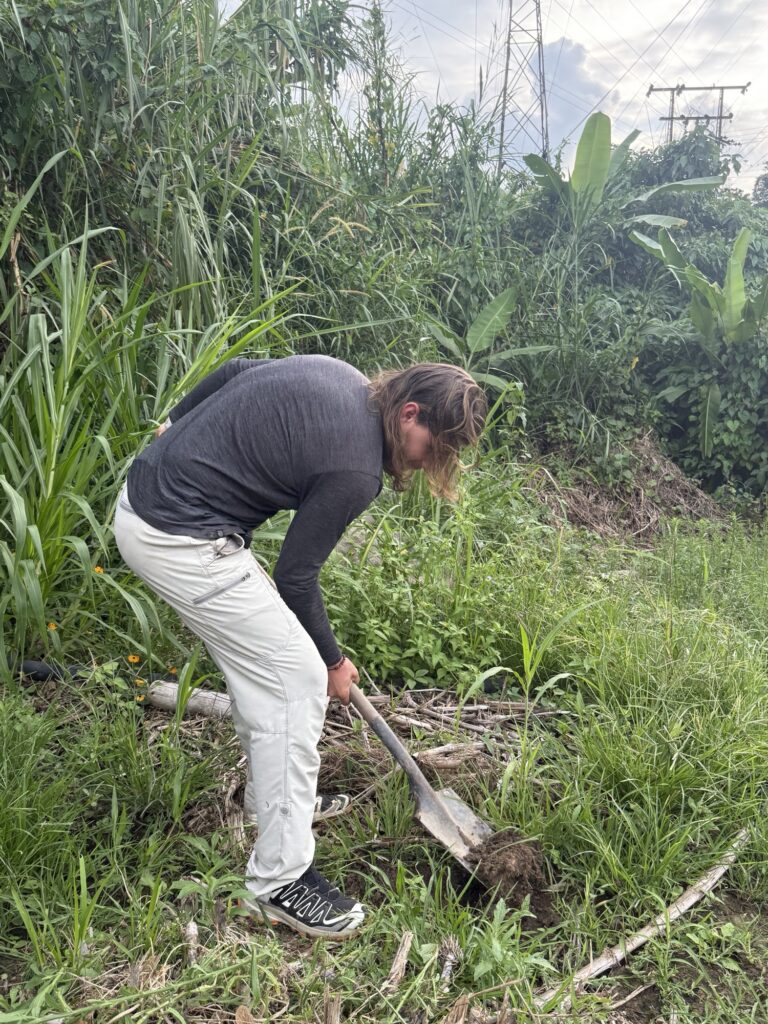
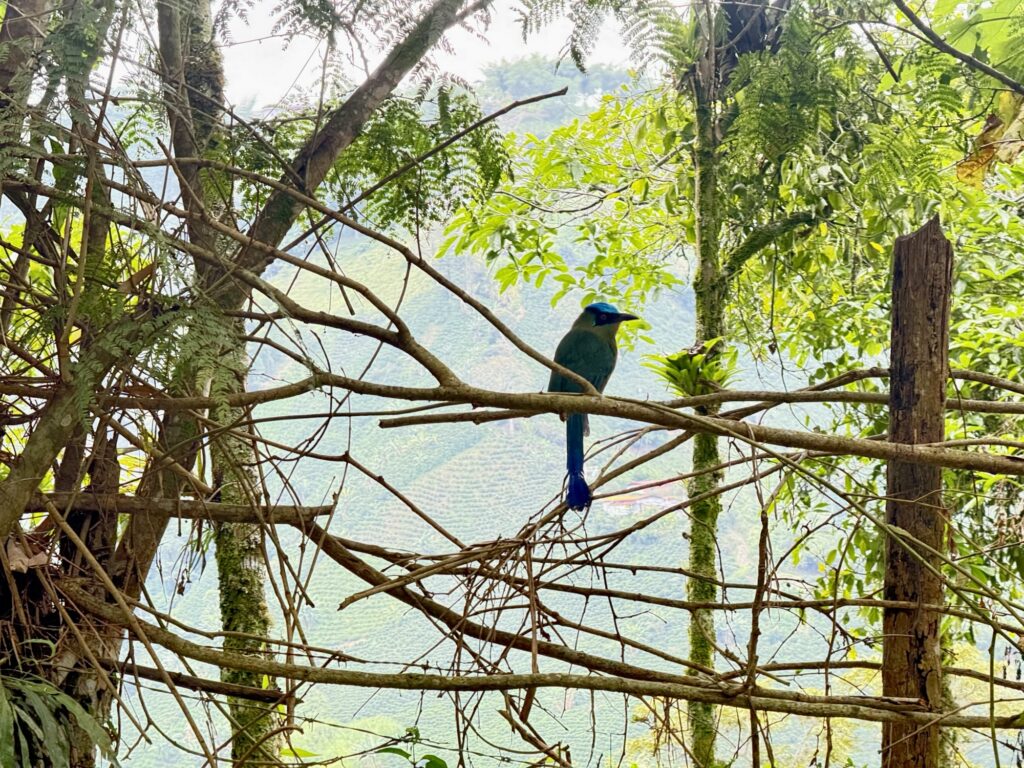
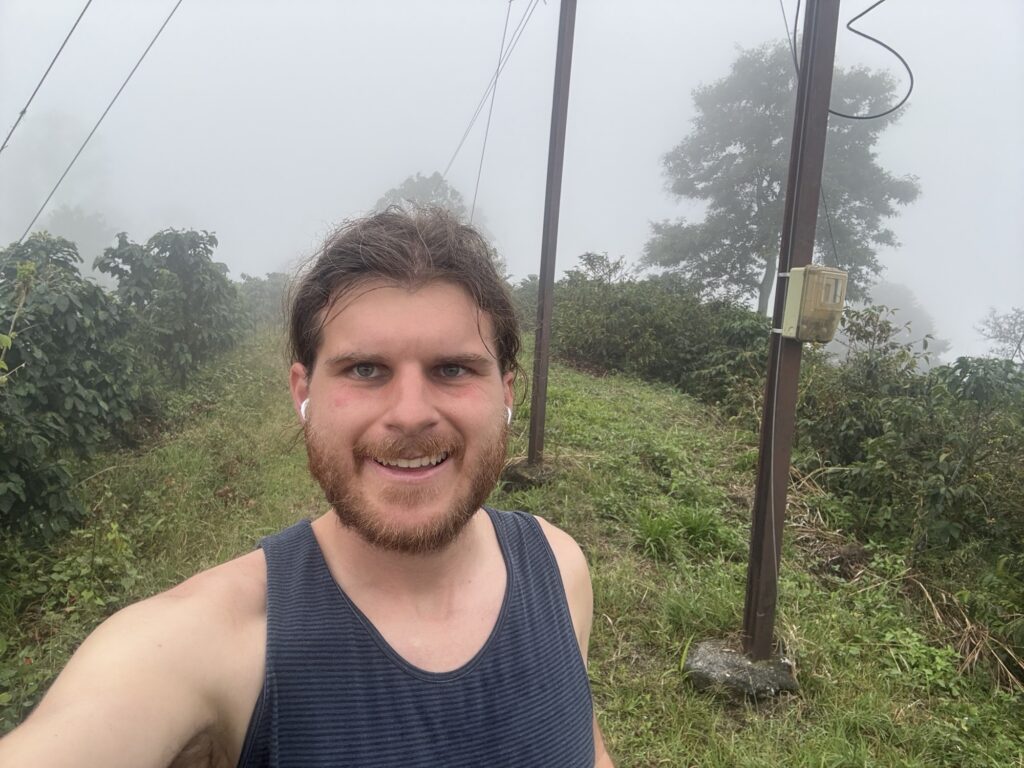
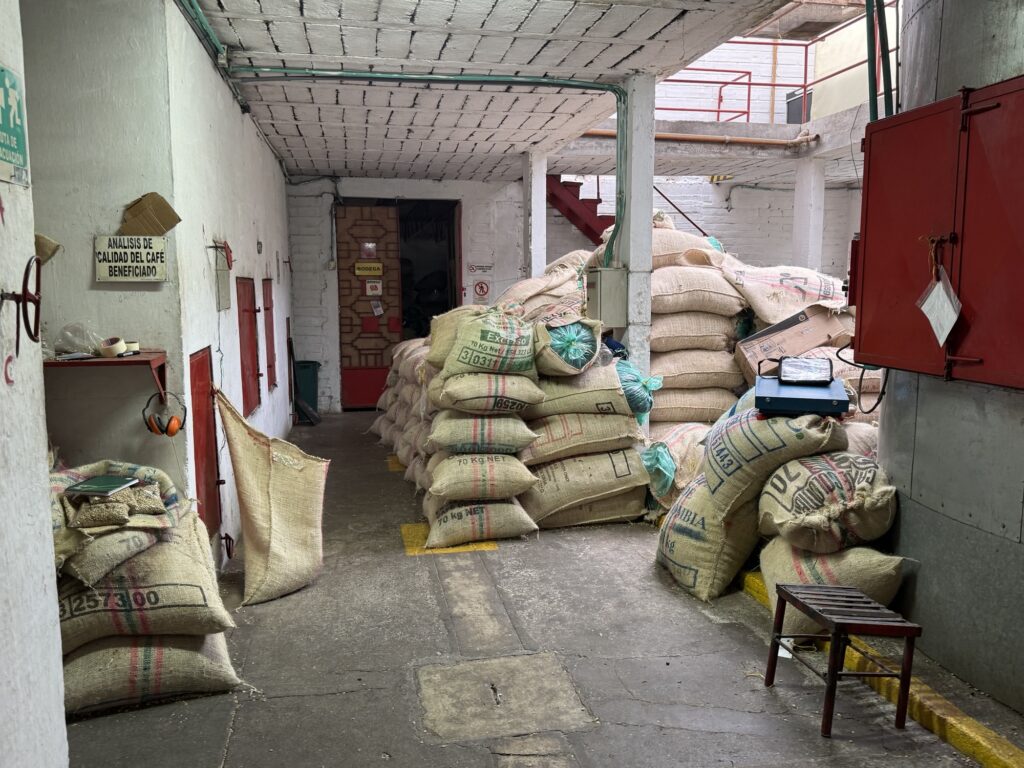
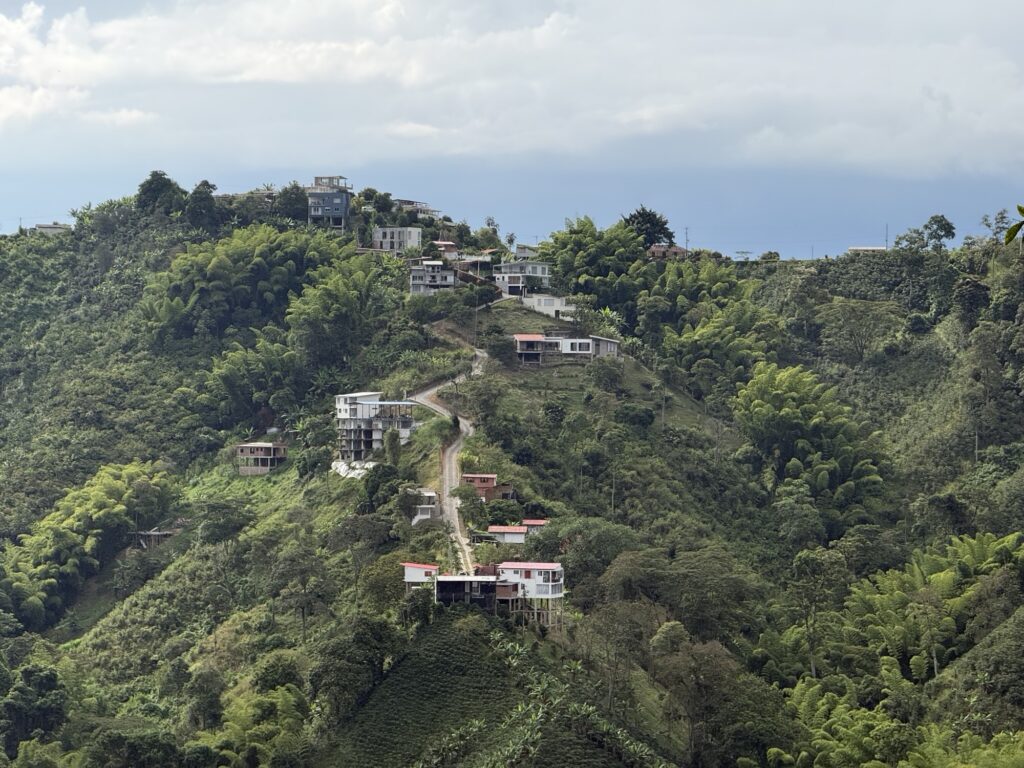
I spent my time there mostly walking through the land and enjoying the amazing views. I also learned a lot about coffee farming from the workers, and even got to plant some trees. Some impressions below.
After a few days at the Hacienda, it’s time to move on. I go south to Salento, a picturesque little village which is very popular with tourists. Here I plan to practice some horseback riding and hopefully see some Condors in the Cocora valley.
My first time going really high up the Andes, at a peak altitude of 4250 meters above sea level. For this adventure, I joined a private tour alongside two German travelers staying at the same Hostel.
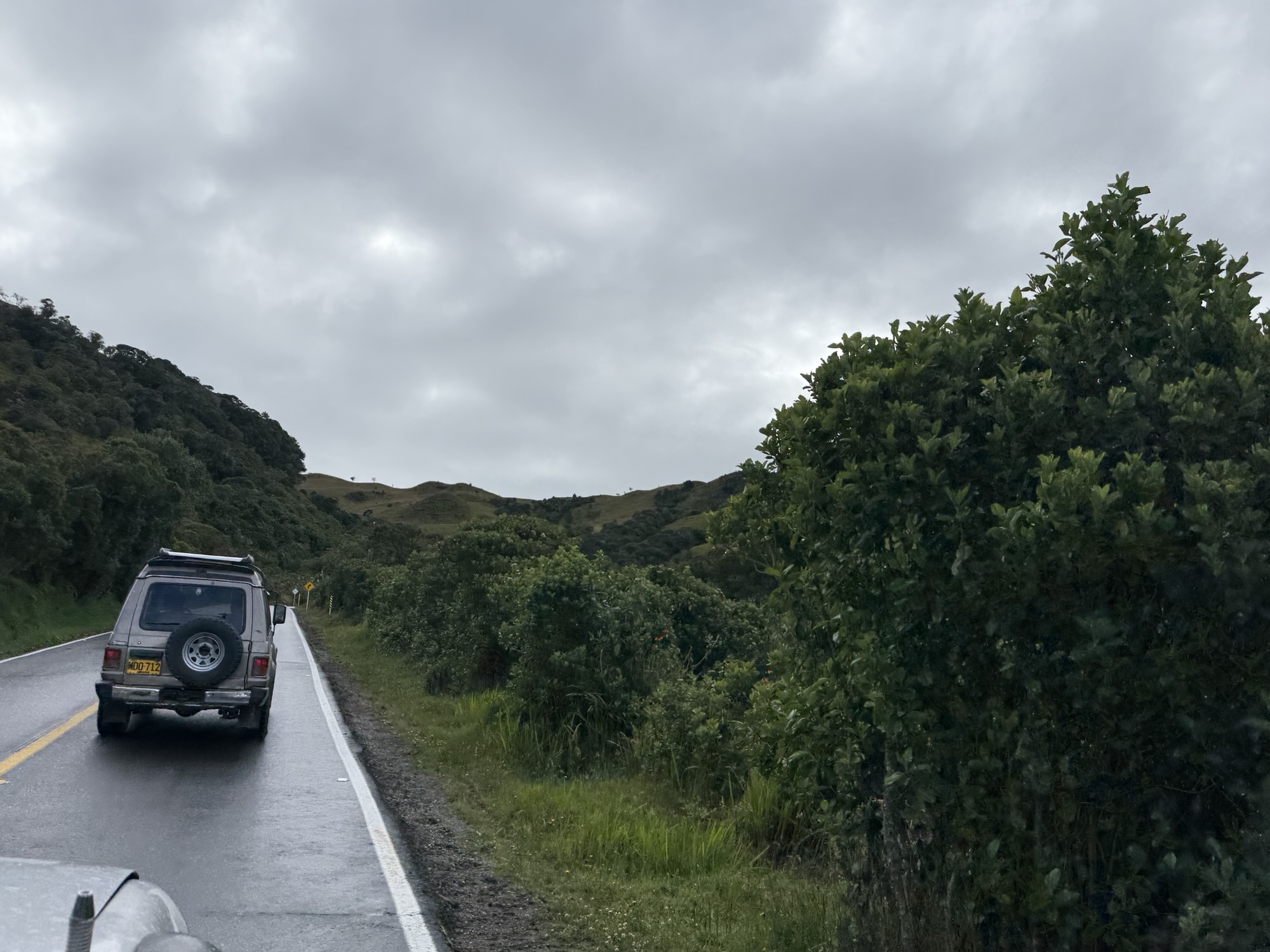
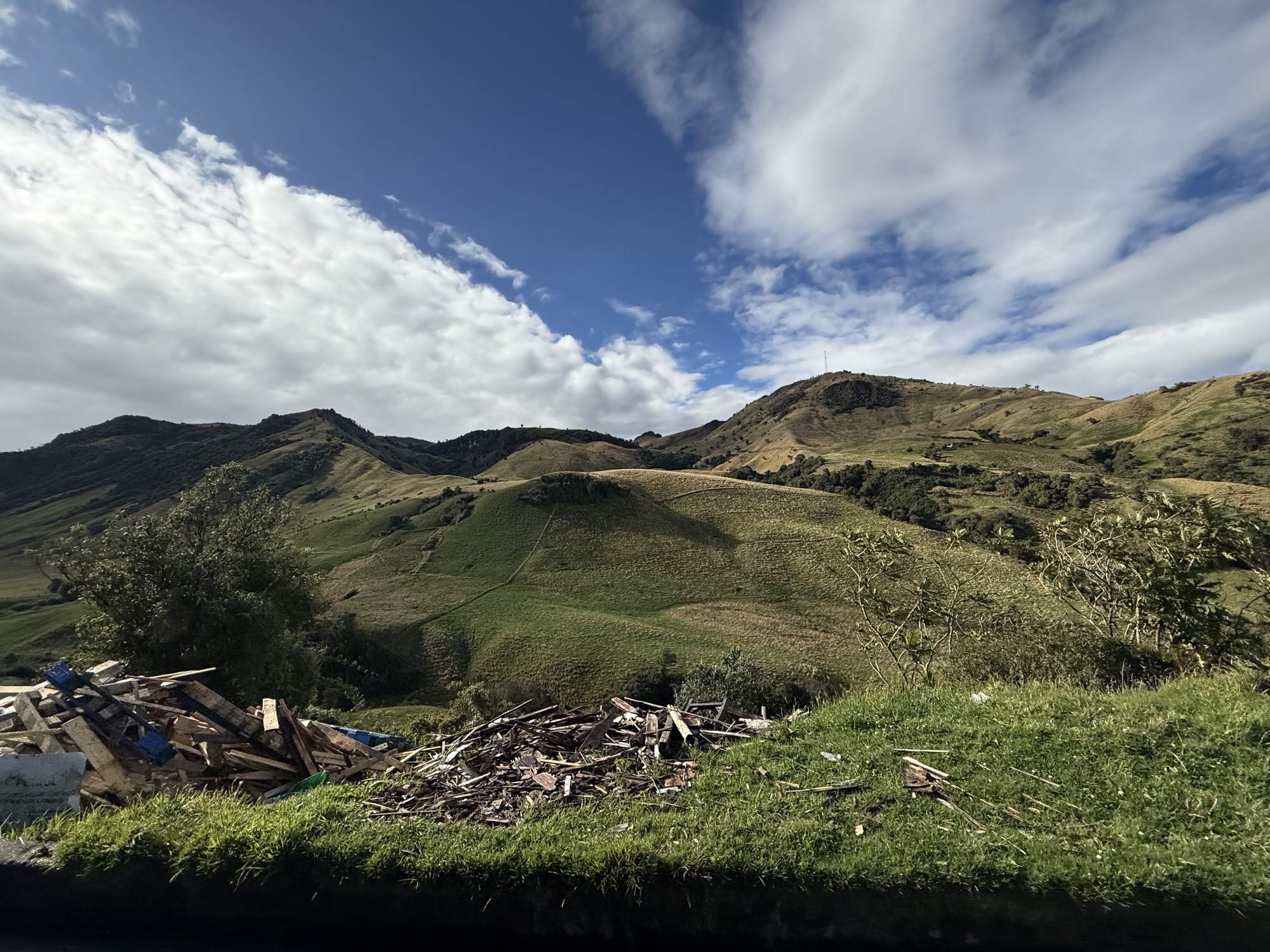
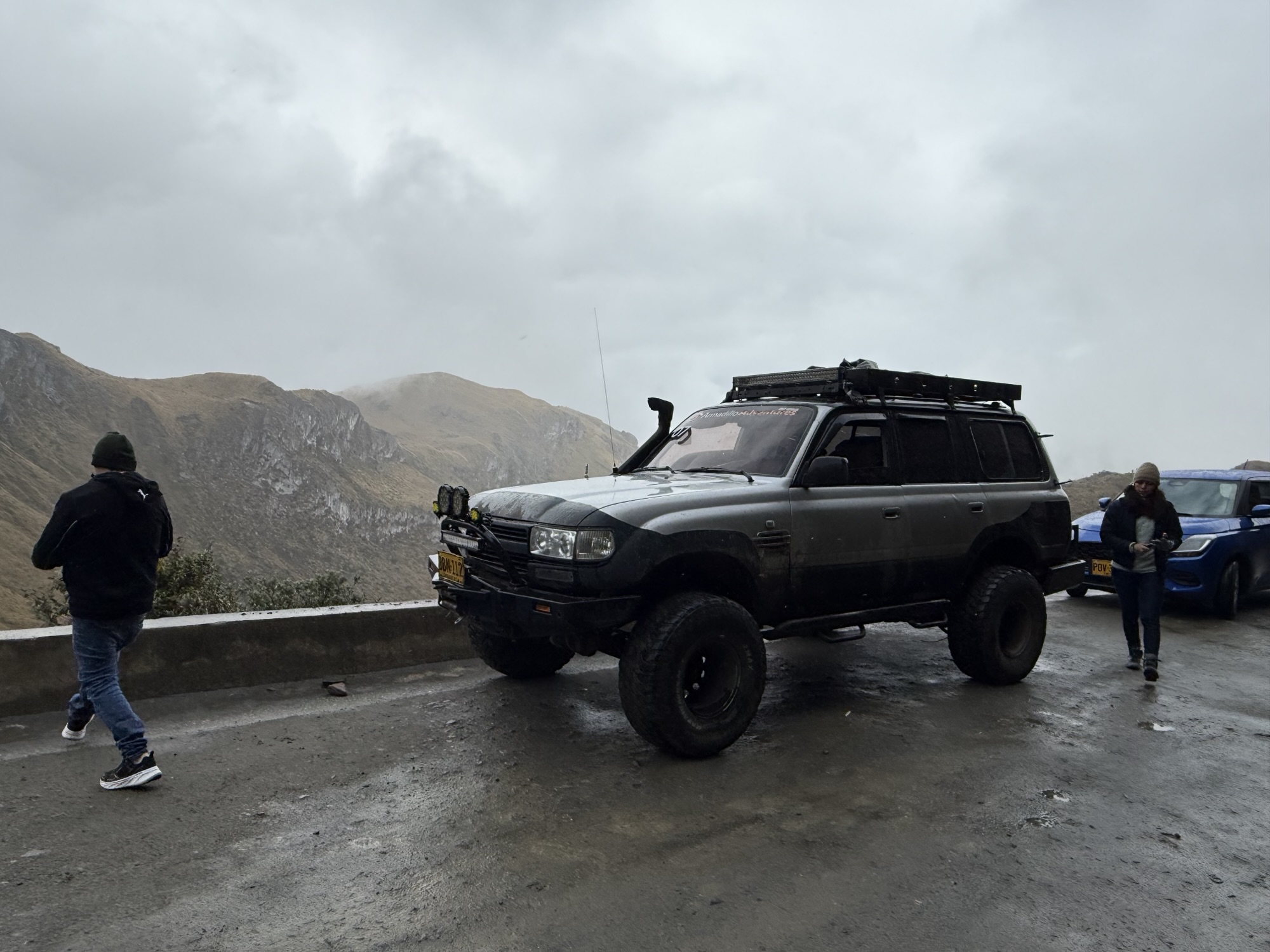
At 6.30 AM, we were picked up by our guide Alejandro. In his 4×4 he drove us up the mountain with some scenic views.
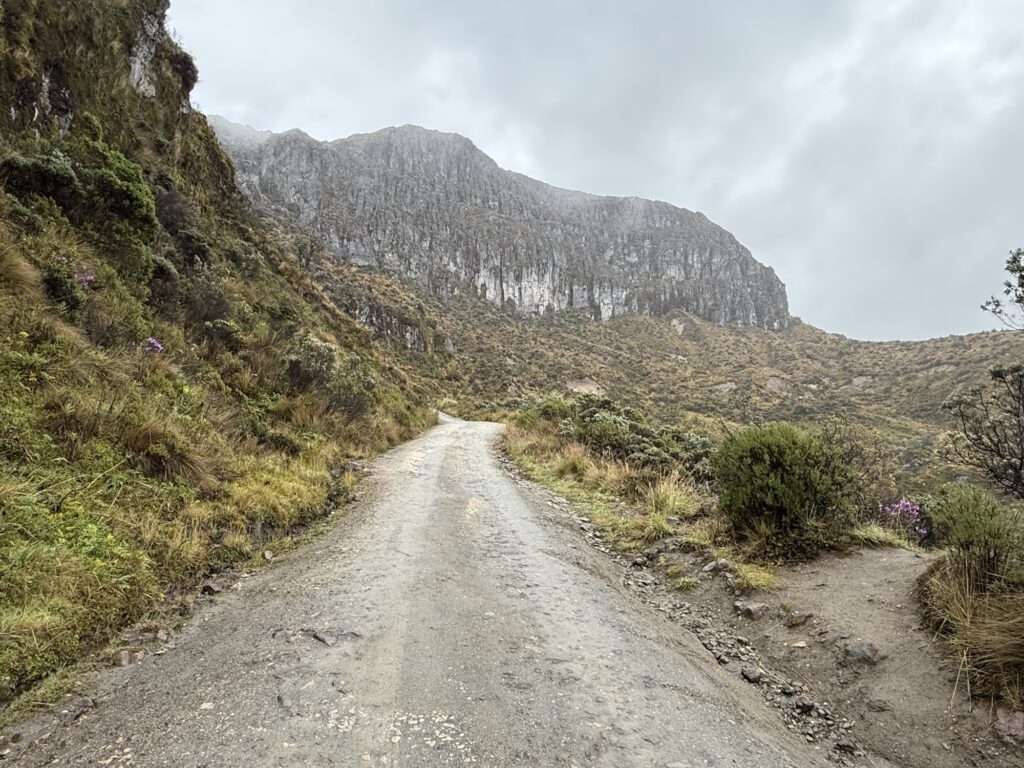
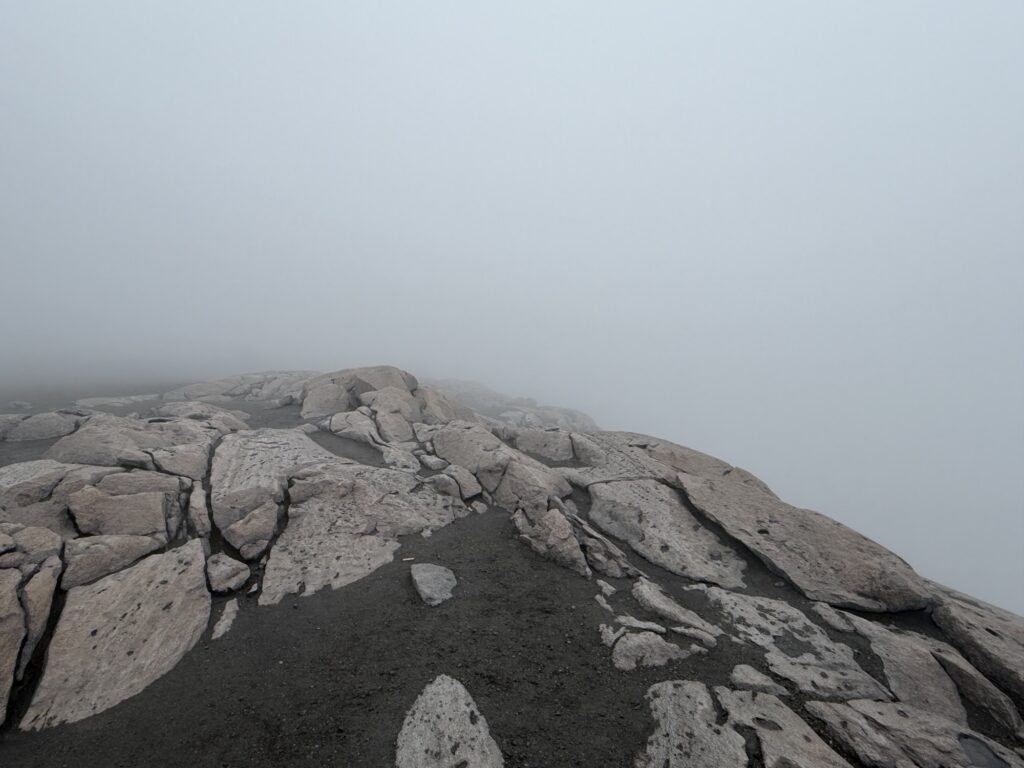
After a rough drive up the mountains we reach the highest point of our tour at 4250 meters above sea level, close to the tallest mountain of the region, Nevado del Ruiz. We can’t go further due to volcanic activity.
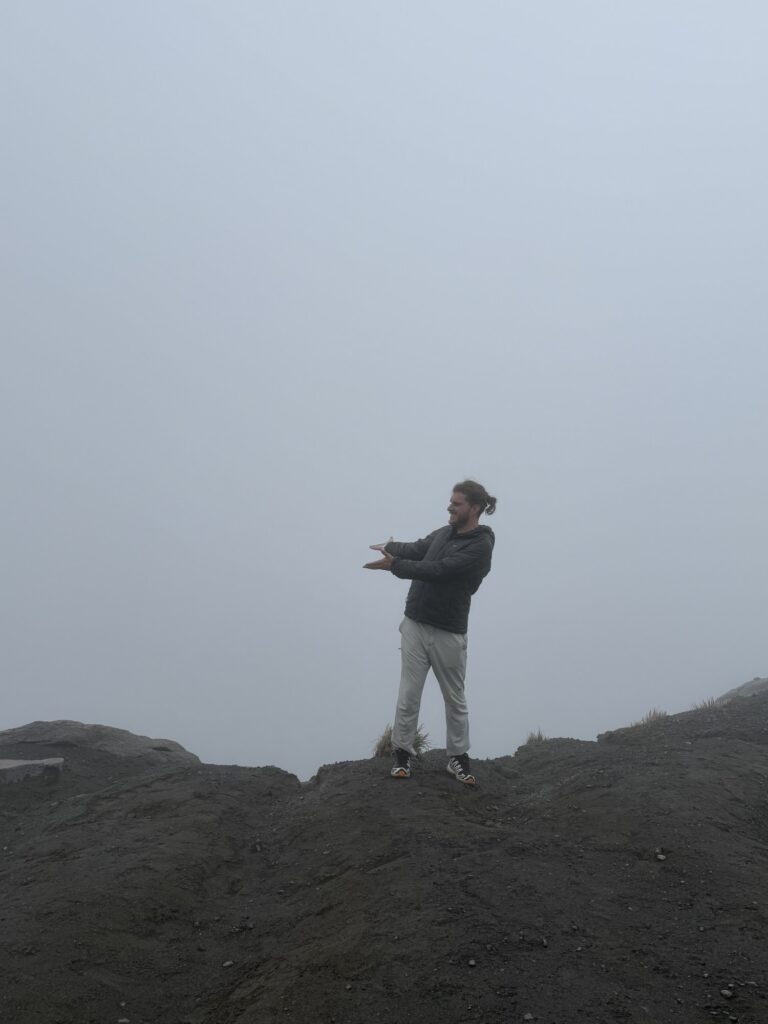
At the very top we are confronted with dense fog, unfortunately. The views are rather grey.
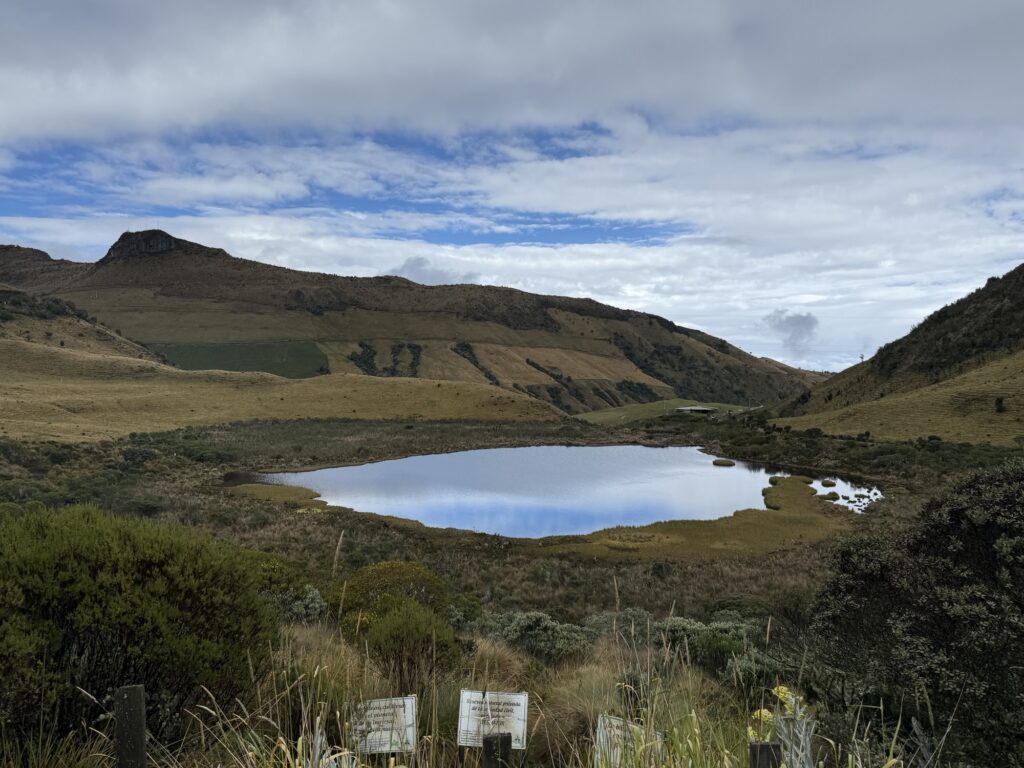
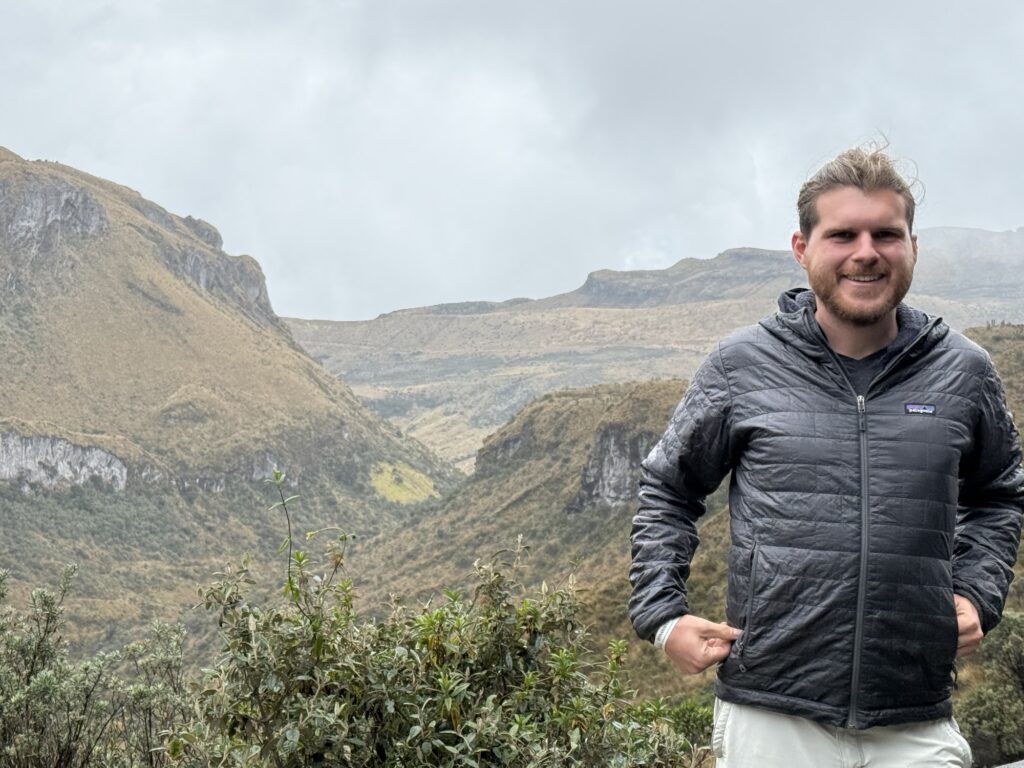
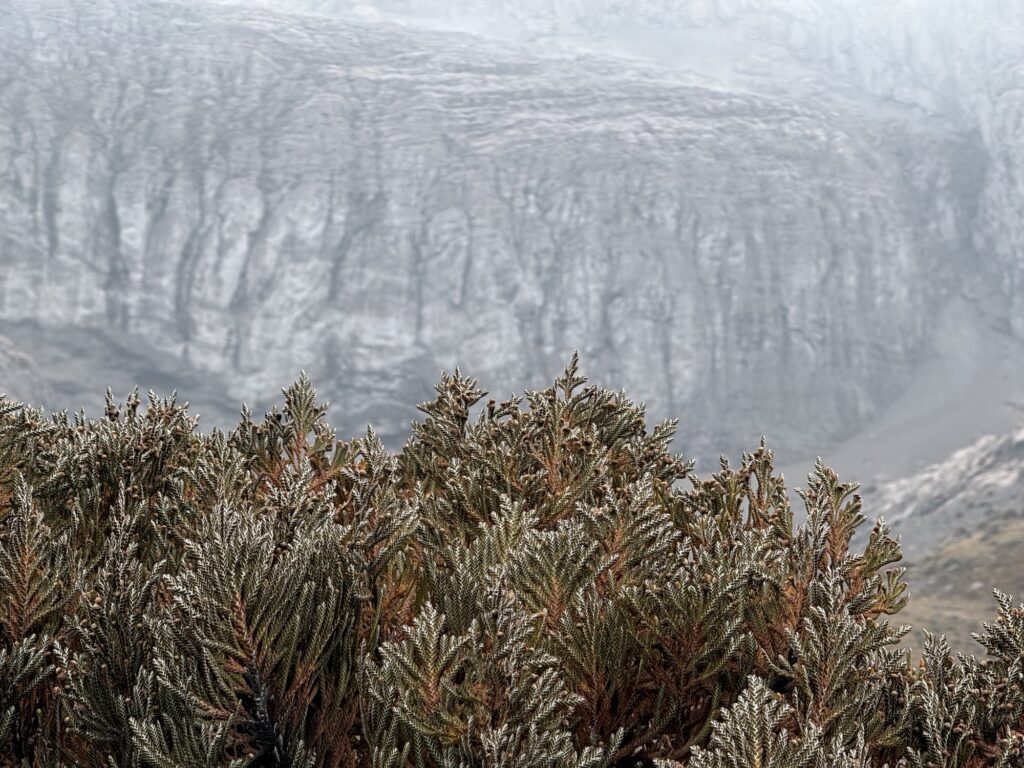
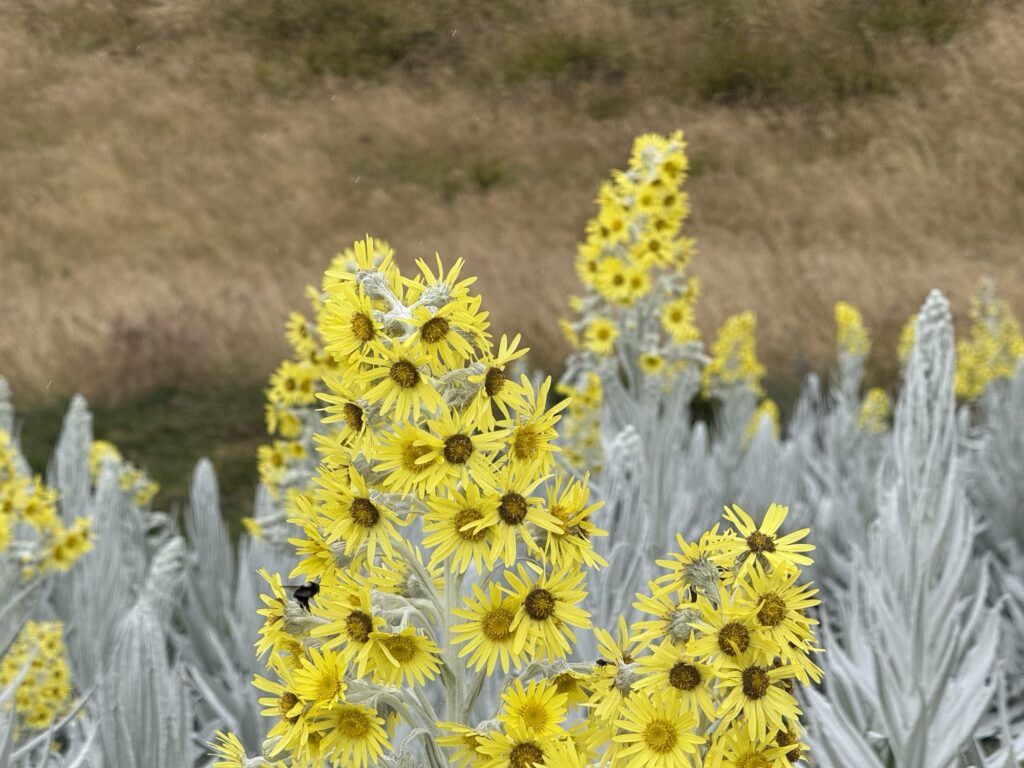
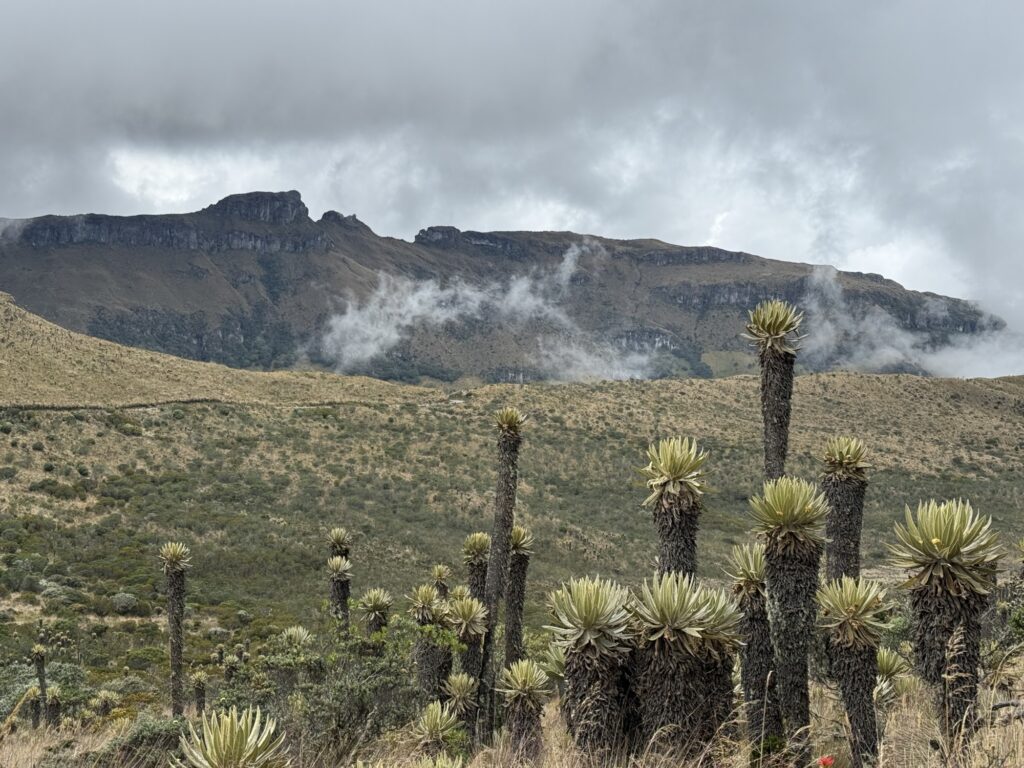
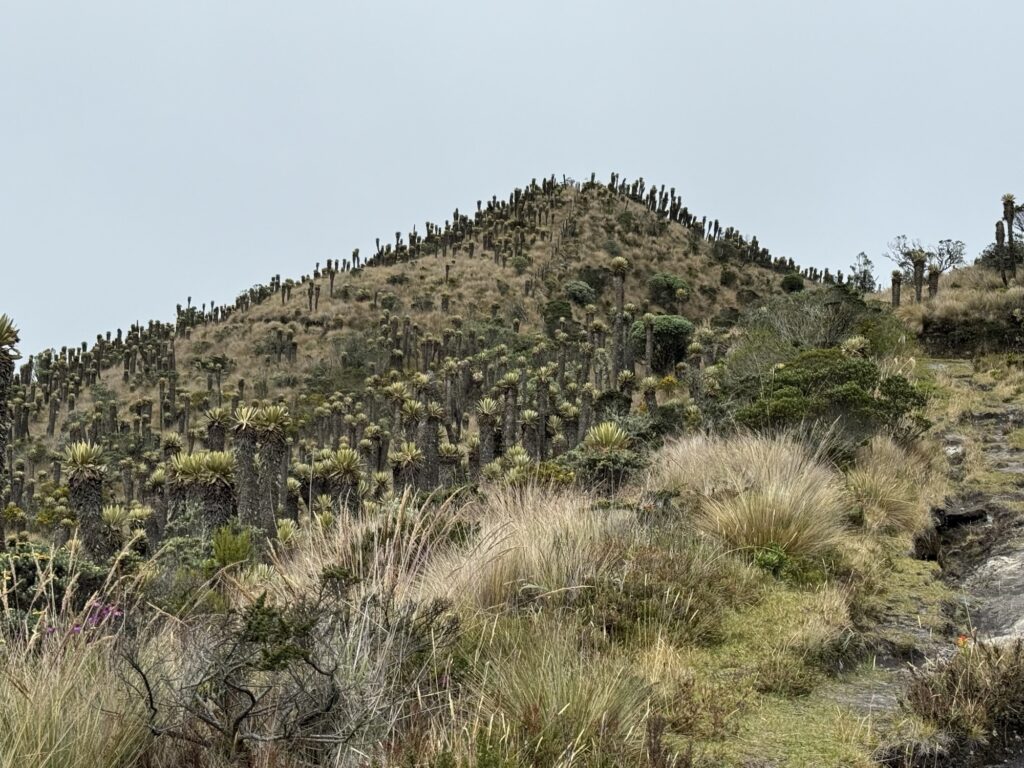
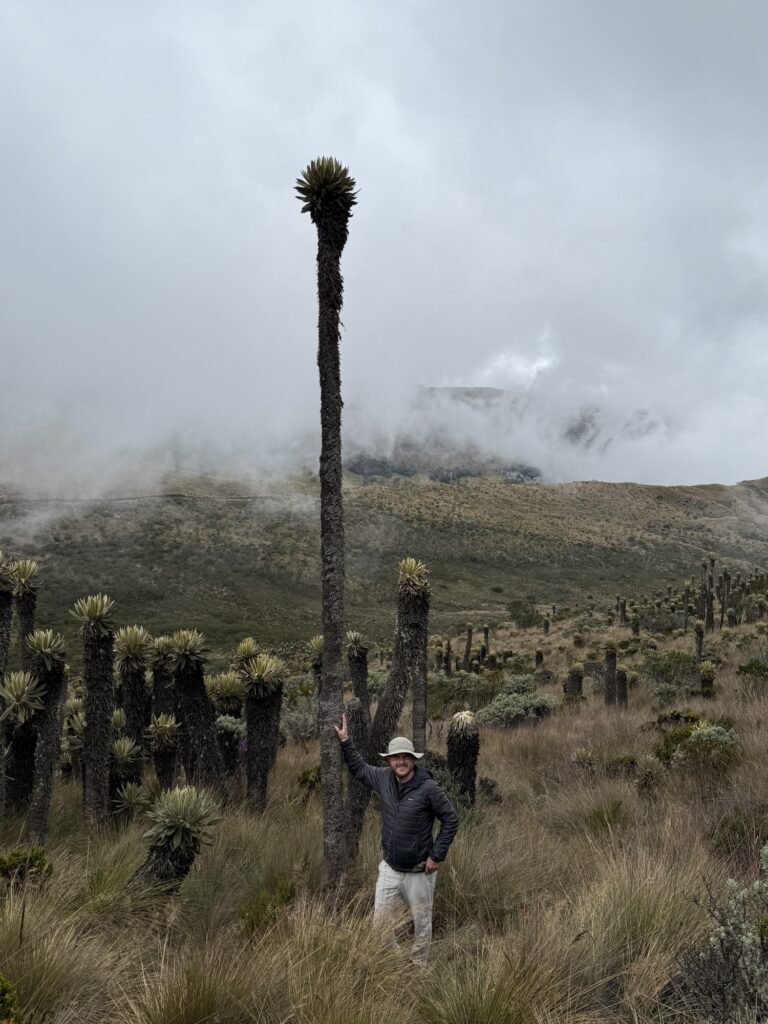
Also, I start to get a bit of altitude sickness, with some headaches. We still wanted to walk a bit but it was quite difficult with feeling so unwell. I am still grateful for a little walk through the Páramo ecosystem. It looked even more beautiful with the fog.
These plants only grow at high altitudes in the Andes. They also grow really slowly, 2-3 cm per year. So this one is hundreds of years old!
After the little hike, we relaxed a bit in the hot springs. A great way to end the day.